-
Gini’s Journey to Inclusive and Sustainable Travel Experiences with Virginia Scheele | Show notes on episode 80 of Women Disrupting Tech

As a woman in tech, you know how important a support network can be in realizing your dream. But, how do you navigate entrepreneurship when your environment doesn’t support your dream?
In Episode 80 of Women Disrupting Tech, Virginia Scheele, founder of Life of Gini and MATI, shares her inspiring journey from microbiology to entrepreneurship.
Key Takeaways from the episode
Here’s a small sample of what Virginia and I cover in our conversation:
💡 What it takes to overcome limiting beliefs about your own capabilities.
💡 How to turn rejection into the motivation to find opportunity.
💡 Why maximizing profit for good is essential for creating lasting change.Hit the play button below to join Gini’s Journey to Inclusive and Sustainable Travel, or scroll down for more information about and opportunities to connect with Virginia, Life of Gini and MATI.

Gini’s Journey to Inclusive and Sustainable Travel Experiences with Virginia Scheele | Ep. 80 – Women Disrupting Tech
Be an ally, be part of the movement!
Do you want to contribute to a more inclusive tech industry, as a woman in tech or as a (male) advocate?
Join the movement to help the women on the show shine as role models and help me encourage other men to support the female entrepreneurs in their lives.
To join, enter your email address below. By joining, you’ll get a weekly newsletter each Thursday afternoon (CET) with highlights and personal observations from the episode. You’ll also get early access to each episode, and you can access the full archive on Spotify.
Processing …Yes! You're now part of the movement!Oopsie, something went wrong at our end. Please reload the page and try again.
- Key Takeaways from the episode
- Be an ally, be part of the movement!
- The magic you can expect in this episode 🪄
- The Two Zero-Cost Ways to Support Women Disrupting Tech
- What makes this episode magical🌟?
- About Virginia Scheele
- About GINI and MATI
- Virginia’s plugs
- Let me know what you think!
- What’s coming up?
- More episodes like this?
The magic you can expect in this episode 🪄
How do you create a sustainable travel business in an unsustainable industry? And how do you navigate entrepreneurship when your environment doesn’t support your dream?
In episode 80 of Women Disrupting Tech, I speak with Virginia Scheele, founder of Life of Gini and MATI, two travel platforms redefining inclusion and impact.
Her journey from microbiology to entrepreneurship is packed with inspiring stories. By listening to Virginia’s story, you’ll learn
– How she turned 65 rejections into motivation,
– How she built two travel platforms redefining inclusion and impact, and
– Why maximizing profit for good is at the heart of Virginia’s mission.Plus, you’ll discover how the Dutch New Narrative Lab helped shape her entrepreneurial journey.
🎧 Listen to episode 80 of Women Disrupting Tech for actionable insights on overcoming limiting beliefs, creating lasting impact through profitability, and making DEI the new normal in tech. Click the button below to tune in on Spotify!
The Two Zero-Cost Ways to Support Women Disrupting Tech
When you’re ready to support my guests in making DEI obsolete by the end of 2032, help out by doing these two things:
- Use the share buttons below to share the podcast with friends, family, and co-workers. This way, you give the women disrupting tech the platform they need to make it happen. Use the buttons below to share.
- Rate the podcast on your favorite podcast platform. Better yet, leave a review. You can use a rating of one to five stars. This will help other people discover the podcast. And if you leave a review, it will help me improve.
What makes this episode magical🌟?
I don’t know about you, but I love pioneers like Virginia for doing whatever it takes to succeed. Imagine getting rejections on 65 job applications. Imagine being down to your last 4 days of budget on your birthday. Imagine getting a last-minute funding rejection even though you ‘just had to submit some additional information.’ And then still finding the energy to take the next step.
I also love her goal of maximizing profitability and thinking big. Not for her own wealth but for a fair and sustainable travel industry.
And she does not sugarcoat her journey as a founder and entrepreneur either. She talks openly about the lack of support in her personal circle, learning to separate business and personal finance, and finding the knowledge, mentors and role models needed to complete her journey.
In the end, the magic of a session on the hero’s journey at Dutch New Narrative Lab and the realization that everyone has more or less the same challenges to tackle inspired her to pursue her entrepreneurial dream.
Virginia’s story proves that with resilience and vision, you can transform challenges into impact. Click the button below to listen on Apple Podcasts, or click the image with the quote to watch the episode on YouTube.
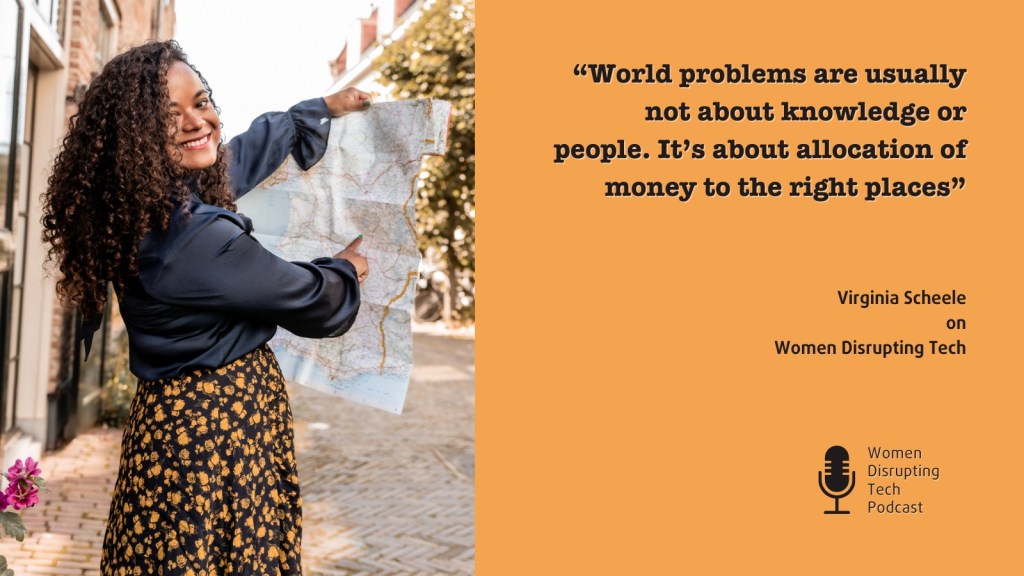
“World problems are usually not about knowledge or people. It’s about allocation of money to the right places.”
Virginia Scheele, founder of GINI and MATI
About Virginia Scheele
Virginia Scheele is the founder of GINI and MATI. Through her work, Virginia hopes to show that travel is more than a privilege; it’s a pathway to building bridges, understanding diversity, and uplifting communities worldwide. She’s open to collaborations and co-creating.
You can connect with her on LinkedIn. If you want to invest in her and her companies, keep an eye out for her fundraising, which started 29 January 2025.
About GINI and MATI
GINI is an inclusive tour operator offering trips and travel experiences to overlooked communities. MATI is a SaaS platform focused on connecting people through shared travel experiences, helping to combat the rising loneliness. Both ventures are dedicated to gender equality, reducing inequality and fostering economic growth. You can learn more about GINI on the website and on LinkedIn. On the website, you can also support inclusive and empowering travel experiences for overlooked communities.
Virginia’s plugs
As you’ll discover toward the end of the episode, Virginia is passionate about politics. She supports Stem Op Een Vrouw, an organization that helps women to become and stay politically active. Virginia also supports Positive Impact Tourism.
Let me know what you think!
Can travel be sustainable and inclusive? Or maybe you have views on finding and using your entrepreneurial support network. Share your views, questions and observations in the comments.
If you would like to suggest a guest that I absolutely must have on the podcast, please let me know via email or send a DM on LinkedIn.
What’s coming up?
Next week on Women Disrupting Tech, LBGTQI+ Journalist Pim Blom will join me for an open and honest conversation on how to improve queer representation in leadership.
After that, systemic change guru Karim El Oteify will share how we can use DEI as a force for good in business.
So stay tuned for more inspiring Men and Women Disrupting Tech!
With that, I wish you a wonderful day. And until we meet again in the next episode, keep being awesome!
More episodes like this?
It’s always difficult to compare, but if I could recommend three episodes related to travel and entrepreneurship, it would be these:
– In episode 62, Ruben Brave shares how he’s creating new narratives for a more innovative society. This episode covers his work with Dutch New Narrative Lab.
– In episode 53, Veerle Witte shares her own journey of building an app empire as a solo founder.
– In episode 49, Arosha Brouwer shares how she’s building a company with grace and empathy. -
Minder financiële stress en betere geldkeuzes met Sofie’s Astrid Bruinsma-Eggink | Show notes on episode 79 of Women Disrupting Tech
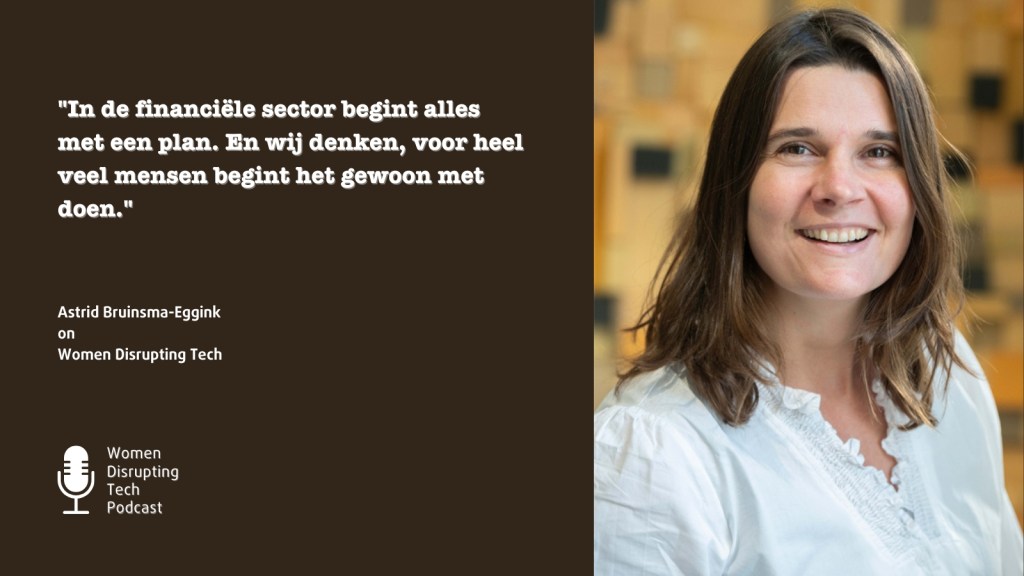
“In the financial sector, everything starts with a plan. And we believe that for most people, it starts by doing things.”
It’s a bold statement from Sofie founder Astrid Bruinsma-Eggink. A statement that she can back up with scientific data.
And if you’re wondering how her platform empowers people to “start doing things” to improve their financial health, this is the episode for you.
Key Takeaways from the episode
In this Dutch episode, you’ll learn:
💶 What financial health really means and how employers can support it.
🤔 Why behavioral change around money is so challenging.
🧠 How behavioral science can empower employees to make smarter financial decisions.Hit the play button below to learn how employers can empower their employees to improve their financial vitality for less financial stress and better financial decisions.
Minder financiële stress en betere geldkeuzes met Sofie's Astrid Bruinsma-Eggink | Ep. 79 – Women Disrupting Tech
Be an ally, be part of the movement!
Do you want to contribute to a more inclusive tech industry, as a woman in tech or as a (male) advocate?
Join the movement to help the women on the show shine as role models and help me encourage other men to support the female entrepreneurs in their lives.
To join, enter your email address below. By joining, you’ll get a weekly newsletter each Thursday afternoon (CET) with highlights and personal observations from the episode. You’ll also get early access to each episode, and you can access the full archive on Spotify.
Processing …Yes! You're now part of the movement!Oopsie, something went wrong at our end. Please reload the page and try again.
- Key Takeaways from the episode
- Be an ally, be part of the movement!
- The magic you can expect in this episode 🪄
- The Two Free Ways to Support Women Disrupting Tech
- What makes this episode magical🌟?
- About Astrid Bruinsma-Eggink and Sofie
- About Sofie
- Let me know what you think!
- What’s coming up?
- More episodes like this?
The magic you can expect in this episode 🪄
In the Netherlands, 60% of households are financially unhealthy or vulnerable for financial problems. And the effects of financial stress can spill over into the workplace.
But how do you help your employees reduce financial stress as an employer?
After all, if we follow the data, only 5% of the people act on the information provided by their financial services provider. Information that accurately reflects their situation.
So why do so few people do something with the financial information? And why can we convince them to just buy stuff?
In episode 79 of Women Disrupting Tech, I sit down with Astrid Bruinsma-Eggink. She’s the founder of Sofie, a social fintech startup on a mission to help 100 million Europeans reduce financial stress and live more sustainably.
Together, we discuss:
💶 What seven indicators we can use to assess our financial health.
🤯 Why people don’t take action for their finances, even if it’s crystal clear what to do
📊 The strategies from behavioral economics that employers can deploy to help employees become financially healthy.Plus, Astrid shares how she secured €750,000 in funding to ensure Sofie’s own financial vitality.
🎧 Discover how Sofie empowers employees to beat financial stress and make smarter money choices. Click the button below to tune in on Spotify and join the conversation!
The Two Free Ways to Support Women Disrupting Tech
When you’re ready to support my guests in making this podcast obsolete by the end of 2032, help out by doing these two things:
- Use the share buttons below to share the podcast with friends, family, and co-workers. This way, you give the women disrupting tech the platform they need to make it happen. Use the buttons below to share.
- Rate the podcast on your favorite podcast platform. Better yet, leave a review. You can use a rating of one to five stars. This will help other people discover the podcast. And if you leave a review, it will help me improve.
What makes this episode magical🌟?
Sofie does a great job at encouraging people to start really small and build up a financial routine. This prevents people from feeling they’re not ready. And the success magically brings the confidence needed to get and stay out of financial trouble.
Another piece of magic is her approach to funding. She recognized early on that she was getting in the way of herself. So, she decided to rely on her strength to connect people to her cause rather than focusing on getting the right pitch, the right term sheet, and the right MVP. But she also used the discussions with investors to learn how to do things herself, thereby bootstrapping the company in the first period.
Last, but certainly not least, behavioral economics is the basis for most of Astrid’s work with Sofie. And that happens to be one of my favorite topics. So, I had a great time interviewing Astrid, and I hope you can hear that.
If you’d like to learn more about this intriguing topic, I recommend Daniel Kahneman’s book ‘Thinking, Fast and Slow‘, and the Freakonomics podcast.
Are you ready for a practical guide to improving your household finances? Click the button below to listen on Apple Podcasts, or click the image with the quote to watch the episode on YouTube.
“In de financiële sector begint alles met een plan. En wij denken, voor heel veel mensen begint het gewoon met doen.”
Astrid Bruinsma-Eggink, founder Sofie
About Astrid Bruinsma-Eggink and Sofie
Astrid Bruinsma-Eggink is on a mission to help 100 million Europeans live financially healthy and green lives. Something that is easier said than done.
With her Social Fintech company Sofie, she uses her experience in the financial services industry and her knowledge of behavioral economics to help people spend money on things they need or enjoy. You can connect with Astrid on LinkedIn.
About Sofie
Sofie can help employers who are faced with wage garnishments or get regular requests for paycheck advances from their employees. But also less obvious issues like increases in sick leave or employees who are complaining about ‘issues at home’, may be in a financially unhealthy position.
You can learn more about how Sofie can help you and your employees become financially healthy on their website. Or you can follow Sofie on LinkedIn, Instagram, Facebook and YouTube.
Let me know what you think!
Do you believe in the power of behavioral economics? Or do you think that people will just never learn how to deal with money? I’d love to learn your thoughts and observations in the comments below this post.
If you would like to suggest a guest that I absolutely must have on the podcast, please let me know via email or send a DM on LinkedIn.
What’s coming up?
Next week on Women Disrupting Tech, we’ll dive into the world of travel with Virginia Scheele to discover how she’s building the future of sustainable and inclusive travel.
After that, LBGTQI+ Journalist Pim Blom will join me for an open and honest conversation on how to improve queer representation in leadership.
So stay tuned for more inspiring Men and Women Disrupting Tech!
With that, I wish you a wonderful day. And until we meet again in the next episode, keep being awesome!
More episodes like this?
It’s always difficult to compare, but if I could recommend three episodes on making the right choices in life, it would be these:
– In episode 77, Astrid’s business buddy Angela Ursem, highlights how making an impact and profitability can go hand in hand.
– In episode 61, Asceline Groot and Wyke Potjer describe how their platform hetkanwel.nl can help you live a sustainable life.
– In episode 5, Puck Landewé educates us on the importance of being financially independent as a woman. -
Using Data to Build a Gender-Equal Future in Entrepreneurship with Katty Hsu | Show notes on episode 78 of Women Disrupting Tech

In episode 78 of Women Disrupting Tech, we’re talking to Katty Hsu, a global changemaker on a mission to make entrepreneurship more inclusive.
Born in Taiwan, raised in South Africa, and now shaping change in Rotterdam, Katty brings a unique perspective to the Women in Tech conversation.
Key Takeaways from the episode
In this episode, you’ll learn:
📊 Why good data is the backbone of driving diversity and inclusion
💬 How universities can reshape entrepreneurial education to reflect real-world diversity
🤝 Why collaboration and honest dialogue are essential for closing the gender gapHit the play button below to learn how we can start using data to build a gender-equal future in entrepreneurship!
Using Data to Build a Gender-Equal Future in Entrepreneurship with Katty Hsu | Ep. 78 – Women Disrupting Tech
Be an ally, be part of the movement!
Do you want to contribute to a more inclusive tech industry, as a woman in tech or as a (male) advocate?
Join the movement to help the women on the show shine as role models and help me encourage other men to support the female entrepreneurs in their lives.
To join, enter your email address below. By joining, you’ll get a weekly newsletter each Thursday afternoon (CET) with highlights and personal observations from the episode. You’ll also get early access to each episode, and you can access the full archive on Spotify.
Processing …Yes! You're now part of the movement!Oopsie, something went wrong at our end. Please reload the page and try again.
- Key Takeaways from the episode
- Be an ally, be part of the movement!
- The magic you can expect in this episode 🪄
- The Two Free Ways to Support Women Disrupting Tech
- What makes this episode magical🌟?
- About Katty Hsu
- About ECE and SheLeads
- Let me know what you think!
- What’s coming up?
- More episodes like this?
The magic you can expect in this episode 🪄
As an entrepreneur, you know that collecting data is critical for building impactful business cases and ensuring you’re tackling the right problem.
This applies to inclusive entrepreneurship, too.
But there wasn’t much data when Katty Hsu joined the Erasmus Center for Entrepreneurship to investigate how inclusive entrepreneurship really is. At the time, DEI wasn’t even on the radar for most organizations.
Therefore, she and a team of researchers started a project to change this. In episode 78 of Women Disrupting Tech, Katty is my guest to educate us on the power of inclusive entrepreneurship.
Join us for a powerful discussion on:
📊 Why high-quality data is the key to advancing DEI
🤝 The importance of collaboration within the entrepreneurial ecosystem
💬 How to start the uncomfortable but necessary conversations about gender inequalityPlus, you’ll get a glimpse into the insights from the SHELEADS+ Insights Report titled: “Towards a gender-equal future in entrepreneurship through data, dialogue and support,” which will be unveiled at the annual event on 29 November.
Ready to learn how data, collaboration, and bold conversations can create a more inclusive future? 🎧 Tune in and join the conversation! Click the button below to listen to the episode on Spotify.
The Two Free Ways to Support Women Disrupting Tech
When you’re ready to support my guests in making this podcast obsolete by the end of 2032, help out by doing these two things:
- Use the share buttons below to share the podcast with friends, family, and co-workers. This way, you give the women disrupting tech the platform they need to make it happen. Use the buttons below to share.
- Rate the podcast on your favorite podcast platform. Better yet, leave a review. You can use a rating of one to five stars. This will help other people discover the podcast. And if you leave a review, it will help me improve.
What makes this episode magical🌟?
Katty brings a truly global perspective to the show. Born in Taiwan, raised in South Africa, and now living in Rotterdam, she has experienced life in three vastly different cultures. This unique background shapes how she views entrepreneurship and inclusion.
Her entrepreneurial journey started young. Her mother instilled business skills early by taking Katty along to supplier negotiations. This hands-on exposure gave her a firsthand understanding of the challenges and opportunities in entrepreneurship.
When we talk about the need for good data on inclusive entrepreneurship, we also discuss the role of data in teaching at universities like Erasmus. Katty reveals that when she started at Erasmus, teaching cases and study materials focused almost entirely on companies led by white men and built solely for profit.
This lack of representation matters. Studies show that women often feel they need more knowledge before taking entrepreneurial risks. Again, the adage that “you can’t be what you can’t see” applies here. So, her efforts to make study materials better reflect female entrepreneurship truly contribute to making the ecosystem more inclusive.
Are you ready for the global perspective on entrepreneurship? Click the button below to listen on Apple Podcasts, or click the image with the quote to watch the episode on YouTube.
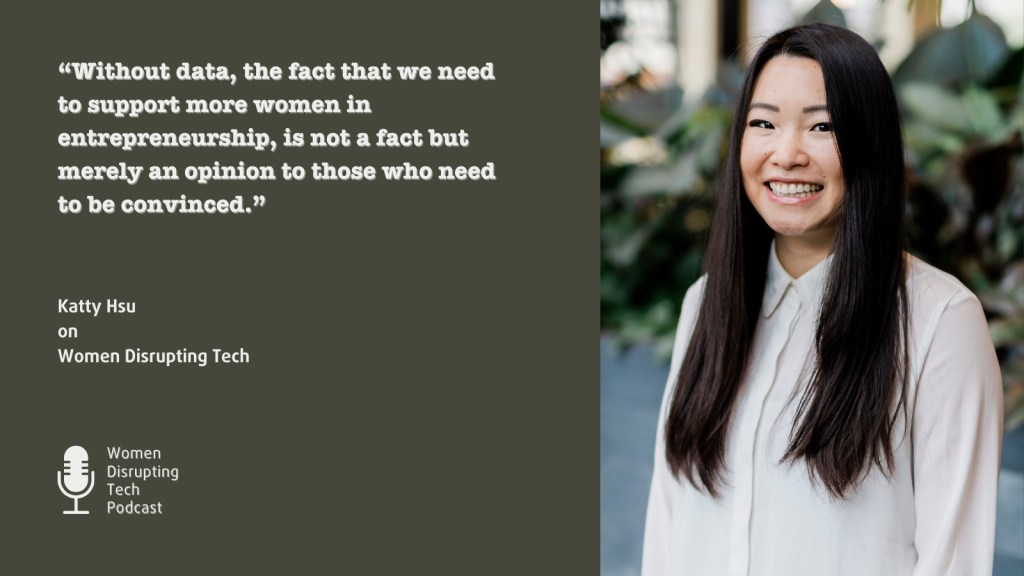
Quote from episode 78 of Women Disrupting Tech. Click the image to listen to the episode on YouTube. “Without data, the fact that we need to support more women in entrepreneurship, is not a fact but merely an opinion to those who need to be convinced.”
Katty Hsu, co-founder and managing director of the SHELEADS+ Global Foundation
About Katty Hsu
Katty Hsu is the Inclusive Entrepreneurship & Research Lead at Erasmus Centre for Entrepreneurship and co-founder and managing director of the SHELEADS+ Global Foundation.
She graduated in Politics, Philosophy and Economics from Stellenbosch University in South Africa. Then, she moved to Rotterdam to get her Master’s in Industrial Dynamics and Strategy at the Erasmus School of Economics.
You can discover her personal story on this website and connect with her on LinkedIn.
About ECE and SheLeads
Erasmus Centre for Entrepreneurship (ECE) is part of Erasmus University Rotterdam. It is a leading international center for entrepreneurship education and research. ECE empowers aspiring and seasoned entrepreneurs through knowledge, networks and access to resources, enabling them to achieve their entrepreneurial ambitions. You can find more information on the ECE website and follow ECE on LinkedIn or Instagram.
SHELEADS+ is an initiative and part of ECE. It leverages high-quality research, transformative education, and meaningful connections to create a future where everyone, including those affected by gender-based marginalization, can thrive. To realize this mission, SHELEADS+ activities are spinning out from ECE to the dedicated SHELEADS+ Global Foundation. Check out their new website or follow them on LinkedIn or Instagram.
On 29 November 2024, they unveiled the report titled: “Towards a gender-equal future in entrepreneurship through data, dialogue and support” at their SheLeads+ Annual Event on 29 November 2024. You can download it here.
Let me know what you think!
Do you believe that profit and impact go together? Or do you think that impact companies must never make profits? I’d love to learn your thoughts and observations in the comments below this post.
If you would like to suggest a guest that I absolutely must have on the podcast, please let me know via email or send a DM on LinkedIn.
What’s coming up?
Next week on Women Disrupting Tech, Astrid Bruinsma-Eggink will be my guest to talk about the importance of financial health for your employees. This topic is near to my heart as I’ve learned firsthand how financial stress can cause people to make really bad decisions.
After that, we’ll dive into the world of travel with Virginia Scheele to discover how she’s building the future of sustainable and inclusive travel.
Later in season four, we’ll move into queer territory as I talk to LBGTQI+ Journalist Pim Blom and Systemic Change Guru Karim El Oteify.
So stay tuned for more inspiring Men and Women Disrupting Tech!
With that, I wish you a wonderful day. And until we meet again in the next episode, keep being awesome!
More episodes like this?
It’s always difficult to compare, but if I could recommend three episodes on sustainability, it would be these:
– In episode 70, Constantijn van Oranje-Nassau argues that we need a cultural shift towards inclusion to reap the benefits in entrepreneurship.
– In episode 59, part of my conversation with Sonal Rattan is about how the way tech is taught plays a key role in making young women choose a career in tech
– In episode 32, we learn from Sanne Jongejan why independent women should choose an education and career in tech. -
Building Food for Skin, Wallet and Planet with Angela Ursem | Show notes on episode 77 of Women Disrupting Tech

Overshoot Day was a turning point in Angela Ursem’s career.
Not the exact date, but the meaning. It’s the day that marks the moment in time when we’ve collectively consumed more resources than our planet has to offer.
In this episode of Women Disrupting Tech, Angela Ursem reveals how she quit her job in the first week of the pandemic to build Food for Skin, a beauty B Corp, using financial success as the foundation for lasting impact.
Key Takeaways from the episode
Listen to the episode to discover:
🥗 How edible ingredients are transforming the beauty industry
🌿 The secrets to scaling a brand without greenwashing
💡 Why profitability drives meaningful change for people and the planetHit the play button below for actionable insights on building a beauty business that balances purpose and profit!
Building Food for Skin, Wallet and Planet with Angela Ursem | Ep. 77 – Women Disrupting Tech
Be an ally, be part of the movement!
Do you want to contribute to a more inclusive tech industry, as a woman in tech or as a (male) advocate?
Join the movement to help the women on the show shine as role models and help me encourage other men to support the female entrepreneurs in their lives.
To join, enter your email address below. By joining, you’ll get a weekly newsletter each Thursday afternoon (CET) with highlights and personal observations from the episode. You’ll also get early access to each episode and you can access the full archive on Spotify.
Processing …Yes! You're now part of the movement!Oopsie, something went wrong at our end. Please reload the page and try again.
- Key Takeaways from the episode
- Be an ally, be part of the movement!
- The magic you can expect in this episode 🪄
- The Two Free Ways to Support Women Disrupting Tech
- What makes this episode magical🌟?
- About Angela Ursem
- About Food for Skin
- Let me know what you think!
- What’s coming up?
- More episodes like this?
The magic you can expect in this episode 🪄
Overshoot Day was a turning point in Angela Ursem’s career. She had been working for multinational companies like Heineken and Nike for a long time. Her job as a marketeer was to persuade people to consume more.
And then came overshoot day, the day that marks the moment in time when we’ve collectively consumed more resources than our planet has to offer.
Soon, Angela learned how we deplete our planet faster than it can recover. How microplastics are everywhere. That you needed a science degree to understand the ingredients in everyday products like shampoo.
And in the first week of the pandemic, she decided she’d seen enough. She felt that the beauty industry needed to change, so she quit her job and, with her sister, started building Food for Skin.
In episode 77 of Women Disrupting Tech, Angela reveals how to build a profitable beauty B Corp that positively impacts people and planet. We learn about:
🥗 How edible ingredients can revolutionize beauty products
🌿 The secrets to scaling a beauty brand without greenwashing and false promises
💡 Why profit is the driving force for creating lasting changeBy listening, you’ll also discover the country where Food for Skin is about to launch its game-changing products.
Curious to learn how to build Food for Skin, Wallet, and Planet? Click the button below to listen to the episode on Spotify.
The Two Free Ways to Support Women Disrupting Tech
When you’re ready to support my guests in making this podcast obsolete by the end of 2032, help out by doing these two things:
- Use the share buttons below to share the podcast with friends, family, and co-workers. This way, you give the women disrupting tech the platform they need to make it happen. Use the buttons below to share.
- Rate the podcast on your favorite podcast platform. Better yet, leave a review. You can use a rating of one to five stars. This will help other people discover the podcast. And if you leave a review, it will help me improve.
What makes this episode magical🌟?
This episode is full of myth-busting. Of course, the biggest myth we bust is that making an impact and being profitable are mutually exclusive. Angela does a great job of inspiring us to take a different perspective.
Then, there is the lesson about resilience and dealing with changing circumstances during the pandemic. Just when Food for Skin was about to launch its first product, the country went into lockdown. This rendered their whole retail strategy useless.
But having to focus on their online business also gave them the opportunity to get to know their customers better.
Finally, Angela’s own pivot is magical in itself. In a couple of years, Angela moved from encouraging people to consume more as a marketer for Heineken and Nike to building her own company that encourages customers to buy only what they need. Pretty remarkable, right?Are you ready for some more myth-busting? Click the button below to listen on Apple Podcasts or click the image with the quote to watch the episode on YouTube.

A quote from episode 77 of Women Disrupting Tech with Angela Ursem. Click on the image to watch the episode on YouTube. “People, planet and profitability. It goes hand in hand. You need all three and then you can make a huge impact.”
Angela Ursem, Founder of Food for Skin
About Angela Ursem
Angela Ursem is the founder of Food for Skin. She spent 25 years in commercial positions for large multinational companies like Heineken and Nike.
Her journey into impact entrepreneurship started after learning about Overshoot Day. She joined Tony’s Chocolonely, an impact brand that makes chocolate, and in the first week of the pandemic, decided to concentrate all her efforts on building Food for Skin, a company she co-founded with her sister Cathy.
You can connect with Angela on LinkedIn.
About Food for Skin
Make the beauty industry beautiful again. That is the mission of Food for Skin founders Angela and Cathy. Food for Skin is a certified B Corp and a clean and green vegan skincare brand that sells 90% directly to consumers. It uses upcycled and vegan ingredients in its products and won the Green Brand of the Year award at the 2021 Dutch Beauty Awards.
To learn more about Food for Skin, its philosophy and its products, please check out its website and subscribe to its newsletter. You can follow the journey on social media on Instagram, Facebook, and LinkedIn.
Let me know what you think!
Do you believe that profit and impact go together? Or do you think that impact companies must never make profits? I’d love to learn your thoughts and observations in the comments below this post.
If you would like to suggest a guest that I absolutely must have on the podcast, please let me know via email or send a DM on LinkedIn.
What’s coming up?
Next week on Women Disrupting Tech, Katty Hsu of the Erasmus Center for Entrepreneurship and SheLeads+ is my guest. We will talk about new data about women in entrepreneurship and her new global initiative to build more meaningful connections in the ecosystem.
After that, Astrid Bruinsma-Eggink will be my guest to talk about the importance of financial health for your employees. This topic is near to my heart as I’ve learned firsthand how financial stress can cause people to make really bad decisions.
Later in season four, we’ll broaden our perspectives as I talk to LBGTQI+ Journalist Pim Blom and Systemic Change Guru Karim El Oteify.
So stay tuned for more inspiring Men and Women Disrupting Tech!
With that, I wish you a wonderful day. And until we meet again in the next episode, keep being awesome!
More episodes like this?
It’s always difficult to compare, but if I could recommend three episodes on sustainability, it would be these:
– In episode 61, Asceline Groot and Wyke Potjer teach us how you can live a sustainable life.
– In episode 33, Rolien Wiersinga reveals how Plants as a Service contribute to a better world.
– In episode 13, we learn from Florentine Gillis how we can get a more sustainable wardrobe by giving our clothes a life of their own. -
The Twin Protocol to Redefine How We Preserve Our Legacy with Stacey Engle | Show notes on episode 76 of Women Disrupting Tech

Imagine that you could use AI to scale your knowledge and identity. How would you build that? And how do you protect this solution from threats like hacking and deepfakes?
If you’re curious to find the answers to these questions, this episode is for you.
Key Takeaways from the episode
In episode 76 of Women Disrupting Tech, Stacey Engle is my guest to let us discover how the AI-powered Digital Twins of her company, Twin Protocol, are redefining the way we share knowledge and preserve our legacy.
In episode 76 of Women Disrupting Tech, Stacey is our guide as we discover
– why these twins are the future of knowledge-sharing.
– how to protect them from threats like hacks and deepfakes.
– the high-profile clients that are already using them.Curious to learn how far AI can go in replicating human expertise? Hit play below to dive into Stacey’s story!
The Twin Protocol to Redefine How We Preserve Our Legacy in the AI Age with Stacey Engle | Ep. 76 – Women Disrupting Tech
- Key Takeaways from the episode
- The magic you can expect in this episode 🪄
- The Two Free Ways to Support Women Disrupting Tech
- What makes this episode magical🌟?
- About Stacey Engle
- About Twin Protocol
- Let me know what you think!
- What’s coming up?
- More episodes like this?
The magic you can expect in this episode 🪄
“Is this the AI Twin of Stacey, or the human?”
It’s a question that co-founder Stacey Engle of Twin Protocol gets often.
And for good reasons. Because Stacey and her team are building something that will extend human capabilities.
Their solution could help you be in multiple places at the same time. They replicate your knowledge in a way that was never done before. Imagine a digital vault with your knowledge and personality, accessible for generations to come.
Sound like sci-fi?
Well, Stacey and her team at Twin Protocol are bringing us closer to this reality with AI-powered “digital twins” designed to replicate and preserve your unique knowledge and personality.
Here are some of the highlights of our conversation:
👷♀️ Tackling safety, trust, and ethical considerations when building AI Twins.
👩🏽💻 How limiting beliefs play a role in the number of women in tech and AI.
🧒🏼 Balancing building a company with spending time with the people she loves.By listening, you’ll also discover the names of some of the high-profile clients she has onboarded for Twin Protocol.
Ready to learn how AI can help you preserve your legacy? Click the button below to listen to the episode on Spotify.
The Two Free Ways to Support Women Disrupting Tech
When you’re ready to support my guests in making this podcast obsolete by the end of 2032, help out by doing these two things:
- Use the share buttons below to share the podcast with friends, family, and co-workers. This way, you give the women disrupting tech the platform they need to make it happen. Use the buttons below to share.
- Rate the podcast on your favorite podcast platform. Better yet, leave a review. You can use a rating of one to five stars. This will help other people discover the podcast. And if you leave a review, it will help me improve.
What makes this episode magical🌟?
Where do I start… I mean, there’s just so much magic in this episode.
For starters, Stacey is the first guest where I could ask her digital twin to come up with some questions to ask her during the interview. I had a lot of fun doing this, and it made my life a whole lot easier.
Then, I thought I was really ambitious with my goal of making DEI obsolete by the end of 2032. But, it turns out that Stacey wants to achieve gender parity in leadership across industries by the end of next year.
You’ve got to love the story of a woman who refuses to let circumstances dictate how she combines business and family. For example, she talks about taking her 3-year-old son with her on a business trip so she can spend time with him and continue to conduct business while being eight months pregnant.
Finally, Stacey also emphasizes the importance of having a good, diverse data set for their twins to ensure that the technology really supports all of us in achieving our goals.
Want to hear all the magic in this episode? Click the button below to listen on Apple Podcasts or click the image with the quote to watch the episode on YouTube.
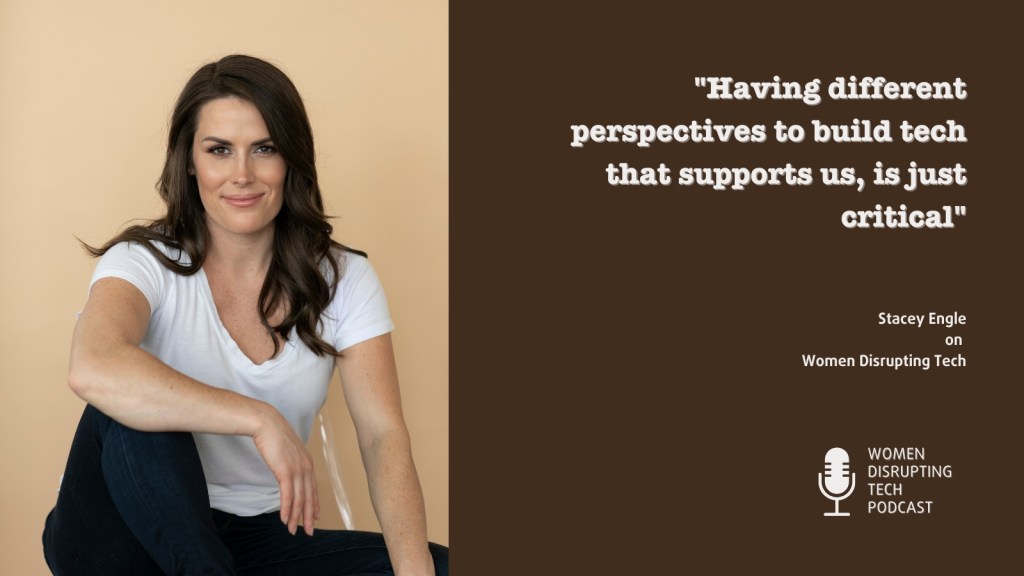
A quote from episode 76 of Women Disrupting Tech with Stacey Engle. Click on the image to watch the episode on YouTube. “Having different perspectives to build tech that supports us, is just critical”
Stacey Engle, CEO and co-founder of Twin Protocol
About Stacey Engle
Stacey Engle is a co-founder and the CEO of Twin Protocol. She’s passionate about all things building business, human potential, and leadership.
Before starting Twin Protocol, she has always been entrepreneurial. She was a key builder and became president of Fierce Conversations, a global training and leadership development company that works with organizations of all shapes and sizes, including Capital One, Walmart, Coca-Cola, and Verizon. She founded a coaching program called Authority Lab™ and is an investor and advisor to multiple Web2 and Web3 companies.
You can connect with Stacey on LinkedIn or chat with her digital twin on the Twin Protocol website.
About Twin Protocol
Twin Protocol is pioneering a new era of digital interaction, transforming how leaders and visionaries elevate their digital presence. Through its AI and blockchain ecosystem, Twin Protocol wants to empower individuals and organizations to train digital versions of themselves to share knowledge, create legacies, and foster continuous learning. You can learn more about Twin Protocol on its website or by following its journey on LinkedIn.
You can also discover how a digital twin could work on the Twin Protocol website by chatting with Stacey, Deepak Chopra or one of the other celebrities who already have a digital twin. And when you’re ready to go on the adventure, you can also join their waitlist to start building your digital twin.
Let me know what you think!
So what do you think about having a digital twin? Would you consider creating one? Or do you think this goes way too far? I’d love to learn your thoughts and observations in the comments below this post.
If you would like to suggest a guest that I absolutely must have on the podcast, please let me know via email or send a DM on LinkedIn.
What’s coming up?
Next week on Women Disrupting Tech, Angela Ursem joins the Women Disrupting Tech community to explain how she is building a beauty B-Corp. It’s a great episode for those who want to learn how entrepreneurship and impact go hand in hand.
After that, Astrid Bruinsma-Eggink will be my guest to talk about the importance of financial health for your employees. This topic is near to my heart as I’ve learned firsthand how financial stress can cause people to make really bad decisions.
Later in season four, we’ll move into queer territory as I talk to LBGTQI+ Journalist Pim Blom and Systemic Change Guru Karim El Oteify.
So stay tuned for more inspiring Men and Women Disrupting Tech!
With that, I wish you a wonderful day. And until we meet again in the next episode, keep being awesome!
More episodes like this?
It’s always difficult to compare, but if there are three episodes that I’d like you to listen to it’s these:
– For a primer on the possibilities that AI has to offer, please check out episode 46 with Maryam Miradi.
– To discover more about how you can do marketing in the age of AI, listen to episode 47 with Liana Hakobyan
– And if you want to find out what a career in AI looks like, check out episode 57 with Wafa M’Ribah. -
Building a Tech Startup Inside a Bank with Lieke Hölscher | Show notes on episode 75 of Women Disrupting Tech

Can you build a tech startup in a highly regulated company like a bank? And how do you persuade senior management that your solution is really better than what they have?
In a special episode 75, I interview Lieke Hölscher live on stage at the European Women’s Payment Network Annual Conference at the Mollie Office in Amsterdam to discover how she did precisely that. Lieke and her colleagues at Rabobank built new software to screen customer payments for possible money laundering or terrorist financing.
Key Takeaways from the episode
If you’ve ever wondered if—and how—you can be entrepreneurial within a corporate setting, this is the episode for you. Here’s what we discuss:
- How Lieke scaled her team from just 2 people to 200, while building a product from scratch. 🚀
- Creating a culture where ownership, excellence, and openness drive success.🌟
- The power of diverse perspectives for better problem-solving.🔍
Are you ready to be inspired by Lieke’s journey and learn how to launch your own startup within your company? Hit play and dive into her story!
Building a Tech Startup Inside a Bank with Lieke Hölscher | Ep. 75 – Women Disrupting Tech
Be part of the movement!
Do you want to contribute to a more inclusive tech industry, as a woman in tech or as a (male) advocate? Join the movement to help the women on the show shine as a role model, and encourage men to support the female entrepreneurs in their lives.
For more information and to stay updated with our latest episodes and articles, subscribe to our weekly newsletter below.
Processing …Yes! You're now part of the movement!Oopsie, something went wrong at our end. Please reload the page and try again.
- Key Takeaways from the episode
- Be part of the movement!
- The magic you can expect in this episode 🪄
- Free ways to support Women Disrupting Tech
- What makes this episode magical🌟?
- About Lieke Hölscher
- Let me know what you think!
- What’s coming up?
- More episodes like this?
The magic you can expect in this episode 🪄
“I can do this better. Much better.”
That’s what Lieke Hölscher thought when she saw Rabobank’s software for monitoring customer transactions to detect possible money laundering and terrorist financing.
Not a female thing to do, right. Then again, she’s not your ordinary female leader. In fact, she has a beautiful story to tell.
We recorded episode 75 of Women Disrupting Tech live at the EWPN Annual Conference at the Mollie office. Here’s a a glimpse of what we cover:
🚀 Growing a team from 2 to 200 people while building a new product from scratch.
⚡ How working Agile can help you be more entrepreneurial at a big company.
🌟 Why being different and standing out can be a good thing.Ready to learn how to unleash your entrepreneurial spirit in a corporate job? Click the button below to listen to the episode on Spotify.
Free ways to support Women Disrupting Tech
When you’re ready to support my guests in making this podcast obsolete by the end of 2032, help out by doing these two things:
- Use the share buttons below to share the podcast with friends, family, and co-workers. This way, you give the women disrupting tech the platform they need to make it happen. Use the buttons below to share.
- Rate the podcast on your favorite podcast platform. Better yet, leave a review. You can use a rating of one to five stars. This will help other people discover the podcast. And if you leave a review, it will help me improve.
What makes this episode magical🌟?
This conversation is about so much more than business strategies like leadership, team building, and selling your vision to senior management. It’s also deeply personal.
Early in the episode, Lieke opens up about her childhood struggles with gender identity. She shares how, until the age of 10, she wished she could be a boy named Bram. She couldn’t see herself reflected in female role models. Her vulnerability on stage is both brave and moving, and it adds a layer of magic to the episode.
Since we recorded this session live, we also took questions from the audience. This led to some fascinating discussions, including whether Lieke had ever thought about spinning off her “startup” from Rabobank. The Q&A section is full of surprises and insights, so make sure to stick around until the end!
Want to hear the audience’s questions and Lieke’s answers? Hit play and find out—it’s all in the episode.

A quote from episode 75 of Women Disrupting Tech with Lieke Hölscher. Click the image to see the episode on YouTube. “With any complex problem, it matters to have different perspectives to come to the best possible solution.”
Lieke Hölscher, Head of Transaction Monitoring Detection at Rabobank
About Lieke Hölscher
Lieke Hölscher is the Head of Transaction Monitoring Detection at Rabobank. She’s responsible for a team of 200 members who build software that monitors all transactions involving Rabobank globally for possible money laundering and terrorist financing.
Lieke was recently nominated for the Young Talent Award by Topvrouw van het Jaar. She’s also the mother of a 2-year-old boy.
You can connect with her on LinkedIn. You can also learn more about working at Rabobank and in her team on Rabobank’s jobs site.
Let me know what you think!
Please let me know your thoughts and observations in the comments below this post.
Lieke is actively looking for female senior developers, so check out the jobs site of Rabobank to find the open positions she has. And if you have any questions that we did not cover in the Q&A at the end of the episode, feel free to put them in the comments or in an email. I’ll forward them to Lieke.
If you would like to suggest a guest that I absolutely must have on the podcast, please let me know via email or send a DM on LinkedIn.
What’s coming up?
Next week on Women Disrupting Tech, we’re kicking off season 4 with another incredible guest: Stacey Engle, who’s revolutionizing legacy building using AI-powered digital twins.
After that, Angela Ursem joins the Women Disrupting Tech community to explain how she is building a beauty B-Corp. It’s a great episode for those who want to learn how entrepreneurship and impact go hand in hand.
Later in season four, we’ll move into queer territory as I talk to LGBTQ+ Journalist Pim Blom and Systemic Change Guru Karim El Oteify.
So stay tuned for an exciting season 4 with inspiring Men and Women Disrupting Tech!
With that, I wish you a wonderful day. And until we meet again in the next episode, keep being awesome!
More episodes like this?
It’s always difficult to compare, but if there are three episodes that I’d like you to listen to it’s these:
– In episode 24, Sujata Dasgupta shares how she’s inspired by the dark side when she helps banks build solutions that prevent money laundering and terrorist financing.
– Episode 42 features two Rabobank Women, Renske Melchers-Vermolen and Elena Zhebel. They explain how to create a safe space in your team (and your company).
– And in episode 59, we cover another woman in tech who started her journey inside a bank. Sonal Rattan shares how she took the problem she faced while working at a bank to build a startup. -
The Guide to Building a Unicorn Team with Ingeborg van Harten | Show notes on episode 74 of Women Disrupting Tech
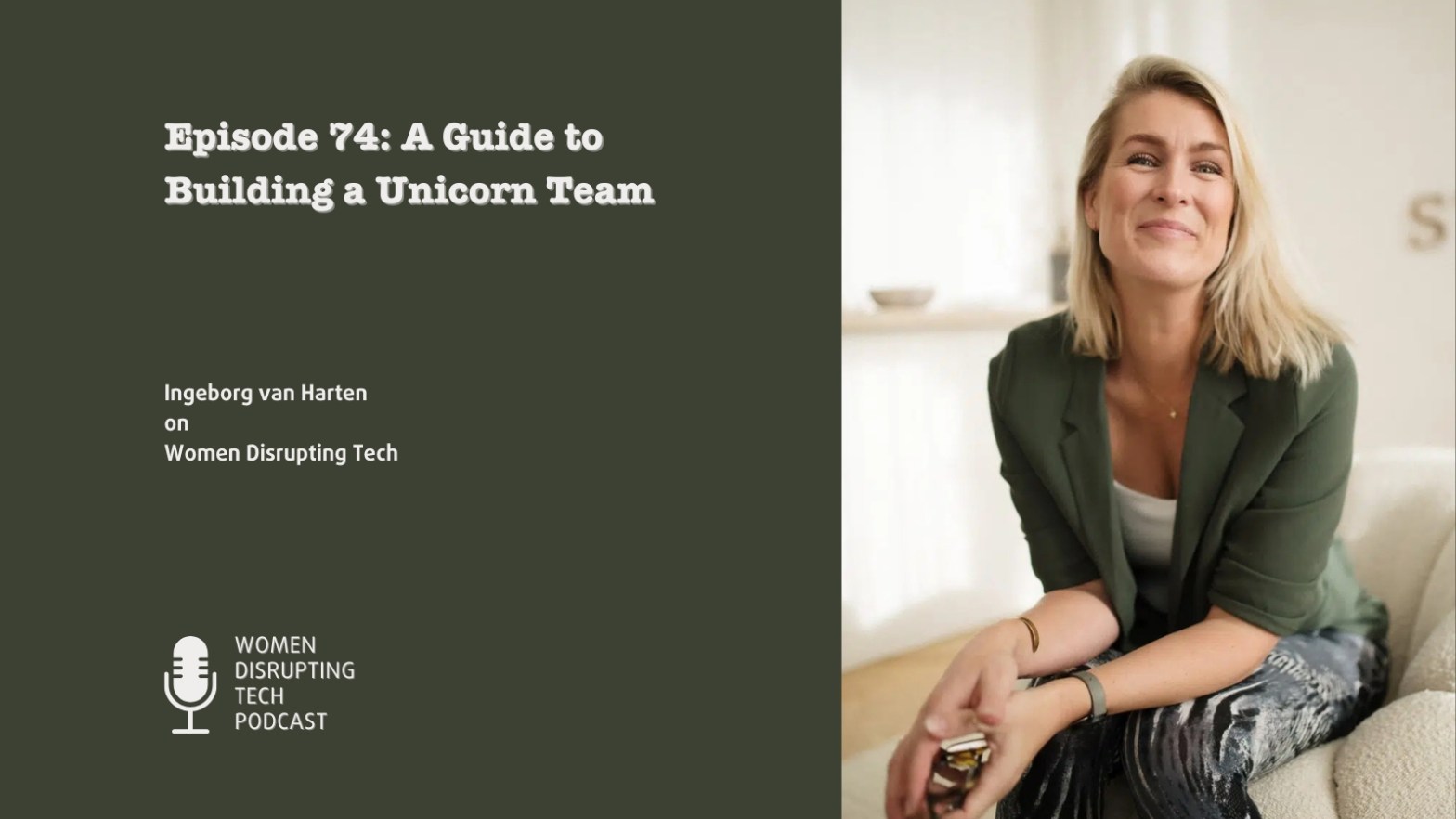
Building a unicorn means first creating a unicorn-worthy team.
But how do you build a Unicorn team?
When I ask Ingeborg van Harten this question, she sighs. “We could probably spend three episodes on this.” And she’s right. There is much more that comes into play when you’re building a unicorn-worthy team than we could possibly cover in one episode. So, consider this a start.
In episode 74 of Women Disrupting Tech, Ingeborg is our guide as we discover how to build a unicorn-worthy team.Key Takeaways from the episode
This episode is packed with practical insights, whether you want to build a unicorn or not. You’ll discover:
– How to attract top talent.
– How to shape a culture where people feel valued.
– Why inclusion is key to sustainable growth.Are you ready to make your startup a magnet for talent? Press play below and get inspired by Ingeborg’s journey and advice.
The Guide to Building a Unicorn Team with Ingeborg van Harten | Ep. 74 – Women Disrupting Tech
Be part of the movement!
Want to contribute to a more inclusive tech industry? Join the movement to help the women on the show shine as a role model, and encourage men to support the female entrepreneurs in their lives.
For more information and to stay updated with our latest episodes and articles, subscribe to our weekly newsletter below.
Processing …Yes! You're now part of the movement!Oopsie, something went wrong at our end. Please reload the page and try again.
- Key Takeaways from the episode
- Be part of the movement!
- The magic you can expect in this episode 🪄
- Free ways to support Women Disrupting Tech
- What makes this episode magical🌟?
- About Ingeborg van Harten
- About 7people
- Let me know what you think!
- What’s coming up?
- More episodes like this?
The magic you can expect in this episode 🪄
When you’re building a unicorn startup, having the right team is crucial. It’s the only way to create an irresistible product that customers love.
But how do you make your organization as irresistible as the product itself? How do you attract the right talent? And how do you craft a team that shares your vision?
In episode 74 of Women Disrupting Tech, I sit down with Ingeborg van Harten for the answers to these questions.
Here’s a taste of what you’ll learn:
✨ What makes an organization truly irresistible.
✨ Why showing people they matter can be a game-changer.
✨ How DEI initiatives are foundational to a culture people love.Plus, you’ll discover why hiring only “A-players” may not be the best recruitment strategy and who to hire instead.
So, when you’re ready to build a team and culture that are unicorn-worthy, click the button below to listen to the episode on Spotify.
Free ways to support Women Disrupting Tech
When you’re ready to support my guests in making this podcast obsolete by the end of 2032, help out by doing these two things:
- Use the share buttons below to share the podcast with friends, family, and co-workers. This way, you give the women disrupting tech the platform they need to make it happen. Use the buttons below to share.
- Rate the podcast on your favorite podcast platform. Better yet, leave a review. You can use a rating of one to five stars. This will help other people discover the podcast. And if you leave a review, it will help me improve.
What makes this episode magical🌟?
Before starting 7people, Ingeborg had a very international company, and it shows. This episode offers many lessons from companies, large and small. I’ll mention a few.
On making the right hires in the early stages of a company: the next layer of people you hire after the initial team are not entrepreneurs. They’re happy to work within a company but still strong executors.
On building a high-performance culture: hiring only A-players will not build you a high-performing team. You have to fill it with stable, supporting people who want to do the work A-players generally want to avoid.
On the importance of pay transparency and performance management: Only when it’s transparent can you test if it’s fair. And if you cannot explain differences in pay based on objective criteria like seniority and output, it’s likely unfair.
Want more magic? Click the button below to listen.
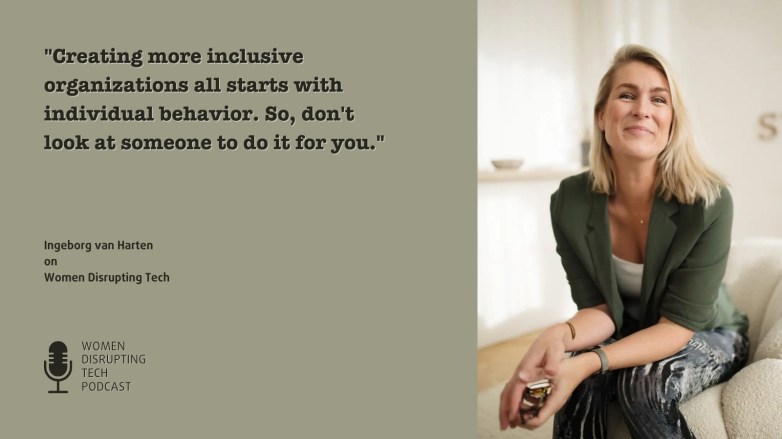
A quote from episode 74 of Women Disrupting Tech with Ingeborg van Harten. Click the image to hear the episode on YouTube. “Creating more inclusive organizations all starts with individual behavior. So, don’t look at someone to do it for you.”
Ingeborg van Harten, Chief People Officer and Founder of 7people
About Ingeborg van Harten
Ingeborg van Harten is the Chief People Officer and Founder of 7people. Prior to founding 7people, Ingeborg spent 15+ years in global HR roles, working for corporates and scale-ups across four continents.
Living in six countries on four continents, she gained unique insights into what it takes to build successful teams with the right people and culture. She is an advisor on Techleap’s Rise program and a trusted advisor to many founding teams in the Netherlands. You can connect with Ingeborg on LinkedIn.
About 7people
7people is an HR consultancy company that helps progressive businesses thrive. It helps these businesses develop strong HR foundations and drives sustainable growth by creating exceptional employee experiences.
So far, they’ve contributed to the success of more than 75 companies, including Fairphone, GoodHabitz, and Ticketswap.
You can learn more about their services on their website. And I invite you to follow their journey of working for the most promising European scale-ups on LinkedIn or Instagram.
On 21 November, they’ll organize a special event about absenteeism and sick leave. Although we don’t discuss these topics during the episode, managing them is absolutely part of building an irresistible organization. To learn more, check out the event on Eventbrite.
Let me know what you think!
Please let me know your thoughts and observations in the comments below this post.
Also, if you have questions about people-related topics in your company, put them in the comments, and I will forward them to Ingeborg.
If you would like to suggest a guest that I absolutely must have on the podcast, please let me know via email or send a DM on LinkedIn.
What’s coming up?
Next week on Women Disrupting Tech, it’s time for the season finale. In episode 75, we hear from Lieke Hölscher how she built an irresistible tribe of financial crime fighters at Rabobank from scratch. This episode was recorded in front of a live audience at the EWPN Annual Conference in Amsterdam.
And I can tell you: it’s magical.
After that, we’ll move straight into season 4 with another magical episode. Stacey Engle is my guest as we learn how she helps to build legacies with AI-powered digital twins.
So stay tuned for two inspiring Women Disrupting Tech!
With that, I wish you a wonderful day. And until we meet again in the next episode, keep being awesome!
More episodes like this?
It’s always difficult to compare, but if there are two episodes that I’d like you to listen to it’s these:
– In episode 45, Alexa Lane talks about her experiences working in HR at fast-growing companies, giving you a playbook for getting started in HR.
– In episode 42, Renske Melchers-Vermolen and Elena Zhebel explain how you can create a safe space in your team (and your company). -
Gespreksstarters voor een gelijkwaardiger investeringsklimaat met Fleur van Leijsen | Show notes on episode 73 of Women Disrupting Tech
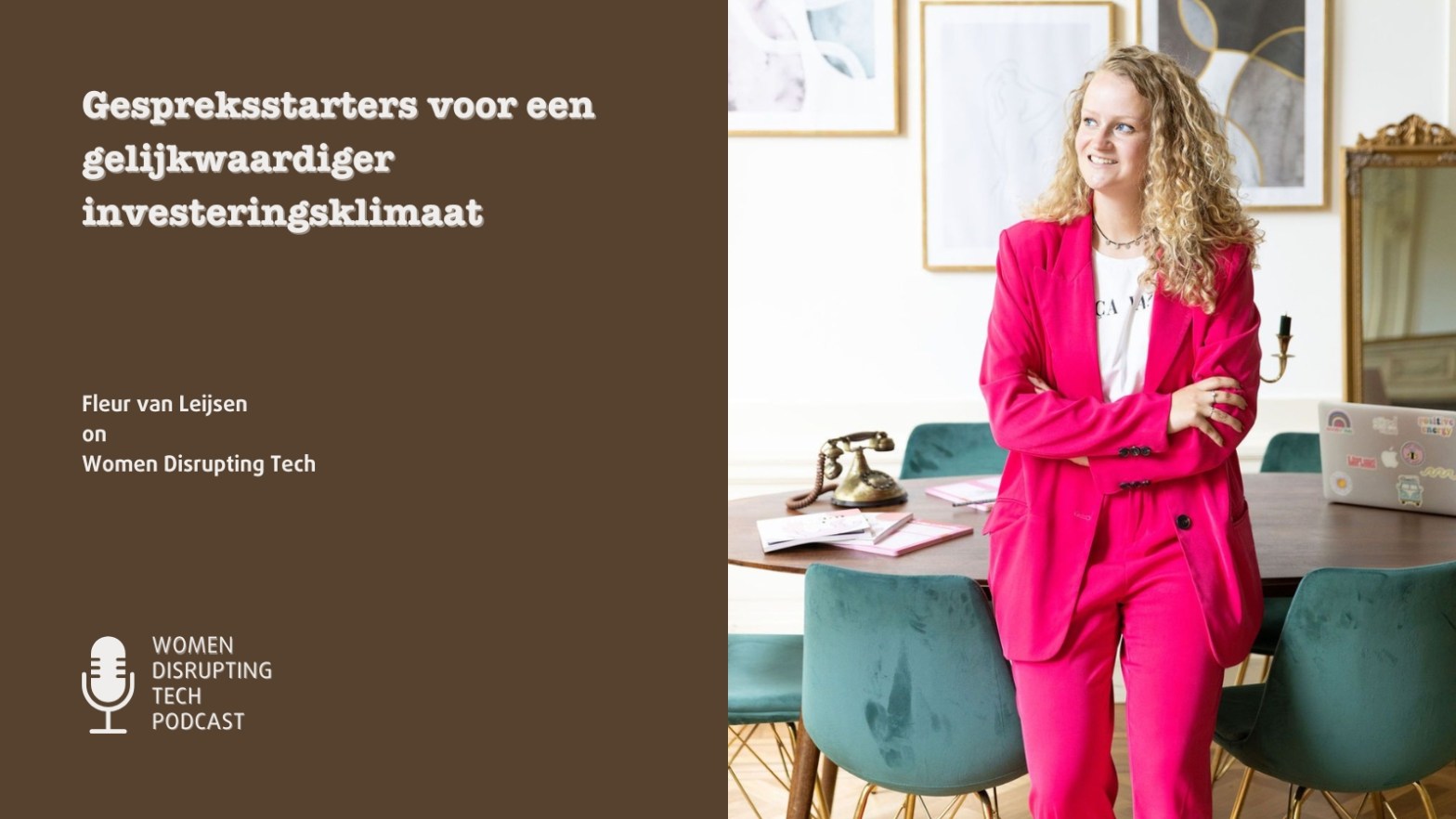
Heads up: this episode is in Dutch!
Why is raising funds still harder for women?
In episode 73 of Women Disrupting Tech, Fleur van Leijsen and I explore why women still face more challenges raising funds than men.
In this Dutch-spoken episode, Fleur shares how she investigated the problem and came up with a practical solution: conversation starters to help founders and investors overcome these biases.
Click the play below to learn more or use one of the links to the podcast throughout this blog post to find the episode on your favorite podcast platform.
Gespreksstarters voor een gelijkwaardiger investeringsklimaat met Fleur van Leijsen | Ep. 73 – Women Disrupting Tech
- The magic you can expect in this episode 🪄
- Want to try the solution for yourself?
- Free ways to support Women Disrupting Tech
- What makes this episode magical🌟?
- About Fleur van Leijsen
- Let me know what you think!
- What’s coming up?
- More episodes like this?
The magic you can expect in this episode 🪄
How can we improve gender equality in startup funding?
Part of the answer is to change our biases about women in entrepreneurship and finance. But how to get started?
As part of her study, Fleur van Leijsen investigated this problem and developed a solution that addresses the biases head-on. Her conversation starters make investors and female founders aware of their biases.
She recently graduated and that was a great opportunity to have her on the podcast to talk about her research and her interventions.
In episode 73 of Women Disrupting Tech, Fleur and I talk about the business case for gender equality in entrepreneurship, the silly questions that female entrepreneurs get asked, and how to bring up a challenging topic like gender equality.
So, if you’re an investor or entrepreneur and want to get ahead of biases in your next funding conversation, this episode is for you. Click the button below to listen to the episode on Spotify.
Want to try the solution for yourself?
Are you female founder looking for funding? On 7 November 4Impact Capital and Women Disrupting Tech will organize a Female Founder and Investor Breakfast at ImpactFest in The Hague. There, we’ll test the conversation starters that Fleur developed. And yes, Fleur will be there too.
You can register for the breakfast here. Since we’re an official side event of ImpactFest, the breakfast is complimentary, but you do need a ticket for ImpactFest. To get your ticket for ImpactFest, use this link to qualify for a 20% discount.
Can’t join us at ImpactFest? Ask Fleur to do a creative session for your company. Simply connect on LinkedIn.
Free ways to support Women Disrupting Tech
When you’re ready to support my guests in making this podcast obsolete by the end of 2032, help out by doing these two things:
- Use the share buttons below to share the podcast with friends, family, and co-workers. This way, you give the women disrupting tech the platform they need to make it happen. Use the buttons below to share.
- Rate the podcast on your favorite podcast platform. Better yet, leave a review. You can use a rating of one to five stars. This will help other people discover the podcast. And if you leave a review, it will help me improve.
What makes this episode magical🌟?
You’ll discover early on in the episode that Fleur and I have the same starting point for what we do: the statistic that in The Netherlands, 0.7% of venture capital goes to female-led teams. Both of us want to change this narrative. For me, it was magical to talk to a woman with the same passion as me. I hope you can hear this when you listen.
Another part of the magic is that Fleur developed a solution that addresses the core of the bias. Being aware of your biases changes how you deal with them. By creating conversation starters to address the biases, she allows founders and investors to work around these biases.
Perhaps not magical, but still important, I got the impression that some men are still in denial about diversity and inclusion. While this seems sad, it also means that this may be an excellent time for solutions like Fleur’s.

A quote from episode 73 of Women Disrupting Tech with Fleur van Leijsen. “Laten we gewoon luisteren naar het verhaal dat wordt verteld or de plannen die worden gemaakt, en niet gelijk een vooroordeel gaan hebben of dit gaat werken.”
Fleur van Leijsen
About Fleur van Leijsen
Fleur van Leijsen is a concept developer and futurist at her own company, FleurConcepts. She developed her interventions and conversation starter as part of her study concept creation & trend research. She interviewed both founders and investors about their views on funding inequality and possible solutions.
Her interventions help female entrepreneurs and investors to be aware of each other’s biases before entering into a conversation about funding, thereby improving the chances of a positive outcome. Learn more by connecting with her on LinkedIn. She recently also showcased her work at the Dutch Design Week in Eindhoven.
Let me know what you think!
Please let me know your thoughts and observations in the comments below this post.
Also, if you have questions about the interventions that Fleur developed, put them in the comments and I will forward them to Fleur.
If you would like to suggest a guest that I absolutely must have on the podcast, please let me know via email or send a DM on LinkedIn.
What’s coming up?
Next week on Women Disrupting Tech, we’ll hear from Ingeborg van Harten how you can build an irresistible organization that people would love to work for.
Speaking of irresistible, in episode 75, we hear from Lieke Hölscher how she built an irresistible tribe of financial crime fighters at Rabobank from scratch. This episode was recorded in front of a live audience at the EWPN Annual Conference in Amsterdam. And I can tell you: it’s magical.
So stay tuned for two inspiring women disrupting tech in the last two episodes of season three of Women Disrupting Tech!
More episodes like this?
It’s always difficult to compare, but if there are two episodes that I’d like you to listen to it’s these:
– In episode 1, Wendy Broersen shares her views on the ideal startup. In that episode, we also cover examples from her own funding journey.
– In episode 25, I hosted a panel about Career Advancement for Women in Tech. In that episode, we cover biases too. -
How to Move from 9-to-5 Corporate to Scale-up Impact with Manisha Athukorala | Show notes on episode 72 of Women Disrupting Tech

Are you thinking of transitioning from corporate to a startup or scale-up but unsure how to pull it off?
Join me as I interview Manisha Athukorala to reveal her playbook to move from 9-to-5 corporate comfort to scale-up hustle.
In this episode, we’ll discover:
- How her move to Uber Eats was the start of a career spanning multiple roles, industries and continents.
- How Manisha prepares for her new scale-up jobs and where intuition fits in that process.
- Her roadmap for navigating a fast-changing leadership environment.
Plus, you’ll learn why Manisha believes that intersectionality is the key to more inclusion in tech.
Click the play below to listen or use one of the links to the podcast throughout this blog post.
How to Move from 9-to-5 Corporate to Startup Impact with Manisha Athukorala | Ep. 72 – Women Disrupting Tech
Timestamps
6:53 Transitioning from Corporate Job to Startups
9:52 De-risking the change
15:50 Cultural Adaptation and Team Dynamics
19:52 Building relationships in a changing environment
26:45 Kindness and empathy in leadership
31:45 The importance of intersectionality and allyship
40:29 Shifting problem ownership of diversity
44:15 The recipe for successfully changing industries
46:45 Preparing for a new job
52:40 Honing in on intuition when selecting a new employer
55:00 Her connections to the guides on her journey
59:00 diversity as a business problem
- Timestamps
- The magic you can expect in this episode 🪄
- Free ways to support the Women Disrupting Tech
- What makes this episode magical🌟?
- About Manisha Athukorala
- Let me know what you think!
- What’s coming up?
- More episodes like this?
The magic you can expect in this episode 🪄
If you love innovation, the startup world is where you can make a bigger impact than in a traditional nine-to-five corporate job.
But making the leap from a structured corporate role to the fast-moving world of startups can feel daunting. Navigating uncertainty, adjusting to new cultures, and finding your footing in a “white space” environment can be challenging.
If you’re contemplating making this change, then episode 72 of Women Disrupting Tech is your playbook for shifting careers. ️
Manisha Athukorala shares her journey from consulting large companies to scaling teams at Uber Eats, Sword Health, and Mews. We cover:
📈 Moving from a step-by-step corporate environment to a startup with the freedom to build.
🔍 Doing due diligence and preparing for new opportunities.
🤝 Focusing on fundamentals to navigate a fast-changing leadership environment.Plus, you’ll learn why Manisha believes that intersectionality holds the key to bringing more people into the diversity debate.
Are you ready to dive in? Click the button below to listen to the episode on Spotify.
Free ways to support the Women Disrupting Tech
When you’re ready to support my guests in making this podcast obsolete by the end of 2032, help out by doing these two things:
- Use the share buttons below to share the podcast with friends, family, and co-workers. This way, you give the women disrupting tech the platform they need to make it happen. Use the buttons below to share.
- Rate the podcast on your favorite podcast platform. Better yet, leave a review. You can use a rating of one to five stars. This will help other people discover the podcast. And if you leave a review, it will help me improve.
What makes this episode magical🌟?
Manisha saw, much earlier than I did, that people who work in consultancy and banking are wearing golden handcuffs. They have 20-, 30-, or 40-year careers, and because of the money, they cannot see themselves doing anything else. She decided to stay true to herself and discover her own path.
She explored, very diligently, how her knowledge and experience could provide value at Uber and how it empowered her to take on a new adventure. That is a process that she refined throughout her career and it’s a theme that surfaces at different stages of the episode.
Another theme that comes up is having a plan and then taking opportunities as they come. Even if you’re not prepared. Like when she went to lead the partnerships team in New York. It’s a magical story about seemingly taking a step back to discover that she skipped what would be 10 years in a corporate career.

A quote from episode 72 of Women Disrupting Tech with Manisha Athukorala. “A pair of fresh eyes is a powerful thing to have.”
Manisha Athukorala, VP of Global Deployment and Customer Engagement at Mews
About Manisha Athukorala
Manisha Athukorala is VP of Global Deployment and Customer Engagement at Mews, an Amsterdam-based hospitality scale-up.
Her career spans various roles, industries and continents. She has worked for companies like KPMG, ANZ, Uber Eats, and Sword Health. On the way, she led teams of different sizes and scopes and concluded landmark deals with brands like Unilever, Starbucks and Subway.
She started at Mews on 1 October 2024 and you can connect with her on LinkedIn.
Let me know what you think!
Please let me know if this episode of Women Disrupting Tech was helpful in planning a move into the startup ecosystem. You can leave your thoughts and observations in the comments below this post.
Also, if you have any questions about building a career in the startup ecosystem or want to share experiences, put them in the comments.
And if you would like to suggest a guest that I absolutely must have on the podcast, send me an email or a DM on LinkedIn.
What’s coming up?
Next week on Women Disrupting Tech, we have an exciting episode about how female founders can call out investor biases. Fleur van Leijsen is my guest to discuss how the questions that she developed as part of her graduation can be of help.
Speaking of biases, in the episode that follows, we’ll discover that playing with dolls does not bar women from choosing a career in tech. Sara Legesse is our guide and role model on that journey.
So stay tuned for more inspiring women disrupting tech and their male allies in season three of Women Disrupting Tech!
More episodes like this?
It’s always difficult to compare, but if there are two episodes that I’d like you to listen to it’s these:
– In episode 49, Arosha Brouwer highlights that you cannot build great products if you don’t care for the people building it.
– In Episode 45, Alexa Lane teaches us how to create a recruiting playbook for your startup from scratch. -
Unlocking The Value of Diversity in Leadership With Roots Inspire CEO Sergio Panday | Show notes on episode 71 of Women Disrupting Tech
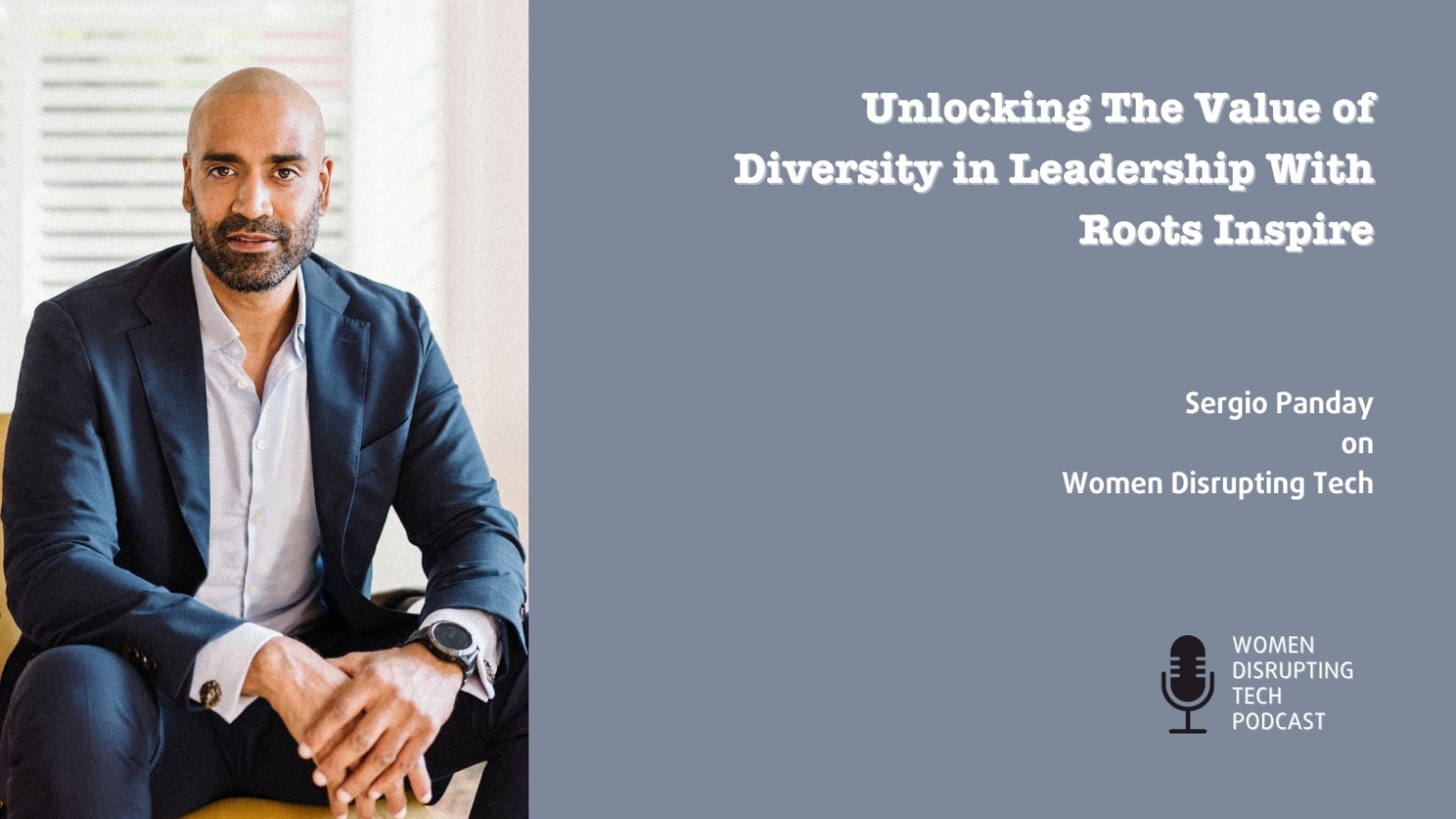
Is diversity a social or an organizational problem? And how can we unlock its value? This is where episode 71 of Women Disrupting Tech starts.
Join me as I interview Sergio Panday about how his company, Roots Inspire, brings ethnic diversity to corporate boardrooms.
In this podcast, Sergio shares:
- How the George Floyd murder triggered him to start Roots Inspire
- How to get to a critical mass of diverse people and measure if your investment in diverse talent pays off.
- The ways to look at DEI through the lens of talent management.
Plus, you’ll learn why some companies should drop DEI from their list of priorities. To listen, click play below or use one of the links to the podcast throughout this blog post.
Unlocking The Value of Diversity in Leadership With Roots Inspire CEO Sergio Panday | Ep. 71 – Women Disrupting Tech
What we cover in this episode
- What we cover in this episode
- Timestamps
- The Magic you can expect in this episode 🪄
- Free ways to support the Women Disrupting Tech
- What makes this episode magical🌟?
- About Sergio Panday
- About Roots Inspire
- Podcast Tip: The Muddy Middle
- Let me know what you think!
- What’s coming up?
- More episodes like this?
Timestamps
04:20 Sergio’s Corporate Banking Journey
10:15 Providing Career Guidance and Leadership mentoring
14:17 The impact of cultural and physical differences
21:45 Critical mass in representation
25:29 The business case for diversity
30:50 How to measure the benefits
35:00 The problem with the word Ally
38:36 Why management is the real problem owner of DEI
41:29 Making DEI in tech the new normal
The Magic you can expect in this episode 🪄
Corporate success isn’t just about hard work. It’s about navigating invisible barriers.
With the right people around you, you can find a way around them.
But what if you don’t have the privilege of access to mentors or people to explain the unwritten rules?
For women and people of diverse ethnic backgrounds, that climb can feel isolating and unfair. How can we collaborate to change this?
This is the topic of Episode 71 of Women Disrupting Tech, where Sergio Panday, founder of Roots Inspire, shares how he is promoting diversity in boardrooms.
Key insights include:
- Why DEI is not a social but an organizational problem.
- The impact of cultural and physical differences on his career.
- How to get to a critical mass of diverse people and measure if your investment in diverse talent pays off.
Plus, by listening, you’ll discover why Sergio believes the word “ally” is not the proper name for men who support people.
Are you ready to dive in?
Free ways to support the Women Disrupting Tech
When you’re ready to support my guests in making this podcast obsolete by the end of 2032, help out by doing these two things:
- Use the share button to share the podcast with friends, family, and co-workers. This way, you give the women disrupting tech the platform they need to make it happen. Use the buttons below to share.
- Rate the podcast on your favorite podcast platform. Better yet, leave a review. You can use a rating of one to five stars. This will help other people discover the podcast. And if you leave a review, it will help me improve.
What makes this episode magical🌟?
For starters, I love how Sergio brings the DEI topic into the business domain—not as ‘the right thing to do’ but as talent management. He also adds ways to measure impact (e.g., attrition and retention) so that it becomes clear how improving diversity positively impacts financial results.
Toward the end of the episode, Sergio clarifies his stance on the word allyship. “I don’t like the word allyship because it sounds like diversity is someone else’s problem, whereas it is an organizational problem.” It’s a powerful statement that I can only agree with.
That said, we both believe that men should definitely support women and people from diverse ethnic backgrounds. By doing so, men become part of the solution.
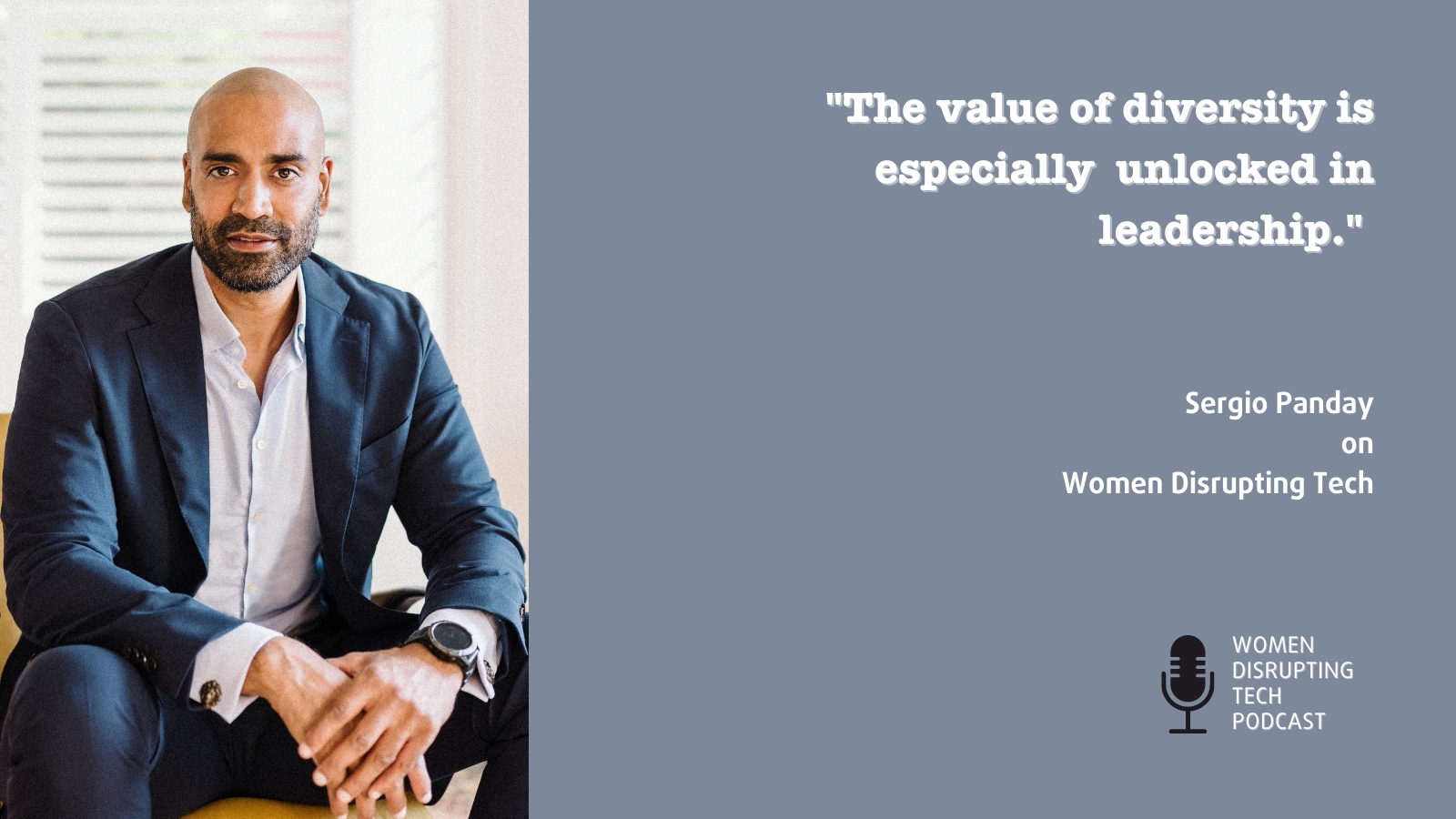
Quote from episode 71 of Women Disrupting Tech with Roots Inspire CEO Sergio Panday “The value of diversity is especially unlocked in leadership.”
Sergio Panday, CEO and co-founder of Roots Inspire
About Sergio Panday
Sergio Panday is the co-founder and CEO of Roots Inspire. Before starting Roots Inspire, Sergio had a successful career in Corporate Banking.
During his 18-year career in banking, he was often the only person of color in the room. The George Floyd murder and the black lives matter movement made him realize that it was time for a change. You can connect with Sergio on LinkedIn.
About Roots Inspire
Roots Inspire is a leadership development platform by ethnic corporate leaders for ethnic leadership talent. Roots Inspire wants to maximize the potential of ethnic talent and increase ethnic diversity in corporate leadership positions.
They offer mentoring and coaching programs to mid-career professionals who have the ambition to pursue a career in leadership. They also offer programs that help companies attract, retain and advance talents. Check out their website and LinkedIn for more information.
Podcast Tip: The Muddy Middle
The podcast “The Muddy Middle” is about how ethnic corporate leaders have broken through to leadership positions. In each episode, Sergio interviews one of the leaders from the Roots Inspire network to talk about how they got unstuck from the muddy middle and what that experience was like. You can find it on Spotify and Apple.
Let me know what you think!
Please let me know your thoughts about this episode of Women Disrupting Tech in the comments.
I love to hear what you think about men being interviewed on the Women Disrupting Tech podcast.
And if you would like to suggest a guest that I absolutely must have on the podcast, send me an email or a DM on LinkedIn.
What’s coming up?
Next week on Women Disrupting Tech, Manisha Athukorala shares how corporate skills come in handy when you’re working for scaleups like Uber Eats, Sword Health and Mews.
After that, we’ll do a Dutch episode about the importance of financial health for women and how to achieve it with Mijn Sofie Founder Astrid Bruinsma-Eggink.
So stay tuned for more inspiring women disrupting tech and their male allies in season three of Women Disrupting Tech!
More episodes like this?
It’s always difficult to compare, but if there are two episodes that I’d like you to listen to it’s these:
– In episode 62, Ruben Brave shares how we can create new narratives for a more innovative society.
– In Episode 70, Constantijn van Oranje talks about how we can create a cultural shift toward more inclusion.
Women Disrupting Tech | The Podcast
The Podcast Closing the Funding Gap for Women in Tech.
 Women Disrupting Tech | The Podcast