-
The ROI of Relocation: Scaling Global Teams Without Attrition with Judith Roetgering | Show notes episode 137
Imagine stepping off a plane in a country you don’t know. And in two days, you start a new job at a company that you only know from online meetings.
On paper, everything is arranged, but nothing feels familiar. Conversations move differently. Rules are implied, not explained. Even small things take effort, and you don’t yet know which questions are safe to ask.
That feeling is where my conversation with Judith Roetgering begins.
Because when we talk about international hiring, we often talk about the ROI, speed, perks, and talent. What we talk about far less is what it feels like to be the person who has to make that leap. And why, despite AI, businesses still grow and thrive with people.
Hit play on Spotify, Apple Podcasts, or YouTube to hear how you can use relocation as a key ingredient to your international hiring strategy.
Or scroll down to discover lessons from the episode, magic moments, and practical takeaways for your fast-growing tech company.
3 Lessons From This Conversation
If there’s one thing this conversation makes clear, it’s that international hiring only works when people are given a soft landing. Not just a contract and a start date, but the human-to-human support to actually settle, belong, and do their best work. Here are three lessons that build on this.
1. Hiring someone internationally means taking responsibility beyond the job
When someone accepts an international role, they are not just switching employers. They are changing countries, routines, and support systems. Judith makes it clear that when companies treat relocation as an afterthought, that weight lands entirely on the employee, often during their very first months.
People who spend their first months firefighting life outside of work rarely get the space to succeed at work.
2. Language is the moment where inclusion becomes real or not
Feeling included shows up in everyday interactions, not in intentions. As soon as an international hire joins, the question of language stops being theoretical. Meetings, documents, and even lunch conversations signal if your company is ready to accept the newcomer.
Judith is blunt here: if a company is not willing to switch its internal language, it should rethink hiring internationally.
3. The hardest moment often comes six months after the move
The first months are usually full of energy. New job, new country, new start. Judith points out that the real test comes later, when the novelty wears off, and daily life sets in. That is when doubts surface, and support matters most.
Most departures don’t come out of nowhere. They build quietly over time.
In the end, international hiring is about slowing down early enough to give people the soft landing they need, before problems show up later.
💬 If you know a founder or hiring manager who is about to hire internationally, share this episode with them.
Or scroll down for magical moments, practical takeaways, and my own observations that made this episode impossible to forget.
- 3 Lessons From This Conversation
- Highlights and timestamps
- 3 Magic Moments In The Episode
- Practical Takeaways for Founders
- The Quote From The Episode
- 3 Things That Changed The Way I Think
- Coming up on Women Disrupting Tech
- Listen to Episode 137 on Spotify, Apple, or YouTube
- About Judith Roetgering
- About Rehive People
- Other ways to amplify the voices of Women Disrupting Tech
- Events that Women Disrupting Tech Must-Attend
- What I Want To Leave You With
- A Question for You 🤔
Highlights and timestamps
Time Highlight 02:00 Journey to Founding Rehive 09:00 Challenges in Relocation 17:54 Understanding International Talent Needs 32:04 Onboarding and Integration of International Hires 42:59 Cultural Readiness for International Hiring 54:50 Success Stories in Relocation 1:00:36 Practical Steps for Hiring International Talent 1:15:17 Future of Talent Mobility and AI in Relocation 3 Magic Moments In The Episode
During our conversation, Judith shared three stories that bring her point about having a human touch in hiring international talent to life.
Landing in India for the first time
Judith describes arriving in India and realizing how disorienting it feels when none of the familiar rules apply. The noise, the mountain of paper, the way people move and communicate. It is not fear she describes, but alertness. The constant awareness that you are navigating a world where your instincts can no longer guide you. It’s easy to hear how that moment shaped her sensitivity to what internationals experience when they arrive somewhere new.
Helping the Italian couple turn their hesitation into settling in.
One of the most human moments comes when Judith talks about relocating an Italian couple in their fifties. They were not eager to move. Their lives were rooted in Italy. What changed things was not persuasion, but her personal touch. Picking them up from the airport. Joining house viewings. Sitting next to them while opening bank accounts. Over time, their hesitation turned into a sense of settling in.
The South African team that slowly disappeared
Not all her anecdotes have a happy ending, though. Judith shares the story of a company that hired a team of developers from South Africa. On paper, everything made sense. In practice, the company never changed how it worked internally. And within twelve months, all had left the company. It’s a clear example of what happens when integration is not a two-way street.
Her stories show what makes the difference between international hires settling in or quietly opting out. Just clear observations without drama.
💬 What was the moment in this episode that stood out to you most? Let me know in the comments.
Or keep scrolling for practical takeaways you can apply as a founder or hiring manager.
Practical Takeaways for Founders
If you want international hires to get a soft landing instead of a rough start, there are a few things you can put in place before they arrive.
Get your legal hiring setup in order early
If you know you will need people from outside the EU, do not wait until you find “the one” to look at visas. Becoming a recognised sponsor with immigration authorities can take months, and using an external Employer of Record as a bridge also needs preparation.
The point Judith makes is simple. If your legal setup lags behind your hiring needs, you either lose great people or end up in a rush that adds stress for everyone.
Put relocation costs into your funding story, not into “unexpected extras”
When you raise your next round, be honest with yourself about where the talent will come from. If the skills you need are not available locally, international hiring is not a nice-to-have. It is part of how you will hit the numbers you promise to investors.
Judith encourages founders to forecast relocation costs upfront. Not as a footnote, but as part of the plan to get the right people in the right place at the right time.
Design integration with a buddy, not just an onboarding checklist
A contract, laptop, and onboarding deck do not make a soft landing. People do. Pairing international hires with a local buddy who shows them how things work in the company and in daily life can make a bigger difference than any welcome gift.
Judith sees this as a way to share responsibility. The company signals that the new hire is not left to figure everything out alone, and the team learns to see onboarding as a shared effort.
In practice, these takeaways all show that a soft landing is built in advance, through choices about timing, budget, and how you involve your team.
💬 Know a founder or hiring manager who is about to hire internationally? Use the share button below to tell them about this episode.
Or scroll down to discover an inspiring quote and learn about my own takeaways.
The Quote From The Episode
“Your business grows and thrives with people.”
Judith Roetgering – Managing Director at Rehive People
Judith explains that while technology and AI are important, startups and scaleups ultimately depend on human talent to hit the growth targets promised to investors. She points out that if you are not able to make the following step in growing your team, you cannot hit the growth that you are aiming for together with your investors.
3 Things That Changed The Way I Think
Having worked outside the Netherlands myself, I have some experience with relocating. That said, this conversation helped me change how I look at international hiring in a few important ways.
Hiring more internationals at once is not automatically better
From my conversation with Johanna Spiller, I remembered her tip to hire at least two women to make integration easier. And I figured this could work for internationals, too. But Judith added an important nuance. If you do not design how they integrate, you risk creating a separate bubble instead of one team. The question is not “how many internationals do we hire” but “how do we make sure they are part of the whole group from day one.”
Capability gaps matter more than job titles or passports
Judith’s use of the Working Genius Assessment at Rehive confirmed how I think about hiring. Instead of starting from “we need another person in this role,” she looks at which types of energy and strengths are missing in the team. That way, international hiring becomes less about filling a vacancy and more about finding someone whose way of working actually completes the group.
AI as a way to enable the human side of relocation
I am used to hearing AI framed as a way to speed things up or cut costs. Judith talks about it differently. For her, AI is there to handle repetitive tasks so she has more time for the personal conversations that make a move feel safe. I like that framing. It makes AI a tool to create more space for human work, not a reason to remove it.
Seen together, these shifts make international hiring feel less like a check-box for international growth and more like something you keep designing as you grow.
💬 What changed your thinking as you listened to this episode? I would love to hear from you in the comments.
Coming up on Women Disrupting Tech
Coming Up on Women Disrupting Tech
In the next episode of Women Disrupting Tech, I talk to Philipp Omenitsch about what the data behind startup funding actually shows, and what founders often get wrong about it. Philipp is a former founder and CTO who now works with large-scale pitch deck data through the Founder Files.
In the short clip from the episode, Philipp explains why we need more female-led startups and why fear of funding outcomes should not be the reason to opt out. It’s a grounded reminder that experience matters, and that starting is often the most important step.
Click play to hear Philipp’s advice to every female founder. Listen to the clip now, and stay tuned for the full conversation in the next episode, where we unpack what 17,000 pitch decks reveal about fundraising, experience, and how the system really works. When you’re subscribed, you’ll find it in your mailbox on 5 February 2026 at 8 am CET.
And until the next episode, as always, keep being awesome.
Dirkjan
Listen to Episode 137 on Spotify, Apple, or YouTube

The ROI of Relocation: Scaling Global Teams Without Attrition with Judith Roetgering | Ep. 137 – Women Disrupting Tech

Listen on Apple Podcasts Listen on YouTube (audio only) About Judith Roetgering
Judith Roetgering is driven by a love for people and international growth. She spent more than 16 years in the fashion world with brands like Karl Lagerfeld and Mexx, living and working across countries and learning how much cultural connection and the right team matter.
Later, she founded Your Talent Agency, a recruitment and relocation agency for international talent that grew to over €4 million in annual revenue and supported companies such as Just Eat Takeaway, Otrium, and ThreatFabric.
With Rehive People, she now helps startups and scaleups relocate and onboard international employees smoothly, from visas and immigration to day-to-day settling in. Her focus is simple: impactful onboarding, a strong cultural match, and international hires who do not just arrive, but stay.
You can connect with Judith on LinkedIn.
About Rehive People
Rehive People helps companies relocate and integrate international talent into their teams. They combine visa and immigration support with hands-on relocation guidance, from housing and paperwork to cultural integration and daily life in the Netherlands. With a mix of proven packages and modular services, they work alongside startups and scaleups to create a clear international talent growth plan, support well-being and job satisfaction, and strengthen cultural fit. Their focus is simple: make onboarding international hires smooth and human, so companies can grow sustainably while people feel welcome enough to stay.
You can learn more about Rehive People on their website and by following them on LinkedIn.
Other ways to amplify the voices of Women Disrupting Tech
Want to help make the funding gap go away by the end of 2032? Here’s how you can help:
Follow the Women Disrupting Tech Podcast
Follow the show on Spotify, Apple Podcasts or YouTube. Every follow brings these stories to more people.
Give the show a rating or review on Spotify or Apple.
It only takes a moment, but it tells others this podcast is worth listening to. And helps the voices of my guests carry further.
Share the episodes that move you.
Send this episode to a friend, a colleague, or someone who needs to hear it. Every share helps to build a more inclusive tech future and supports my guests in getting the stage they deserve.
Events that Women Disrupting Tech Must-Attend
The fall is loaded with great events, and I’ve found some cool ones. Below is one event you definitely want to check out. For a full overview of all events, including links to buy tickets, please check the events page.
Diverse Leaders in Tech Events
If you like being in the know about what is happening in the DEI space, Diverse Leaders in Tech is the place to be.
Every last Thursday of the month, they have monthly in-person meetups for tech people, HR leaders and supporters of diversity to exchange insights, tackle challenges, and take action. It’s a vibrant, safe space where diversity is celebrated.
You can register for events on the DLiT website. Did I mention that joining your first event is free?
Equals Events
Equals is on a mission to shape a society where women and men stand on equal footing. At their home base in Amsterdam, they regularly organize events, but you can organize yours there too. You can find the events on Luma.
What I Want To Leave You With
Even though this episode is about Judith’s work, our conversation reminded me of my own first experience abroad.
In my early twenties, I moved to New York for a five-month assignment. I arrived knowing no one. Work started two days later. On paper, it was simple. In reality, I was learning a new city, a new way of working, and a new system all at once. I remember having to write cheques for rent without a local bank account or credit card, hoping I was doing it right.
I was lucky. People around me were kind and helped when I dared to ask for it. Still, I felt lonely and a bit exposed. It was only five months, and I would not want to have missed the experience. Yet listening to Judith, I kept wondering what it would have been like if I had moved not for a temporary assignment, but for a permanent role. With a partner. With kids. With a whole life to move, not just a suitcase.
That is where her focus on a soft landing starts to feel different. It is no longer about being “brave enough” to figure it out. It is about how much responsibility a company takes for the humans they invite into its growth story.
You can listen to our entire conversation on Spotify, Apple Podcasts, or YouTube.
A Question for You 🤔
💬 What’s your experience with hiring international team members?
👇 Share your thoughts in the comments. Let’s keep this conversation going and discover new truths.
Leave a comment
-
Why Your AI Implementation Fails and How to Fix It with Sophia Zitman | Show notes episode 136
Most conversations you’ll hear and read about AI focus on what the technology can do. How it will change companies, industries, and society.
The reality is more sobering. 95% of AI projects fail.
To understand why, I invited Sophia Zitman to join me on episode 136 of Women Disrupting Tech. Sophia is clear about where things go wrong. It’s not the technology that causes most AI implementations to fail. It’s the human factors around it. We also talk about why resistance is often a signal, not a blocker. And how AI can become an equalizer for women in tech when it is built the right way.
Hit play to listen to the episode on Spotify, Apple Podcasts, or YouTube, or scroll down to read about the other lessons for AI Native founders, women in tech, and their allies.
3 Lessons From This Conversation
We all know that technology should work for people, and not the other way around. But how to do that has been a well-hidden secret in tech. Sophia shares these three lessons to make AI work for humans.
Lesson 1: Most AI failures are caused by people, not technology
When AI fails, it is rarely because the model is not good enough. Sophia sees fear, misaligned incentives, resistance, and internal politics as the real causes. These human factors derail projects long before technology becomes the issue.
Lesson 2: Successful AI starts with goals and processes, not models
Sophia works top-down. Start with the organization’s vision and long-term goals. Translate those into targets for upper and middle management. Map the processes behind those targets. Do shadow runs to see how work really happens. Only then build the AI.
Lesson 3: AI implementation succeeds or fails on organizational politics
AI does not land in a neutral space. Speed, incentives, and internal agendas of people matter. Even moving too fast can trigger resistance or power struggles. Ignoring the political reality often means even good solutions never make it to production.
Together, these lessons explain why so many AI projects fail during the implementation phase, and what it takes to design AI that people actually use.
💬 Know someone who is stuck in hustle mode? Share this episode with them to help them rediscover what freedom can actually feel like. Or continue below for the magic moments.
Or scroll down for magical moments, practical takeaways, and my own observations.
- 3 Lessons From This Conversation
- Highlights and timestamps
- 3 Magic Moments In The Episode
- Practical Takeaways for Founders
- The Quote From The Episode
- 3 Things That Changed The Way I Think
- Coming up on Women Disrupting Tech
- Listen to Episode 136 on Spotify, Apple, or YouTube
- About Sophia Zitman
- Other ways to amplify the voices of Women Disrupting Tech
- Events that Women Disrupting Tech Must-Attend
- What I Want To Leave You With
- A Question for You 🤔
Highlights and timestamps
Time Highlight 01:23 Introduction to Sophia Zitman 04:09 The Importance of Understanding AI for Consultancy 07:15 Balancing AI Development and Regulation 10:07 Why AI Strategies Fail: The Human Factor 13:27 Transforming Organizational Goals into AI Solutions 16:08 Making AI Technology Future-Proof 19:19 Navigating Political Dynamics in AI Projects 22:23 Success Stories: Rapid AI Implementation 25:07 Lessons from AI Project Failures 28:16 Conclusion and Future Perspectives 36:19 Proactive Healthcare Solutions with AI 40:25 Navigating Resistance to AI Implementation 44:33 Technical Considerations for AI Projects 47:12 Agility in Startups vs. Corporations 51:46 Hiring for Innovation and Purpose 55:43 Hands-On Learning with AI 59:35 AI as an Equalizer in Society 1:02:35 Addressing Bias in AI Solutions 1:07:03 Empowering Women in Tech 3 Magic Moments In The Episode
You can hear how much she enjoys helping people build the right AI. Enthusiasm paired with deep expertise. These moments show what that looks like in practice.
The Erasmus MC emergency care project
Sophia shares how her team worked with the emergency care department at Erasmus MC. The problem was clear. Too many moments at full capacity. The solution was not abstract. A small window into the future that helped doctors and nurses act more proactively. The impact was real. Fewer crisis moments. Better decisions. AI designed to support people under pressure.
Reframing fear around AI making mistakes
Around the 38-minute mark, the conversation turns to resistance. Many people fear AI because it might make mistakes. Sophia calmly reframes that fear. Humans already make plenty of mistakes. The real question is whether outcomes improve overall. If they do, society still benefits.
Listening to resistance instead of shutting it down
Sophia makes a strong case for listening to concerns rather than banning them from a project. Resistance is often a signal. It usually comes from people who understand the organization best. By involving them, AI projects become stronger, and adoption becomes easier.
Together, these moments show why her approach works. Serious expertise, genuine enjoyment, and a focus on people over hype.
💬 What was your favorite moment from the episode? Share yours in the comments.
Or scroll down for practical tips that will help you escape the hustle and build a sustainable company.
Practical Takeaways for Founders
Making sure you’re solving the right problem with the right design comes before building. That sounds obvious, but Sophia keeps coming back to that point. Not as theory, but as a way to avoid wasting time on the wrong solution. The takeaways below are where that way of thinking becomes practical.
AI makes starting a company easier
You no longer need an army of developers to get an idea off the ground. AI can handle parts of coding, research, and early decision-making. That makes it easier to test ideas early and build with less capital and fewer dependencies. That shift matters, especially for founders who have historically had less access to resources.
Infrastructure matters more than most founders expect
Building the model is only one part of AI. Infrastructure matters just as much. Data pipelines, systems talking to each other, monitoring, and lifecycle management often decide whether an AI solution survives in practice or collapses quietly.
Hire entrepreneurial tech talent
Sophia looks for people who want to see their work make it to production. Not ticket-driven developers, but people who understand context and take ownership. That mindset separates experiments from systems that actually get used.
This is what it takes from founders to build AI that people actually use. It works when they stay intentional about what they build, why they build it, and who they build it with.
💬 Know a founder who could use this perspective? Use the buttons below to tell them about this conversation.
Or scroll down to discover an inspiring quote and learn about my own takeaways.
The Quote From The Episode
“Use AI to your advantage. Because there is so much you can do yourself now, especially in those early phases.”
Sophie Zitman – Product Manager at Just Horizons
Sophia says this when we talk about AI lowering the barrier to building. Not as a promise of shortcuts, but as a shift in agency. Tools that help with coding, research, and early decisions change who gets to experiment, who gets to start, and who gets to keep going without needing large teams or deep pockets.
In the context of the episode, this quote captures her broader point. AI becomes powerful when it helps people move from idea to reality, instead of adding another layer of complexity or dependence.
3 Things That Changed The Way I Think
Sophia’s confidence is quiet but obvious. She doesn’t have to perform expertise. You hear it in statements like this: if you need endless training sessions to explain how to use AI, the design is wrong. It should feel natural to people. A few moments in the conversation changed how I think about building AI.
Regulation should be an enabler, not a blocker
“I would like to see regulations actually stimulate the use of AI, but in a safe and sound environment and not saying not do AI.” That framing stuck with me. It moves the conversation away from fear and fines. Toward shared responsibility, agency, and better outcomes.
Teaching children AI builds agency
Sophia argues that teaching children AI in school matters. Avoiding it makes no sense. Mindful experimentation helps people understand what AI can and cannot do. Just like computers and the internet before it, access builds confidence.
Building FundingCoach with more intention
Her advice landed close to home. Start with the problem. Design before building. Be clear about what you are optimizing for. Tech for the sake of tech almost guarantees unwanted bias. This reinforced how intentional I need to stay while developing FundingCoach.
Together, these shifts pulled my focus back to agency. To the people who design the system. And how early choices shape what AI becomes in practice.
💬 What, if anything, shifted in your thinking? I’d love to hear from you in the comments.
Coming up on Women Disrupting Tech
In episode 137, we return to the theme of relocation. Judith Roetgering is my guest as we explore why proper relocation support for international hires is key to helping them deliver their best work.
Listen to the short clip below to hear Judith describe what a real soft landing looks like for someone moving across the world, and why that matters just as much as the contract you sign.
Here’s a teaser to let you imagine what it’s like to relocate to a different country for work. If you are hiring internationally or dreaming about working abroad yourself, stay tuned for the full conversation in episode 137 of Women Disrupting Tech. When you’re subscribed, you’ll find it in your mailbox on 29 January 2026 at 8 am CET.
And until the next episode, as always, keep being awesome.
Dirkjan
Listen to Episode 136 on Spotify, Apple, or YouTube
Why Your AI Implementation Fails and How to Fix It with Sophia Zitman | Ep. 136 – Women Disrupting Tech
Listen on Apple Podcasts Listen on YouTube (audio only) About Sophia Zitman
Sophia Zitman works with organizations to design and ship AI products that hold up in the real world. With a background in engineering and consulting, she bridges technical teams, product strategy, and organizational realities. Her focus is not just on building AI solutions, but on building the ways of working needed to sustain them.
At the time of the recording, Sophia was Director of AI Projects at Kickstart AI, where she helped organizations move beyond AI hype and toward solutions that actually work for people.
Sophia has since joined Just Horizons, a US-based nonprofit focused on ensuring AI is developed and used in ways that genuinely benefit humanity. There, she leads the development of the Ethical AI Index.
You can connect with Sophia Zitman on LinkedIn.
Other ways to amplify the voices of Women Disrupting Tech
Want to help make the funding gap go away by the end of 2032? Here’s how you can help:
Follow the Women Disrupting Tech Podcast
Follow the show on Spotify, Apple Podcasts or YouTube. Every follow brings these stories to more people.
Give the show a rating or review on Spotify or Apple.
It only takes a moment, but it tells others this podcast is worth listening to. And helps the voices of my guests carry further.
Share the episodes that move you.
Send this episode to a friend, a colleague, or someone who needs to hear it. Every share helps to build a more inclusive tech future and supports my guests in getting the stage they deserve.
Events that Women Disrupting Tech Must-Attend
The fall is loaded with great events, and I’ve found some cool ones. Below is one event you definitely want to check out. For a full overview of all events, including links to buy tickets, please check the events page.
Diverse Leaders in Tech Events
If you like being in the know about what is happening in the DEI space, Diverse Leaders in Tech is the place to be.
Every last Thursday of the month, they have monthly in-person meetups for tech people, HR leaders and supporters of diversity to exchange insights, tackle challenges, and take action. It’s a vibrant, safe space where diversity is celebrated.
You can register for events on the DLiT website. Did I mention that joining your first event is free?
Equals Events
Equals is on a mission to shape a society where women and men stand on equal footing. At their home base in Amsterdam, they regularly organize events, but you can organize yours there too. You can find the events on Luma.
What I Want To Leave You With
Sophia ends the conversation with advice that will stay with you. Especially if you are considering a career in tech. “Just do it. Just go there. Is it sometimes harder? Is it sometimes unfair? Yes. But is there a reason not to do it? Absolutely not.”
You can find the full conversation, with many more moments like this, on Spotify, Apple Podcasts, or YouTube.
A Question for You 🤔
💬 What’s your experience with AI so far? Do you use it? Or are you afraid of it?
👇 Share your thoughts in the comments. Let’s keep this conversation going and discover new truths.
-
Moving Beyond the Hustle as a Female Founder with Valerie Hirschhauser | Show notes episode 135
Many founders wear hustle, being busy, and feeling exhausted as a badge of honor. By following the startup playbook to the letter, they can show that they’re doing everything right to be successful.
Except, they follow someone else’s playbook. With devastating outcomes.
In this episode of Women Disrupting Tech, Valerie explains why following the playbook often pushes founders into hustle and survival mode instead of sustainable success. We talk about what happens when you stop confusing busyness with impact, start building your company in alignment with your values, and see profit, even in impact-driven companies, as the oxygen that allows a mission to succeed.
Press the play button to listen to the episode on Spotify, Apple Podcasts, or YouTube, or scroll down to read about the other lessons for startup founders, women in tech, and their allies.
3 Lessons From This Conversation
Valerie challenges the idea that success comes from executing the startup playbook well. Her experience shows what happens when founders try to force a misaligned system to work. Here’s what she wants you to take away:
Hustle culture is a system glitch
Valerie describes hustle culture as a glitch in the system. Exhaustion is worn as a badge of honor. Long hours are praised as ambition. But if 80- or 100-hour weeks are required to keep a company running, something is broken. Not the founder, but the business model or expectations shaped by the default model.
Build what feels right, not what gets approval
A big turning point for her was realizing how much of her ambition was driven by external signals. Clicks. Praise. Doing things “the right way.” Following the playbook instead of questioning whether it actually fits. Her advice to founders is not to ignore feedback, but to stop letting external approval override internal alignment with their own values and beliefs.
Profit is oxygen for the mission
Profit isn’t a betrayal of purpose—not even in impact-driven startups. It’s a design requirement. Without it, founders compensate with longer hours, more pressure, and personal sacrifice. Seeing profit as oxygen shifts the focus from proving intent to building something that lasts.
These lessons dismantle the belief that more effort is the answer. Real success comes from designing a business that fits your values, your energy, and the impact you want to create. Not from executing someone else’s script.
💬 Know someone who is stuck in hustle mode? Share this episode with them to help them rediscover what freedom can actually feel like. Or continue below for the magic moments.
Or scroll down for magical moments, practical takeaways, and my own observations.
- 3 Lessons From This Conversation
- Highlights and timestamps
- 3 Magic Moments In The Episode
- Practical Takeaways for Founders
- The Quote From The Episode
- 3 Things That Changed The Way I Think
- A Question for You 🤔
- Coming up on Women Disrupting Tech
- Listen to Episode 135 on Spotify, Apple, or YouTube
- About Valerie Hirschhauser
- Other ways to amplify the voices of Women Disrupting Tech
- Events that Women Disrupting Tech Must-Attend
- What I Want To Leave You With
Highlights and timestamps
Time Highlight 02:20 Valerie Hirschhauser’s journey and the search for freedom in tech 05:11 Debunking the illusion of hustle culture for founders 08:07 The invisible impact of burnout on tech founders 11:10 Strategies for navigating the modern startup landscape 13:50 The role of mentorship and support for female founders 16:49 Addressing double standards for women in entrepreneurship 19:26 Rethinking investment expectations and VC relationships 22:22 Why energy management beats time management for leaders 25:27 Cultivating worthiness, balance, and self-belief in STEM 32:45 How to choose agency over autopilot in your career 35:41 Balancing purpose and profitability in a sustainable business 39:17 Why hustle is not a sustainable business strategy 45:34 How location and environment influence work-life integration 48:43 Making leadership development accessible for women in tech 51:25 Leading from the heart: Combining empathy and strength 55:09 The role of trust and investor support in startup success 57:52 Building inclusive and stronger founder ecosystems 3 Magic Moments In The Episode
Throughout the conversation, three moments showed what changes when founders stop forcing themselves to fit the startup playbook and start building in alignment with their values.
Intuition belongs in the boardroom
Valerie challenges the idea that good decisions need to be defensible. Data feels safe. You can explain it, justify it, hide behind it. But when values, people, and long-term impact are at stake, intuition matters. Not instead of data—alongside it. Especially when the playbook stops giving clear answers.
Freedom comes from alignment
Valerie comes back to this point through lived experience. Freedom is not about being your own boss or having a flexible schedule. It shows up when you no longer need to constantly prove that you are doing things the “right” way. When decisions are guided by values instead of expectations, work stops feeling like a trap, even when it is demanding.
The ocean moment
At the end of the episode, Valerie jokes about taking her paddleboard out after we talk. It’s a small moment, but it captures the shift perfectly. When your business doesn’t rely on constant hustle to stay afloat, you get space back. Space to think, to choose joy, to stop filling every moment with unnecessary work.
These moments all point to the same thing. Alignment isn’t abstract. You feel it in how decisions get made, how pressure shows up, and how much space you have to breathe.
💬 What was your favorite moment from the episode? Share yours in the comments.
Or scroll down for practical tips that will help you escape the hustle and build a sustainable company.
Practical Takeaways for Founders
This episode offers questions to check if you’re building in alignment or compensating for a broken system. Here are three that stood out.
Am I busy, or am I actually moving the needle?
When Valerie looks at founders’ calendars, she often sees the same pattern. Half the agenda is filled with marginal busy work. Tasks that appear to signal momentum. To investors. To the outside world. To themselves. But activity is not the same as progress. Many of the things that truly move the needle require thinking, prioritizing, and making fewer, better decisions. And those are much harder to perform visibly.
Am I optimizing my days for time, or for energy?
Most startup schedules are built around availability and meetings. Valerie suggests starting from a different place. When do you think clearly, make good decisions, and create real value? Designing your work around energy instead of hours is a way to step out of autopilot and back into authorship.
What’s the right funding for my business and values, really?
Not every company is meant to grow at VC speed. Chasing the fanciest fund can quietly reintroduce the same pressure as the startup playbook. A better question is whether the type of capital you pursue supports the pace, priorities, and kind of success you actually want.
These questions help founders stop fixing problems with more effort. They shift the focus to redesigning the system so it doesn’t require constant hustle.
💬 Know a founder who could use this perspective? Share the episode with them.
Or scroll down to discover an inspiring quote and learn about my own takeaways.
The Quote From The Episode

“I really imagine 10 years from now that intuition is just as much valued as data in the boardroom.”
Valerie Hirschhauser – OneMillionWomen
3 Things That Changed The Way I Think
Building a company is like moving up Maslow’s Pyramid. Once basic needs are met, staying on autopilot stops being about survival. It becomes a question of agency. Of whether you are willing to define success for yourself, or let external expectations quietly shape your choices.
Hustle as a trauma response
Valerie’s idea of hustle as a system glitch was new to me and helped me connect the dots. When exhaustion becomes normal, it’s rarely about ambition or resilience. It’s usually a learned response to constant pressure, misaligned expectations, or the fear of falling behind. Hustle isn’t the fix. It’s the symptom.
Intuition belongs in the boardroom
This was genuinely new for me. In tech and investing, data is treated as the safest input. Intuition is often seen as vague or risky. Valerie flipped that framing. Intuition is not the opposite of data. It is what helps you decide when data is incomplete, misleading, or optimized for the wrong outcome. Seeing intuition as a legitimate boardroom asset changed how I think about leadership and decision-making.
Doing what you love does not automatically create freedom
One piece of advice I often hear in the ecosystem is that you need to fall in love with the problem. This episode made me question whether that actually solves for hustle and burnout. Or whether it keeps founders locked in longer. Enjoyment can mask overload. Especially when the story becomes, “You used to like this.” That tension feels important to sit with, not resolve too quickly.
These shifts reinforced one idea. Alignment isn’t a nice-to-have. It’s what determines whether success is sustainable or quietly draining.
💬 I’m curious how this lands for you. What, if anything, shifted in your thinking? Let me know in the comments.
A Question for You 🤔
💬 How has this episode changed your thoughts about the startup hustle and being busy all the time?
👇 Share your thoughts in the comments. Let’s keep this conversation going and discover new truths.
Coming up on Women Disrupting Tech
In episode 136, Sophia Zitman is my guest to talk about why 95% of AI projects fail, and what it really means to design AI for people.
Hit play to hear how Sophia thinks about building AI that benefits patients, nurses, doctors and hospitals at the same time. And stay tuned for the full episode, where we go deeper into why so many AI projects fail in practice, how human systems shape outcomes, and what it takes to build AI that actually makes it into the real world.
Want to hear the rest? When you’re subscribed, you’ll find it in your mailbox on 22 January 2026 at 8 am CET.
And until the next episode, as always, keep being awesome.
Dirkjan
Or follow the show on Spotify, Apple Podcasts or YouTube.
Listen to Episode 135 on Spotify, Apple, or YouTube
Moving Beyond the Hustle as a Female Founder with Valerie Hirschhauser | Ep. 135 – Women Disrupting Tech
Listen on Apple Podcasts Listen on YouTube (audio only) About Valerie Hirschhauser
Valerie Hirschhauser is an impact entrepreneur and leadership advisor supporting female founders who want to build successful businesses on their own terms.
After founding and selling Frank About Tea, Valerie experienced firsthand how hustle culture can pull founders away from their values, creativity, and well-being. That experience led her to start OneMillionWomen, a leadership platform focused on helping women build bold, sustainable companies without burning out.
Alongside her work with OneMillionWomen, Valerie advises and coaches founders on strategy and fundraising. She brings over a decade of experience in agrifood, climate, and sustainability, and has helped raise millions, shape impact strategies, and serve on advisory boards across Europe and beyond.
Valerie believes the future of leadership lies in combining heart with strength, and designing success that is both impactful and sustainable.
You can connect with Valerie on LinkedIn and learn more about her leadership support services on the OneMillionWomen website.
Other ways to amplify the voices of Women Disrupting Tech
Want to make inclusion in tech the new normal by 2032? Here’s how you can help:
Follow the Women Disrupting Tech Podcast
Follow the podcast on your favorite platform. Every follow brings these stories to more people.
Give the show a rating or review on Spotify or Apple.
It only takes a moment, but it tells others this podcast is worth listening to. And helps the voices of my guests carry further.
Share the stories that move you.
Send this episode to a friend, a colleague, or someone who needs to hear it. Every share helps to build a more inclusive tech future and supports my guests in getting the stage they deserve.
So when you know someone who should hear it, pass it on when you’re done.
Events that Women Disrupting Tech Must-Attend
The fall is loaded with great events, and I’ve found some cool ones. Below is one event you definitely want to check out. For a full overview of all events, including links to buy tickets, please check the events page.
Diverse Leaders in Tech Events
If you like being in the know about what is happening in the DEI space, Diverse Leaders in Tech is the place to be.
Every last Thursday of the month, they have monthly in-person meetups for tech people, HR leaders and supporters of diversity to exchange insights, tackle challenges, and take action. It’s a vibrant, safe space where diversity is celebrated.
You can register for events on the DLiT website. Did I mention that joining your first event is free?
Equals Events
Equals is on a mission to shape a society where women and men stand on equal footing. At their home base in Amsterdam, they regularly organize events, but you can organize yours there too. You can find the events on Luma.
What I Want To Leave You With
Building a successful business shouldn’t require setting yourself on fire to keep the mission warm. When it does, something in the system is off.
True leadership isn’t about choosing between heart or strength. It’s about holding both. Having the courage to build differently while staying grounded in what actually sustains you and the people around you. Your well-being isn’t separate from the company. It’s one of its most valuable assets.
When founders move from survival mode to intentionality, the work changes. Impact gets more focused. Decisions get clearer. And profitability stops feeling like a compromise and starts acting as the fuel that makes long-term impact possible.
You can find the episode on Spotify, Apple Podcasts, or YouTube.
-
Unlocking Worlds by Making Language Learning Fun with Carolina Bongers | Show notes episode 134
What if teaching young children a language is less about teaching words and more about opening doors to entire worlds?
Carolina Bongers knows this firsthand. Being raised bilingual gave her a brain wired for optimism and problem-solving. When her own children were young, she wanted to give them that same advantage. But the methods she found were boring, uninspiring, and built for adults who could already read and write.
So she built Jungle the Bungle—a language learning app for children aged two to eight where learning feels like play.
In this episode, you’ll hear why she started validating her idea by writing a book, why she believes that parents should offer their children responsible, high-quality content, and how her Disney background shapes how she thinks about storytelling, characters, and scale.
Hit play to listen to the episode on Spotify, Apple Podcasts, or YouTube, or scroll down to read about the other lessons for startup founders, women in tech, and their allies.
3 Lessons From This Conversation
What makes this conversation work is how clearly Carolina’s thinking shows up in her product decisions. Nothing feels accidental. Each choice follows logically from how she looks at children, learning, and opportunity.
Fun is the engine, not the reward
Carolina was very clear about this. If children don’t enjoy something, they simply won’t use it. And if they don’t use it, learning never really starts. That belief runs through Jungle the Bungle. Children are never told they are wrong. The app quietly adapts the level in the background, so curiosity stays intact and frustration never takes over. Learning happens because children keep playing, not because they are corrected.
Validation does not have to start with technology
Before building an app, Carolina wrote children’s books to bring the characters to life and see how children and parents responded. That approach stood out to me because it feels obvious in hindsight, yet it’s rarely done. She tested the emotional core of the idea first. Only once she saw that children connected with the characters did she invest in building the digital product around them.
Real demand does not always come from where you expect it
Jungle the Bungle was designed for parents, but schools and teachers became the strongest early adopters. They use the app mostly to support children learning Dutch in the classroom without requiring constant supervision. That forced Carolina to rethink assumptions about her audience and adapt the product for classrooms. Instead of resisting that shift, she followed the signal. The product became stronger because she listened.
These lessons matter because they show how good products are built by paying attention to real behavior, not by sticking rigidly to the plan you started with.
💬 Know someone building something for children, learning, or education who could benefit from these lessons? Share this episode with them.
Or scroll down for magical moments, practical takeaways, and my own observations.
And if you want more lessons like this? Subscribe to updates for a weekly dose of female founder inspiration.
- 3 Lessons From This Conversation
- Highlights and timestamps
- 3 Magic Moments In The Episode
- Practical Takeaways for Founders
- The Quote From The Episode
- 3 Things That Changed The Way I Think
- A Question for You 🤔
- Coming up on Women Disrupting Tech
- Listen to Episode 134 on Spotify, Apple, or YouTube
- About Carolina Bongers
- About Mendix
- Other ways to amplify the voices of Women Disrupting Tech
- Events that Women Disrupting Tech Must-Attend
- What I Want To Leave You With
Highlights and timestamps
Time Highlight 02:05 Introduction to Jungle de Bungle 04:47 The Power of Bilingualism 07:36 Creating Engaging Educational Content 09:58 Addressing Screen Time Concerns 12:36 Fun and Effective Learning Methods 15:39 Transitioning from Books to Apps 18:25 Adapting for Schools and Educational Needs 21:06 Future Growth and Expansion Plans 23:46 Crowdfunding and Community Engagement 26:42 Lessons Learned and Overcoming Challenges 29:40 Vision for the Future of Jungle de Bungle 3 Magic Moments In The Episode
Carolina’s background at Disney kept surfacing throughout this conversation. Not as name-dropping, but as a way of thinking. About characters. About emotion. And about how stories shape behavior long before logic ever does.
“We’re not teaching words, we’re unlocking worlds.”
This moment landed because it reframed everything. Carolina is not building a vocabulary tool. She is trying to give children access to the same cognitive and emotional advantages she experienced growing up bilingual. Language becomes a way to open doors, not a goal in itself. Once she said this, the rest of her choices made more sense.
Removing right and wrong from learning
Another moment that stayed with me was how deliberately the app avoids telling children they are wrong. If a child makes a mistake, the app quietly adjusts the level in the background. There is no failure signal. Just another chance to keep going. It’s a small design choice with a big impact. Children stay curious. They keep playing. And learning happens without pressure.
The magic of characters and the dreamer’s motto
When Carolina talked about briefing the illustrator, her Disney roots became very tangible. The instruction was simple: a child should see the character and fall in love instantly. That belief in the power of characters is paired with her favorite Disney motto: if you can dream it, you can do it. It explains why she talks about movies, events, and even theme parks without irony. She is building something playful, but she is thinking very big.
These moments matter because they show how ambition, empathy, and craft can coexist. They explain why Jungle the Bungle feels intentional rather than accidental.
💬 What was your favorite moment from the episode? Share yours in the comments.
Or scroll down for practical tips that will fuel your own journey as a founder.
Practical Takeaways for Founders
Many founders end up building not just an app, but an ecosystem. Carolina is no exception, but her journey started in an unusual way: by writing a book. It helped her test whether children connected with the characters and whether parents believed in the idea of early language learning. From there, she started building and learned valuable founder lessons along the way.
Crowdfunding as community building
Crowdfunding was not just a way to raise money. It became a way to build a group of people who genuinely cared about the company’s success. Carolina now has more than a hundred investors who act as ambassadors, talk about the product, and stay involved. That kind of early support creates momentum you can’t buy later.
Reframing the act of asking for money
Carolina was open about how awkward fundraising felt in the beginning. Asking people for money never feels natural at first. What changed everything was her mindset. Once she stopped seeing it as begging and started seeing it as inviting people to be part of a success, selling became easier. Confidence followed clarity about the value she was offering.
Pick your battles for perfection
Coming from companies like Disney and L’Oréal, Carolina had very high standards. Startup life forced her to be selective. Some things still need to be perfect, like emails to customers or key brand moments. Other things, like early versions of the product, need room to evolve. Knowing where to hold the line and where to let go is not lowering standards. It’s how progress happens.
These takeaways matter because most founders struggle with validation, funding, and perfection at the same time. Carolina’s approach shows that tackling them one by one makes the journey feel more manageable.
💬 Know a founder who’s navigating these exact questions? Use the share button below to send them this episode.
Or scroll down to discover an inspiring quote and learn about my own takeaways.
The Quote From The Episode
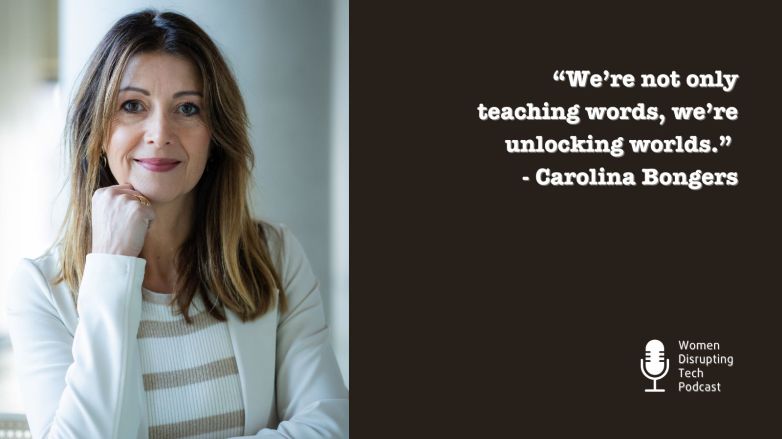
“We’re not teaching words, we’re unlocking worlds.”
Carolina Bongers, co-founder Jungle the Bungle
This line captures the heart of Carolina’s story because it reflects how she thinks about impact. Teaching words is not the point. Creating access and possibility is. For children who are not raised bilingual, learning a new language can open up confidence, curiosity, and a sense of possibility that reaches far beyond vocabulary.
3 Things That Changed The Way I Think
This conversation pushed me to question a few of my own assumptions about launching a product and building a company. Not in a dramatic, but in a practical way.
Parents are often the easier entry market, but not always always.
In edtech, the common logic is that parents are the least complex market to start with. Fewer stakeholders. Faster decisions. Carolina’s experience complicates that picture. Jungle the Bungle found real traction with schools and libraries early on, because teachers saw the impact on children who needed language support most. It reminded me that “easier” is not always the same as “right,” and that early demand deserves to be taken seriously, even when it shows up somewhere else than expected.
Validation can be analog.
I don’t know many founders who validate part of their idea by writing a book. Carolina did exactly that. And the more I thought about it, the more it expanded my own view on validation. She didn’t start by testing features or funnels. She tested whether children connected with the characters and whether parents believed in the idea. That kind of proof is not digital, but it is very real. It made me rethink how narrow our definition of validation sometimes is.
Perfection is contextual.
Coming from companies like Disney and L’Oréal, Carolina was used to very high standards. Startup life forced her to recalibrate. Some things still need to be flawless. Others need space to evolve. That tension felt very familiar to me. Letting go of perfection is not about lowering the bar. It’s about deciding consciously where the bar actually needs to be at each stage.
These shifts matter because they influence how I look at markets, proof, and progress as a founder myself.
💬 What changed your thinking reading or listening? Let me know your thoughts in the comments.
A Question for You 🤔
💬 Do you think children should learn second languages early on in their lives?
👇 Share your thoughts in the comments. Let’s keep this conversation going and discover new truths.
Coming up on Women Disrupting Tech
Next week, I sit down with Valerie Hirschhauser to explore how hustle becomes normalized, why intuition deserves a place in leadership decisions, and how small shifts in how you structure your days can change everything.
In this clip from the episode, Valerie shares her vision of future boardrooms where intuition carries the same weight as data, and where women no longer have to toughen up to be taken seriously.
Click the play button to hear Valerie’s vision of future boardrooms. Want to hear the rest? When you’re subscribed, you’ll find it in your mailbox on 15 January 2026 at 8 am CET. So stay tuned for more Women Disrupting Tech.
And until the next episode, as always, keep being awesome.
Dirkjan
PS. You’ve come this far? You must be a fan. So do yourself a favor and subscribe to updates:
Or follow the show on Spotify, Apple Podcasts or YouTube.
Listen to Episode 134 on Spotify, Apple, or YouTube
Unlocking Worlds by Making Language Learning Fun with Carolina Bongers | Ep. 134 – Women Disrupting Tech
Listen on Apple Podcasts Listen on YouTube (audio only) About Carolina Bongers
Carolina Bongers is the founder of Jungle the Bungle, a language learning platform for young children built on the belief that early multilingual education should be joyful, not tedious. She grew up bilingual with a Spanish mother and Dutch father, and that experience shaped her appreciation for the lifelong advantages of speaking more than one language. After careers in brand roles at companies like Disney and L’Oréal, she saw a gap in tools that help very young children learn languages in a way that feels natural and fun. Her drive to fill that gap began with writing multilingual children’s books to test whether kids connected with her characters and stories, and eventually led to building the Jungle the Bungle app with a focus on playful learning and real educational impact.
You can connect with Carolina on LinkedIn.
About Mendix
Jungle the Bungle is a playful language learning platform designed for children aged two to eight, where learning happens through exploration, stories, songs, and games rather than drills or repetition. The idea originated in 2015 when founder Carolina Bongers saw that existing tools did not make language learning engaging for very young kids. Before the app existed, the Jungle the Bungle universe was tested through multilingual children’s books that sold thousands of copies, validating both the characters and the concept.
The interactive app builds on that foundation with smart, adaptive learning and a world of colorful characters that invite children to discover English, Dutch, Spanish, and more in context. Teachers and schools have embraced the platform for its ability to motivate learners and make vocabulary acquisition feel like play, and the company’s mission extends beyond entertainment to expand access to early language skills for as many children as possible.
You can check out the app in the Apple App Store or the Google Play Store. And you can learn more about Jungle the Bungle on the website and by following Jungle the Bungle on LinkedIn, Facebook, and Instagram.
Other ways to amplify the voices of Women Disrupting Tech
Want to make inclusion in tech the new normal by 2032? Here’s how you can help:
Follow the Women Disrupting Tech Podcast
Follow the podcast on your favorite platform. Every follow brings these stories to more people.
Give the show a rating or review on Spotify or Apple.
It only takes a moment, but it tells others this podcast is worth listening to. And helps the voices of my guests carry further.
Share the stories that move you.
Send this episode to a friend, a colleague, or someone who needs to hear it. Every share helps to build a more inclusive tech future and supports my guests in getting the stage they deserve.
So when you know someone who should hear it, pass it on when you’re done.
Events that Women Disrupting Tech Must-Attend
The fall is loaded with great events, and I’ve found some cool ones. Below is one event you definitely want to check out. For a full overview of all events, including links to buy tickets, please check the events page.
Featured Event: That’s What She Said
Looking for an event to start your new year off right? Well, Impowr and Boom Chicago have got your back. They’re starting on 14 January 2026 (that is next Tuesday) with an event where networking meets comedy. You can get your early-bird ticket (a €10 discount until 30 November) on the Boom Chicago website.
This is the last week you can get that early bird, and the last time I spoke with the ladies of Impowr, they had sold 70 tickets already.
Diverse Leaders in Tech Events
If you like being in the know about what is happening in the DEI space, Diverse Leaders in Tech is the place to be.
Every last Thursday of the month, they have monthly in-person meetups for tech people, HR leaders and supporters of diversity to exchange insights, tackle challenges, and take action. It’s a vibrant, safe space where diversity is celebrated.
You can register for events on the DLiT website. Did I mention that joining your first event is free?
Equals Events
Equals is on a mission to shape a society where women and men stand on equal footing. At their home base in Amsterdam, they regularly organize events, but you can organize yours there too. You can find the events on Luma.
What I Want To Leave You With
What I appreciated most about this conversation is how quietly ambitious Carolina is. She’s building not just a language learning app but an omnichannel franchise that successfully bridges the gap between entertainment and education.
By combining the storytelling magic she learned at Disney with evidence-based didactic methods, Carolina built a tool that meets a real need in schools and homes alike. Her path from a bilingual upbringing to a startup aiming for “world domination” serves as a testament to the power of starting small, validating early, and never losing sight of the “magic” that captures a child’s imagination.
If there’s one thread running through this episode, it’s that learning, like building a company, works best when curiosity stays intact. When pressure is removed. And when space is created to grow at your own pace.
You can find the episode on Spotify, Apple Podcasts, or YouTube.
-
Building a Tech Career on Agency, Agility, and Bouncebackability with Simone Mink | Show notes episode 133
How does a degree in leisure management lead to a career in tech?
In this episode of Women Disrupting Tech, I speak with Simone Mink about how her career unfolded not by following a predefined path, but by claiming agency, staying agile, and learning how to bounce back when resilience tipped into burnout.
We talk about learning to code without a technical background, asking for a do-over of a job interview to get the job you really want, and why structure can be a strength rather than a contradiction when you are neurodivergent.
Our conversation also touches on leadership, boundaries, and the limits of systems and AI when crucial context lives in people’s heads. It is an honest look at what it takes to grow in tech without losing yourself along the way.
Hit play to listen to the episode on Spotify, Apple Podcasts, or YouTube, or scroll down to read about the other lessons for startup founders, women in tech, and their allies.
3 Lessons From This Conversation
Simone approaches her career with what she calls a Pippi Longstocking mindset. She embraces uncertainty, takes risks before she feels ready, and trusts that she can figure things out along the way.
Here are three things you can learn from her Pippi moments:
You do not need to be “a science person” to code.
Simone challenges the idea that good developers must excel at math, chemistry, or physics. For her, coding clicked because it felt like learning another language and solving puzzles. Curiosity, pattern recognition, and enjoyment of problem-solving mattered more than having the “right” technical background.
Career growth requires self-advocacy.
A defining moment in her career was asking for a do-over conversation when she realized she had pitched herself too cautiously. By clearly articulating what the new team actually needed, she moved from being a trainer to building products inside Mendix. Growth came from naming the gap and stepping into it, not from waiting to be invited.
Resilience without boundaries becomes harmful.
Simone’s burnout showed that mental toughness alone is not a virtue when it ignores physical limits. Being able to push through does not equal sustainability. Learning where her boundaries were changed how she now works and how she leads others.
Together, these lessons matter because they challenge common assumptions about talent, ambition, and success in tech. They point toward careers built on learning, agency, and self-awareness rather than endurance alone.
Share this episode with someone who needs to hear this and be inspired to choose a career in tech!
Or scroll down for magical moments, practical takeaways, and my own observations.
And if you want more lessons like this? Subscribe to updates for a weekly dose of female founder inspiration.
- 3 Lessons From This Conversation
- Highlights and timestamps
- 3 Magic Moments In The Episode
- Practical Takeaways for Founders
- The Quote From The Episode
- 3 Things That Changed The Way I Think
- A Question for You 🤔
- Coming up on Women Disrupting Tech
- Listen to Episode 133 on Spotify, Apple, or YouTube
- Other ways to amplify the voices of Women Disrupting Tech
- About Simone Mink
- About Mendix
- Events that Women Disrupting Tech Must-Attend
- What I Want To Leave You With
Highlights and timestamps
Time Highlight 02:26 From Leisure Management to Tech Innovator 05:17 The Journey of Learning to Code 08:08 Transitioning Roles at Mendix 11:02 Pitching Yourself: The Art of Self-Advocacy 16:12 Embracing Uncertainty and ADHD 24:49 Navigating Challenges in HR Management 30:47 Lessons from Burnout and Resilience 37:37 Resilience and Boundaries 39:08 Graciousness Towards Oneself 43:24 The Importance of Exercise 45:11 Navigating Hormonal Changes 46:47 Current Role and Responsibilities 52:25 AI’s Role in Decision Making 57:00 Change Management and Accountability 1:00:44 Driving Change Through Positivity 1:03:27 The Power of Communication 1:07:19 Addressing Bias in AI 3 Magic Moments In The Episode
One of the earliest moments in the conversation set the tone for everything that followed. Simone reframed her mother’s fear with a simple “What if I succeed?” This Pippi moment revealed a mindset that would quietly shape her entire career.
Building a muscle for change.
Early in Simone’s career, her mother would ask, “Are you sure you want to do this?” as Simone moved into new roles she had never done before. Over time, that question changed into a confident “I’m sure you’ll nail it.” The shift did not come from reassurance, but from repetition. Each reinvention built trust, showing how confidence compounds when you keep learning and delivering.
Asking for a do-over.
Another defining moment was Simone realizing she had pitched herself too cautiously in a conversation about a new role. Instead of accepting the outcome, she asked for a second conversation and clearly articulated what the team actually needed. That simple but brave move showed rare agency and self-awareness, and became a turning point in her move from trainer to leader.
The off-script perimenopause conversation.
Neither of us expected to talk about perimenopause. Yet when it came up, it added an important layer to the conversation. It brought honesty about hormones, energy, and brain fog, and about what it means to lead while navigating realities that are still rarely discussed in tech. It reminded me how often the most meaningful moments happen when we leave the script behind.
Taken together, these moments show how careers are shaped less by grand plans and more by small decisions, honest conversations, and the courage to name what is really happening.
💬 What was your favorite moment from the episode? Share yours in the comments.
Or scroll down for practical tips that will fuel your own journey as a founder.
Practical Takeaways for Founders
One practical habit that stood out in this conversation is how Simone models boundaries visibly. By not sending messages after work hours, she sets a clear cultural norm that people do not have to be “always on” to be committed or effective.
Use structure to manage uncertainty.
Simone relies on 30–60–90 day plans and breaks large, undefined responsibilities into small, bite-sized pieces. This approach helps her create clarity, manage expectations, and build momentum, especially in roles where success is not clearly defined yet.
Be cautious with AI outputs.
AI can only work with what has been documented. It cannot process the assumptions, context, and lived knowledge that sit in people’s heads. As a founder, it is important to remember that dashboards and models may look complete while still missing what actually matters.
Implement change incrementally.
Simone’s approach to change is simple and disciplined. Take baby steps, focus on easy wins, get people excited, and resist the urge to boil the ocean. Momentum grows when people experience progress they can trust.
Together, these takeaways show that sustainable leadership is built through clarity, restraint, and respect for human limits, not by pushing harder or faster at all costs.
💬 Know a founder who should hear this? Use the share button below to tell them.
Or scroll down to discover an inspiring quote and learn about my own takeaways.
The Quote From The Episode

“Being visible has been the biggest catalyst for my career.”
Simone Mink, Head of Portfolio Management at Mendix
This quote captures a quiet truth that runs through the entire conversation: Simone’s growth did not come from having the perfect background or waiting to be recognized, but from making her work, her thinking, and her boundaries visible at the moments when it mattered most.
3 Things That Changed The Way I Think
One insight that stayed with me is how intentional we need to be about AI bias. If women are not involved in building systems, and if women’s successes are not recorded as data, those systems will quietly keep reinforcing the same patterns we already see today.
See coding and learning as languages, not gatekeeping skills.
Simone’s experience reframed how I think about technical ability. Coding is not reserved for people who excelled at certain school subjects. Curiosity, pattern recognition, and the joy of solving puzzles matter just as much as formal credentials.
ADHD and structure are not opposites.
I was struck by how deliberately structured Simone is. Her use of 30–60–90 day plans and small, clear steps shows that strong self-imposed structure can support neurodivergence rather than limit it.
Resilience can turn toxic when it is never questioned.
Simone’s story made me reflect on how early life experiences can normalize pushing through at all costs. Resilience is valuable. But without boundaries, it can slowly work against you instead of for you.
Together, these reflections shifted how I think about talent, systems, and sustainability in tech. They point to a future where learning, structure, and care are treated as strengths, not exceptions.
💬 What changed your thinking? I’d love to hear from you in the comments.
A Question for You 🤔
💬 What boundary has made the biggest difference in your career (positive or negative?
👇 Share your boundary in the comments. Let’s keep this conversation going and promote openness about boundaries so it becomes a normal thing.
Coming up on Women Disrupting Tech
Almost all founders I met speak two or more languages. And as we learned in this episode, coding is just another language. So I wondered how we can set up our children to learn languages in an easy and fun way at a young age.
That is where Carolina Bongers and Jungle The Bungle come in. In the next episode, she is our guide as we explore the world of language learning for children aged two to eight.
In this clip, she defines her mission as “unlocking worlds” for children rather than just teaching words.
Click play to hear Carolina Bongers share her mission. Want to hear the rest? When you’re subscribed, you’ll find it in your mailbox on 8 January 2026 at 8 am CET. So stay tuned for more Women Disrupting Tech.
And until the next episode, as always, keep being awesome.
Dirkjan
PS. When you’ve come this far, you must be a fan. So do yourself a favor and subscribe to updates or follow the show on Spotify, Apple Podcasts or YouTube.
Listen to Episode 133 on Spotify, Apple, or YouTube
Building a Tech Career on Agency, Agility, and Bouncebackability with Simone Mink | Ep. 133 – Women Disrupting Tech
Listen on Apple Podcasts Listen on YouTube (audio only) Other ways to amplify the voices of Women Disrupting Tech
Want to make inclusion in tech the new normal by 2032? Here’s how you can help:
Follow the Women Disrupting Tech Podcast
Follow the podcast on your favorite platform. Every follow brings these stories to more people.
Give the show a rating or review on Spotify or Apple.
It only takes a moment, but it tells others this podcast is worth listening to. And helps the voices of my guests carry further.
Share the stories that move you.
Send this episode to a friend, a colleague, or someone who needs to hear it. Every share helps to build a more inclusive tech future and supports my guests in getting the stage they deserve.
So when you know someone who should hear it, pass it on when you’re done.
About Simone Mink
Simone Mink is Head of Portfolio Management at Mendix, where she works at the intersection of product strategy, data-driven decision-making, and cross-functional alignment. In her role, she helps shape how Mendix invests in its product portfolio, aligning R&D, go-to-market, and operations to drive measurable impact, adoption, and long-term growth.
Alongside her work in portfolio management, Simone plays an active role in shaping Mendix’s culture. She is Chair of the Works Council and leads the company’s Neurodiversity ERG, advocating for workplaces where different ways of thinking are recognized as strengths. She also developed mPath, an employee experience suite that reimagined hiring and onboarding and was shortlisted for a Siemens P&O Innovation Award.
Outside Mendix, Simone is a keynote speaker on embracing unlimited growth. Drawing on her own career pivots, she encourages people to challenge self-limiting beliefs and adopt what she calls a Pippi Longstocking mindset: “I have never tried that before, so I think I should definitely be able to do that.”
You can connect with Simone on her website and on LinkedIn.
To hear more of her perspective, you can also listen to her earlier conversation on Journeys of Empowerment.
About Mendix
Mendix is a leading enterprise low-code application development platform that helps organizations build web and mobile applications faster and more collaboratively than traditional software development. Instead of writing all the code by hand, teams use visual modeling and reusable components to design, test, and deploy solutions at scale. The platform supports the full software development lifecycle and enables both technical and non-technical contributors to participate in building meaningful digital solutions.
Founded in Rotterdam in 2005 and now part of Siemens, Mendix is used by thousands of companies around the world to modernize legacy systems, automate workflows, and create apps that solve real business problems with speed and quality.
You can learn more about Mendix on the website and by following Mendix on LinkedIn.
Events that Women Disrupting Tech Must-Attend
The fall is loaded with great events, and I’ve found some cool ones. Below is one event you definitely want to check out. For a full overview of all events, including links to buy tickets, please check the events page.
Featured Event: That’s What She Said
Looking for an event to start your new year off right? Well, Impowr and Boom Chicago have got your back. They’re starting on 14 January with an event where networking meets comedy. You can get your early-bird ticket (a €10 discount until 30 November) on the Boom Chicago website.
This is the last week you can get that early bird, and the last time I spoke with the ladies of Impowr, they had sold 70 tickets already.
Diverse Leaders in Tech Events
If you like being in the know about what is happening in the DEI space, Diverse Leaders in Tech is the place to be.
Every last Thursday of the month, they have monthly in-person meetups for tech people, HR leaders and supporters of diversity to exchange insights, tackle challenges, and take action. It’s a vibrant, safe space where diversity is celebrated.
You can register for events on the DLiT website. Did I mention that joining your first event is free?
Equals Events
Equals is on a mission to shape a society where women and men stand on equal footing. At their home base in Amsterdam, they regularly organize events, but you can organize yours there too. You can find the events on Luma.
What I Want To Leave You With
Simone’s story is a reminder that there is no such thing as a standard way to build a career in tech. What matters more than background or titles is the willingness to take agency, stay curious, and keep learning, even when the path feels uncertain or unexplored.
This episode also shows that strength is not just about pushing through. Real growth happens when ambition is paired with boundaries, when structure supports rather than constrains, and when we allow ourselves to be visible without burning out. Especially in a system that still rewards endurance over sustainability, that shift matters.
If you’re navigating your own next step in tech, I hope this conversation encourages you to trust what you can learn, name what you need, and build a career that works for you, not just on paper.
Listen to the episode on Spotify, Apple Podcasts, or YouTube.
-
Designing The Workplace Women in Tech Actually Want with Tiffany Aude and Yoana Leusin | Show notes episode 132

What if promoting people on merit is the easiest way to get more women into boardrooms?
In episode 132 of Women Disrupting Tech, Yoana Leusin shares this statistic: using clear, merit-based promotion criteria makes companies 75 percent more likely to promote women.
It shows how much potential goes unseen and why so many women in tech step away before senior leadership.
In this episode, Tiffany Aude and Yoana Leusin explore what changes when you redesign the workplace so women in tech can actually thrive.
Hit play to listen to the episode on Spotify, Apple Podcasts, or YouTube, or scroll down to read about the other lessons for startup founders, women in tech, and their allies.
3 Lessons From This Conversation
This conversation with Tiffany Aude and Yoana Leusin challenges some familiar assumptions about how careers are built and who rises inside tech companies. It shows how mindset, structure, and lived experience shape women’s careers in tech.
1. Meritocracy is only fair when it is designed that way
Tiffany and Yoana explain how men are often promoted on potential while women are judged on performance. When companies switch to objective merit criteria, the likelihood of promoting women rises by 75 percent. The talent was always there. The system simply wasn’t measuring it. This matters because fixing meritocracy is one of the simplest ways to unlock the leadership pipeline already inside your company.
2. Women leave tech not because they lack drive but because clarity is missing
Unclear expectations and shifting goalposts drain motivation fast. Many women respond by questioning themselves rather than the structure around them. Yoana’s point is sharp: clarity in job descriptions, promotion paths, and feedback is not a nice-to-have. It is a retention strategy. When clarity improves, women stay, contribute, and lead with far more confidence.
3. Mindset determines how far you allow yourself to go
Tiffany’s story about wishing she “were one of those men” shows how early narratives shape ambition. What changed her trajectory was learning to challenge those beliefs and replace them with ones that gave her agency. Many women in tech never get support for that shift. Of course, mindset alone can’t fix a broken structure, but it does influence how women navigate it and how they step into the opportunities they earn.
Together, these lessons underline a simple point: when you redesign the system, you redesign who succeeds in it.
Know someone who does not believe in this? Yoana and Tiffany would love to talk to them. So share the episode using the buttons below.
Or scroll down for magical moments, practical takeaways, and my own observations.
And if you want more lessons like this? Subscribe to updates for a weekly dose of female founder inspiration.
- 3 Lessons From This Conversation
- Highlights and timestamps
- 3 Magic Moments In The Episode
- Practical Takeaways for Founders and Allies
- The Quote From The Episode
- 3 Things That Changed The Way I Think
- A Question for You 🤔
- Coming up on Women Disrupting Tech
- Listen to Episode 132 on Spotify, Apple, or YouTube
- Other ways to amplify the voices of Women Disrupting Tech
- About Tiffany Aude
- About Yoana Leusin
- About impowr
- Events that Women Disrupting Tech Must-Attend
- What I Want To Leave You With
Highlights and timestamps
Time Highlight 03:08 Yoana’s and Tiffany’s Personal Journeys and Career Paths 08:15 The Impact of Gender Dynamics in the Workplace 12:43 The Dynamics of Competition in Corporate Environments 20:24 The Promotion Paradox 26:56 Legislative Changes and Their Impact on Gender Equality 29:01 The Business Case for Gender Equality 38:17 The Impact of Job Descriptions on Diversity 39:24 Creating Inclusive Interview Structures 41:33 Building a Supportive Workplace Culture 43:35 Strategies for Empowering Women in Tech 50:07 Creating Inclusive Work Environments 51:54 Overcoming Self-Doubt and Building Confidence 55:09 Tools for Enhancing Self-Worth and Negotiation Skills 1:02:00 The Role of Male Leaders in Supporting Women 1:09:19 Future of Gender Equality in the Workplace 3 Magic Moments In The Episode
Many women step out of traditional career paths and start building their own businesses. It’s a clear sign that something is broken. Tiffany and Yoana give us hope. These three moments in this conversation reveal the emotional and strategic shifts that help women move from self-doubt to agency.
1. “Maybe we’re not actually the problem here.”
Tiffany and Yoana explain how many women respond to stalled careers by questioning themselves first. The turning point comes when they realise other women in similar roles experience the same barriers. That shared recognition interrupts the cycle of self-blame and reframes the issue as systemic rather than personal. It is often the moment women stop shrinking and start advocating.
2. From frenemies to partners
The two of them operated as competitors in their corporate roles because the structure pushed them into rivalry. It wasn’t personal. It was the environment. Once that structure fell away, they discovered that their different styles and shared values were an advantage. The friction that once limited them became a strength when they built impowr together.
3. Control what you can. Walk away when you can’t.
Yoana’s advice is simple but grounding: look at any situation and identify what is within your control to move it forward. If there is no action you can take to change the outcome, that is often the signal to leave. It is a mindset shift that returns agency to women who have been taught to overanalyse instead of act.
Together, these moments show how clarity, community, and agency help women navigate a system that was not built for them.
💬 What was your favorite moment from the episode? Share yours in the comments.
Or scroll down for practical tips that will fuel your own journey as a founder.
Practical Takeaways for Founders and Allies
This episode offers founders three takeaways that help you retain great people, build inclusive teams, and create workplaces where women in tech can grow.
1. Use objective hiring practices to reduce bias
A structured interview process and a diverse interview panel can reduce gender bias by more than 50 percent. Clear, specific job descriptions also matter. Women are 28 percent more likely to apply when responsibilities are spelled out rather than left open to interpretation. Bias is not inevitable. It is something you can design against.
2. Rethink how you incentivize your team
Perks like Rolexes or trips to Vegas may appeal to some men, but they rarely motivate women. Women often want development, visibility, and opportunities that strengthen their leadership. When your team diversifies, your incentives should too. The right incentives increase motivation. The wrong ones signal who the system was built for.
3. Male leaders need to act, not observe
Tiffany and Yoana are clear: the men who made a difference in their careers listened, advocated, and removed obstacles. They didn’t wait to be asked. They stepped in. Listening to understand is one of the most important skills a male leader can develop. When men act with intention, women rise faster. The system changes with them.
These takeaways matter because founders shape the environment. A few intentional choices can change who stays, who grows, and who leads.
💬 Know a founder who should hear this? Use the share button below to tell them.
Or scroll down to discover an inspiring quote and learn about my own takeaways.
The Quote From The Episode

“You have to be intentionally creating spaces that women want to be in, and cultures that they want to be part of.”
Tiffany Aude, co-founder of impowr
This line from Tiffany captures the heart of the episode and the work still ahead for founders and leaders.
3 Things That Changed The Way I Think
Part of our conversation is about the systems that are blocking women. But Tiffany and Yoana also share these personal strategies and mindset shifts discussed for navigating the current corporate landscape:
1. Allyship is not theory. It is removing a blocker at the right moment
The stories Tiffany and Yoana shared about the men who shaped their careers were concrete. Someone stepped in, cleared a path, or made a decision that changed everything. It reminded me that allyship is not abstract encouragement. It is action taken at the moment it matters.
2. The power of knowing when to leave
If self-advocacy and negotiation don’t shift the situation, women need the confidence to walk away and choose environments that value them. Yoana’s advice to act on what is within your control—and to leave when nothing else can change—felt like a mindset shift many women never give themselves permission to make.
3. The right legislation helps companies be more inclusive
Their work at impowr is shaped by new rules that demand more transparency and accountability. Instead of treating legislation as a burden, they see it as a catalyst. When the rules change, companies finally redesign the systems that have held women back.
Together, these ideas made it clear that inclusion is a mix of personal agency, supportive systems, and leaders who act with intention.
💬 What changed your thinking? I’d love to hear from you in the comments.
A Question for You 🤔
💬 Do you have an ally in your life who clears obstacles for you?
👇 Celebrate him in the comments. Let’s keep this conversation going and promote allyship so it becomes a normal thing.
Coming up on Women Disrupting Tech
Christmas is a time for reflection. And if there is one stat to reflect on for 2025, it’s that 95% of AI projects fail.
To discover why this happens, I had a conversation with Sophia Zitman. She argues that it’s the human factors that often lead to the failure of AI implementation. We cover do’s and don’ts, how to navigate company politics and stakeholder engagement, and the potential of AI as an equalizer in business and education.
In this clip, you’ll hear Sophia discuss how to design AI projects for long-term adoption.
Hit play to hear what makes and breaks AI projects. Want to hear the rest? When you’re subscribed, you’ll find it in your mailbox next week at 8 am CET. So stay tuned for more Women Disrupting Tech.
And until the next episode, as always, keep being awesome.
Dirkjan
PS. When you’ve come this far, you must be a fan. So do yourself a favor and subscribe to updates or follow the show on Spotify, Apple Podcasts or YouTube.
Listen to Episode 132 on Spotify, Apple, or YouTube
Designing The Workplace Women in Tech Actually Want with Tiffany Aude and Yoana Leusin | Ep. 132 – Women Disrupting Tech
Listen on Spotify Listen on Apple Podcasts Listen on YouTube (audio only) Other ways to amplify the voices of Women Disrupting Tech
Want to make inclusion in tech the new normal by 2032? Here’s how you can help:
Follow the Women Disrupting Tech Podcast
Follow the podcast on your favorite platform. Every follow brings these stories to more people.
Give the show a rating or review on Spotify or Apple.
It only takes a moment, but it tells others this podcast is worth listening to. And helps the voices of my guests carry further.
Share the stories that move you.
Send this episode to a friend, a colleague, or someone who needs to hear it. Every share helps to build a more inclusive tech future and supports my guests in getting the stage they deserve.
So when you know someone who should hear it, pass it on when you’re done.
About Tiffany Aude
Tiffany believes your mind is your most precious possession – the key to unlocking your potential. She discovered this through her own struggle in London’s male-dominated recruitment sector, where her obsession with mindset work became her breakthrough, ascending the sales leaderboard. Moving to Amsterdam, she launched and led a brand in healthtech recruitment, where she discovered her true calling in coaching and trained 250+ professionals, designing performance management programs still embedded in organizations today.
With her BSc in Psychology and ICF certification, she identified the pattern: women were capable but lacked permission to own the power they already had within. At impowr, she co-founded the solution – equipping women with the mindset, tools, and confidence to play bigger and fulfill every dream they’re bold enough to pursue.
You can connect with Tiffany on LinkedIn.
About Yoana Leusin
Yoana Leusin is Co-Founder of impowr. After a decade in high-pressure sales environments and serving as VP of People & Performance managing the performance of 250+ professionals, she identified a critical gap: few development programs were built for women, like her, advancing in these spaces.
Inspired by her mother’s example to be a powerwoman- both as a mom and a business lady, Yoana’s ambitious drive and passion for impact led her to co-launch impowr, creating a community where women build the skills, mindset, and support to reshape the most influential industries in the world. With a degree in social studies, ICF coaching certification, and Harvard Business School credentials, she delivers measurable outcomes to forward-thinking businesses.
You can connect with Yoana on LinkedIn as well.
About impowr
Impowr is the coaching platform for ambitious women in male-dominated industries. Through their tried and tested coaching methodologies, their partnerships with forward-thinking businesses, and their community of badass women, impowr’s mission is to inspire and empower women to stop playing it safe and start playing bigger so together we can reshape the most influential industries in the world.
You can learn more about impowr on the website, LinkedIn and Instagram. And they’ll be hosting this event on 14 January 2026.
Events that Women Disrupting Tech Must-Attend
The fall is loaded with great events, and I’ve found some cool ones. Below is one event you definitely want to check out. For a full overview of all events, including links to buy tickets, please check the events page.
Featured Event: That’s What She Said
Looking for an event to start your new year off right? Well, Impowr and Boom Chicago have got your back. They’re starting on 14 January with an event where networking meets comedy. You can get your early-bird ticket (a €10 discount until 30 November) on the Boom Chicago website.
This is the last week you can get that early bird, and the last time I spoke with the ladies of Impowr, they had sold 70 tickets already.
Diverse Leaders in Tech Events
If you like being in the know about what is happening in the DEI space, Diverse Leaders in Tech is the place to be.
Every last Thursday of the month, they have monthly in-person meetups for tech people, HR leaders and supporters of diversity to exchange insights, tackle challenges, and take action. It’s a vibrant, safe space where diversity is celebrated.
You can register for events on the DLiT website. Did I mention that joining your first event is free?
Equals Events
Equals is on a mission to shape a society where women and men stand on equal footing. At their home base in Amsterdam, they regularly organize events, but you can organize yours there too. You can find the events on Luma.
What I Want To Leave You With
The biggest shift for me in this conversation is seeing inclusion for what it really is: strategy. Not an add-on. Not a side project. A strategic choice that shapes performance, retention, and long-term value.
When companies embed inclusion into how they hire, reward, develop, and lead, the impact is measurable. It changes who thrives, who stays, and how strong the business becomes. And when founders treat it as strategy, they build companies that are both more profitable and more humane.
Listen to the episode on Spotify, Apple Podcasts, or YouTube.
-
Why Your Strategy Should Fit on a Post-It with Dorit Roest | Show notes episode 131

Does your strategy fit on a Post-It?
Founders often feel off-track because the world shifts fast and their own motivations shift with it, while their strategy stays frozen in last year’s (or even last month’s) version of reality.
But what if strategy were simple and agile, something you could revisit often and adjust without stress?
That question sits at the heart of my conversation with Dorit Roest. She sees that many founders risk losing their drive when misalignment between personal and business goals drains their motivation. Because success without impact feels empty. And she offers a recipe to realign your goals with what is happening in your company and the world around you, Post-Its included.
Listen on Spotify, Apple Podcasts, or YouTube, or scroll down for the lessons from the episode.
3 Lessons From This Conversation
Dorit argues that we need a new definition of what a successful company or what successful entrepreneurship looks like. Strategy should be more agile and more aligned with the impact founders want to make with their businesses.
Entrepreneurship carries a moral obligation
Founders build the systems that shape our future. That power comes with responsibility. Dorit argues that entrepreneurship is one of the few places where change can move fast and with intention. When founders zoom out and consider their role in the world, their strategy gains depth and direction. Purpose becomes a design choice rather than an afterthought.
Misalignment drains motivation
When founders drift from the reason they started, their energy drops long before their metrics do. The work becomes heavier, decisions slower, and momentum harder to recover. Misalignment creates a quiet leak in motivation that compounds over time. Staying close to your why is not a luxury. It is fuel.
Investor and founder incentives must align
It is tempting to absorb an investor’s priorities as your own. It feels efficient, even strategic. But when the incentives diverge, the founder risks bending the company into a shape that no longer fits. The cost is subtle at first. Eventually it becomes a loss of purpose or even a loss of the company. Healthy strategy requires clarity on who you are building for and why that matters.
These lessons matter because strategy is not only about goals and staying aligned with your purpose requires courage, because thinking bigger than your circumstances is often the first strategic decision you make.
Share the episode with someone who needs to hear this.
Or scroll down for magical moments, practical takeaways, and my own observations.
And if you want more lessons like this? Subscribe to updates for a weekly dose of female founder inspiration.
- 3 Lessons From This Conversation
- Highlights and timestamps
- 3 Magic Moments In The Episode
- Practical Takeaways for Founders and Allies
- The Quote From The Episode
- 3 Things That Changed The Way I Think
- A Question for You 🤔
- Coming up on Women Disrupting Tech
- Listen to Episode 131 on Spotify, Apple, or YouTube
- Other ways to amplify the voices of Women Disrupting Tech
- About Dorit Roest
- About Strategy Sprint Company
- Events that Women Disrupting Tech Must-Attend
- What I Want To Leave You With
Highlights and timestamps
Time Highlight 02:20 Dorit Roest’s Entrepreneurial Journey 05:24 The Role of Entrepreneurship in Solving Global Issues 08:16 Aligning Personal and Business Goals 11:13 The Importance of Agility in Strategy 14:09 Simplifying Strategy for Modern Businesses 17:16 Zooming Out: Understanding the Bigger Picture 20:24 Addressing Global Challenges as Entrepreneurs 23:14 Mapping Opportunities and Threats 26:14 The Battery Check: Assessing Personal and Business Energy 29:09 Prioritizing Time, Money, and Energy 32:02 Lessons from the Past Year 43:33 Navigating Maternity Leave and Business Growth 46:05 The Unique Challenges of Women Entrepreneurs 48:09 Innovative Leadership and Team Management 50:47 Encouraging Ambition and Risk-Taking 52:18 Visualization Techniques for Goal Setting 58:40 Aligning Personal and Professional Goals 1:03:11 The Importance of Alignment in Success 1:07:13 Simplifying Goals and Accountability 1:12:20 Building Supportive Networks for Female Founders 3 Magic Moments In The Episode
What if you had 10 times as much courage? That question opens a part of the conversation that shifts how founders see themselves and what they allow themselves to build and grow without limitations.
Thinking big
Dorit contrasts European modesty with the American instinct to applaud ambition. Her message is simple: dreamers move faster when people around them say yes instead of should you really do that. Founders need circles that lift them up, not rein them in.
The visualization
At about 50 minutes into our conversation, Dorit guides a visualization of your ideal day in 2030. It is a practical way to bypass limitations and reconnect with the life you are actually trying to create. It brought me back to the spark behind Project Ally and why the long-term vision matters more than any single feature or milestone.
The maternity leave moment
Dorit describes the quiet peak of realizing her company kept running during her maternity leave. It was proof that the systems she built could hold, and that leadership does not mean being indispensable. For founders, it is a reminder that sustainable companies require trust, not constant presence.
These moments matter because they show how courage, clarity, and systems create momentum.
💬 What was your favorite moment from the episode? Let me know in the comments.
Or scroll down for practical tips that will fuel your own journey as a founder or ally.
Practical Takeaways for Founders and Allies
A good strategy starts with zooming out. When you understand what is happening in the world and how it touches your domain, opportunities become clearer and threats feel manageable instead of overwhelming.
Zooming out gives you the right focus.
Dorit teaches founders to look at global shifts, then bring the lens back to their own business. Keep it simple. Ask what is happening, why it matters, and where you can play a role. Eight minutes is enough to spot blind spots and name risks without getting lost in them.
The battery check helps you focus on what matters.
Time, money, and energy shape every decision. The battery check shows which of the three needs attention next year. Choosing one priority creates a natural compass for what to say yes to and what to postpone.
Keep goals simple to ensure alignment and momentum.
If your objective and key results cannot fit on a post-it, they are too complex. Simple goals are easier to track, easier to communicate, and easier to adjust as reality changes. Complexity kills momentum. Clarity fuels it.
Founders often overcomplicate strategy when what they need is a rhythm that helps them choose, focus, and act. These takeaways help them avoid exactly that.
💬 Know a founder who should hear this? Use the share button below to tell them.
Or scroll down to discover an inspiring quote and learn about my own takeaways.
The Quote From The Episode
Strategy without context becomes hollow. And Dorit puts words to a discomfort many founders feel but rarely name out loud:
“Success that is only based on what you think is important to your company, without taking into account the role that you play in the world, is doomed to be empty.”
Dorit Roest, CEO and co-founder of Strategy Sprint Company
3 Things That Changed The Way I Think
Alignment matters more than speed. When founders lose sight of why they started, their drive fades even if the company looks healthy from the outside. This conversation made me look differently at what fuels momentum and what quietly drains it.
Purpose vs money
Dorit shared her experience that during the battery check, many women choose money because they are underpaid or undervalued. But money is often a stand-in for worth. What if purpose is the real unlock? For many women founders, shifting attention from compensation to contribution might create more confidence, more clarity, and eventually more revenue.
The Pregnancy Gap
Dorit’s honesty about pregnancy and entrepreneurship hit hard. The reality that women fall “behind ten to zero” during fertility treatments, pregnancy, or maternity leave is not a mindset issue. It is a systemic one. It reshapes how I think what genuine support for women founders must look like.
Community is not a nice-to-have.
While talking about fundcoach.ai, Dorit reminded me that nothing fuels you like talking to a woman who has already walked through what you are facing. It helped me shift how I look at community as a strategic asset for my own company. Courage, clarity, and momentum grow faster in the company of people who understand your ambitions.
These reflections matter because alignment is not a feeling. It is a discipline. And the clearer you are about your reality, your purpose, and your constraints, the easier it becomes to build something that lasts.
💬 What changed your thinking? I’d love to hear from you in the comments.
A Question for You 🤔
💬 When you could 10x your courage, what would your company look like?
👇 Share your thoughts in the comments. Let’s keep this conversation going and make dealing with stress easier for everyone.
Coming up on Women Disrupting Tech
Next week, I’m joined by Yoana Leushin and Tiffany Aude from Impowr to see how we can stop the drop to the top for women in tech. When rising the career ladder, many women get stuck in the middle of their careers. And our conversation is about why that is and how we can solve it.
Here, you hear Yoana reveal one of the main causes for the lack of women at the top: the promotion paradox.
Hit play to hear about the promotion paradox. Want to hear the rest? When you’re subscribed, you’ll find it in your mailbox around the same time next week. So stay tuned for more Women Disrupting Tech.
And until the next episode, as always, keep being awesome.
Dirkjan
PS. Want to be the first to learn about new episodes? Subscribe to updates or follow the show on Spotify, Apple Podcasts or YouTube.
Listen to Episode 131 on Spotify, Apple, or YouTube
Why Your Strategy Should Fit on a Post-It with Dorit Roest | Ep. 131 – Women Disrupting Tech
Listen on Spotify Listen on Apple Podcasts Listen on YouTube (audio only) Other ways to amplify the voices of Women Disrupting Tech
Want to make inclusion in tech the new normal by 2032? Here’s how you can help:
Follow the Women Disrupting Tech Podcast
Follow the podcast on your favorite platform. Every follow brings these stories to more people.
Give the show a rating or review on Spotify or Apple.
It only takes a moment, but it tells others this podcast is worth listening to. And helps the voices of my guests carry further.
Share the stories that move you.
Send this episode to a friend, a colleague, or someone who needs to hear it. Every share helps to build a more inclusive tech future and supports my guests in getting the stage they deserve.
So when you know someone who should hear it, pass it on when you’re done.
About Dorit Roest
Dorit Roest is an entrepreneur, strategist, speaker and founder of Strategy Sprint Company. She built her first startup, TIM — the first influencer-marketing platform in the Netherlands. She helped Techleap and the Dutch Government build ScaleNL — an accelerator-and-ecosystem program that helped dozens of Dutch tech startups scale to the US market, before starting The Strategy Sprint Company.
With Strategy Sprint Company, she uses that breadth of experience to help founders and teams find clarity, direction and impact. She combines startup-hardened discipline with big-picture thinking, always centering people and purpose. Her background as a founder, strategist and international ecosystem builder gives her a sharp yet human lens into the challenges that entrepreneurs face. Her approach to strategy is reflected throughout our conversation, where she shows how clarity and alignment unlock momentum for founders.
You can connect with Dorit on LinkedIn and via her website.
About Strategy Sprint Company
Strategy Sprint Company is a strategy agency, academy and facilitator network founded by Dorit Roest. The company is built on a unique method — the Strategy Sprint — designed to help entrepreneurs, teams and organisations quickly get clarity and direction without over-complexity.
With formats ranging from one-on-one sessions to team and group workshops, Strategy Sprint Company uses a “pressure-cooker” model to transform scattered ideas, doubts or noise into a clear roadmap. The promise: in a few focused hours you arrive at a sharpened strategic foundation, a ranked set of priorities, and a concrete plan for short- and long-term execution.
In 2023 Strategy Sprint Company launched an Academy to train and certify facilitators — scaling the method beyond the founder’s own practice. The aim is to make Strategy Sprint a go-to ritual for entrepreneurs, similar to a periodic check-up, that helps them stay aligned with both their internal purpose and external reality.
If your strategy feels noisy, scattered, or stuck, their Sprint formats offer a fast way to find direction again. To learn more, check out their website and use their brand-new booking tool. Of course, you can also follow the company on LinkedIn.
Events that Women Disrupting Tech Must-Attend
The fall is loaded with great events, and I’ve found some cool ones. Below is one event you definitely want to check out. For a full overview of all events, including links to buy tickets, please check the events page.
Featured Event: That’s What She Said
Looking for an event to start your new year off right? Well, Impowr and Boom Chicago have got your back. They’re starting on 14 January with an event where networking meets comedy. You can get your early-bird ticket (a €10 discount until 30 November) on the Boom Chicago website.
This is the last week you can get that early bird, and the last time I spoke with the ladies of Impowr, they had sold 70 tickets already.
Diverse Leaders in Tech Events
If you like being in the know about what is happening in the DEI space, Diverse Leaders in Tech is the place to be.
Every last Thursday of the month, they have monthly in-person meetups for tech people, HR leaders and supporters of diversity to exchange insights, tackle challenges, and take action. It’s a vibrant, safe space where diversity is celebrated.
You can register for events on the DLiT website. Did I mention that joining your first event is free?
Equals Events
Equals is on a mission to shape a society where women and men stand on equal footing. At their home base in Amsterdam, they regularly organize events, but you can organize yours there too. You can find the events on Luma.
What I Want To Leave You With
What stayed with me after this conversation was Andrea’s calm clarity. She knows stress will always show up, but she refuses to let it run her life. She listens to her own rhythm and leads from there.
And the way she names it is disarming. Women should not be expected to lead the way men lead. Founders should not treat self-care as something they must earn. Stress can be a guide instead of a burden.
Andrea told me that recording the episode was the highlight of her week. It reminded me why these conversations matter. They give us a different way to build, one that lasts.
Listen to the episode on Spotify, Apple Podcasts, or YouTube.
-
The Founder Guide to Turning Stress into a Superpower with Andrea Christancho | Show notes episode 130

As a founder, you probably know the feeling when stress feels like it is steering the wheel. I know it. And so does Andrea Cristancho.
She built her life across Shanghai, South Africa, and Switzerland. And somewhere along the way, she learned something simple and hard. If she is not feeling it, she cannot sell it. Not to her team. Not to her clients. Not to herself.
That realisation changed how she leads. And it’s where our conversation starts.
We talk about the pressure founders put on themselves. The routines that fall apart when life changes. And the idea that stress can become a tool instead of a weight you carry.When you are ready to turn stress into a superpower, listen on Spotify, Apple Podcasts, or YouTube. Or scroll down for more about the episode.
3 Lessons From This Conversation
Founders hear a lot of noise about what it takes to build a company. Sleep later. Push harder. Get up no matter how many times you fall. These mantras sound motivating, but often break the people who try to live by them. Andrea cuts through that noise and offers three lessons that show a different way to lead.
1. Wellbeing is a business foundation
Andrea learned early that you cannot build a company on empty fuel. When founders push through without checking in with themselves, the team feels it, the work suffers, and the business pays the price. She sees wellbeing as the starting point of leadership, not a bonus you earn at the end of the week. Something to be integrated into your routines and business plans. It is a reminder that how you feel shapes how you lead and how others follow.
2. The old “fall down, get up again” mantra becomes false leadership
The startup world loves the idea that strength means getting back up no matter how many times you fall. Andrea calls this false leadership. After her second burnout, she realised that muscling through everything might look heroic, but breaks you faster than it builds you. Sustainable leadership requires honesty about limits, not blind persistence. It is a call to replace toughness with long-term thinking.
3. Stress can become a tool when you know how to work with it
Andrea reframes stress as something you can learn from rather than fight. Pattern interrupts help you notice the moment when you still have capacity or when you have hit your edge. With that awareness, stress shifts from a threat to a signal that helps you lead with more clarity. It is a lesson in treating stress as feedback instead of a force to resist.
Each of these lessons points to the same idea. You lead better when you stop fighting stress and start understanding what it is trying to tell you.
Share the episode with someone who needs to hear this.
And if you want more lessons like this? Subscribe to updates for a weekly dose of female founder inspiration.
Or scroll down for magical moments, practical takeaways, and my own observations.
- 3 Lessons From This Conversation
- Highlights and timestamps
- 3 Magic Moments In The Episode
- Practical Takeaways for Founders and Allies
- The Quote From The Episode
- 3 Things That Changed The Way I Think
- A Question for You 🤔
- Coming up on Women Disrupting Tech
- Listen to Episode 130 on Spotify, Apple, or YouTube
- Other ways to amplify the voices of Women Disrupting Tech
- About Andrea Cristancho
- Events that Women Disrupting Tech Must-Attend
- What I Want To Leave You With
Highlights and timestamps
Time Highlight 03:45 Andrea’s Journey to Entrepreneurship and Health Coaching 06:50 The Impact of Burnout on Leadership 09:35 Well-being as a Foundation for Success 13:16 Integrating Well-being into Leadership 17:47 Managing Guilt and Prioritizing Self-Care 24:57 The Role of Pattern Interrupts in Daily Life 34:37 How Leaders Can Support Teams in Building Routines 38:56 Breathing Techniques for Better Focus 41:28 The Breathing Exercise 45:28 Stress as a Friend, Not the Enemy 51:00 The Role of Men in Supporting Women in Leadership 3 Magic Moments In The Episode
If you allow your mind to believe that self-care is only earned after work is finished, you’re on the wrong track. It’s something Andrea found out while recovering from her second burnout. Where powering through worked the first time, she needed to recalibrate how she wanted to build her business. These magical moments tie her ideas together in a way that is impossible to ignore.
1. “If I Can’t Feel It, How Can I Sell It?”
Already in her twenties, Andrea learned that if she cannot feel well, she cannot lead well. And if she treats self-care as something she must earn, she breaks the foundation she is trying to build her company on. It is rare to hear someone speak this honestly about the cost of ignoring your own limits. This felt like a truth every founder needs to hear.
2. The 10-second reset
We paused the conversation, and she took me through a simple practice. Hands on the stomach. Inhale until the ribcage expands for seven seconds. Then exhale through the nose. Ten seconds of presence that change the entire tone of your workday. I felt it immediately. It’s a simple exercise that you can do in between replying to emails. It shows how small moments can reset a founder’s mind.
3. Her message to men at the end of the episode
Andrea ends with something both gentle and firm. Do not expect women to lead the way men do. Let them work in their own rhythm. Honor the cycle they are in. When men give that space, they get the best out of the women they work with. It is one of the clearest allyship lessons I have heard.
Each of these moments shows a different side of what conscious leadership can look like.
💬 What was your favorite moment from the episode? Let me know in the comments.
Or scroll down for practical tips that will fuel your own journey as a founder or ally.
Practical Takeaways for Founders and Allies
A lot of founders still hear the old mantra that you can sleep when you are dead, but Andrea shows there is a better way. Stress can become a friend when you learn how to work with it.
1. Use pattern interrupts to catch stress early
Stress becomes harmful when it slips below your awareness. Pattern interrupts help you notice the moment when healthy pressure turns into overload. A one-minute walk. A break between tasks. A pause before you reply. These small signals make stress workable instead of overwhelming.
They teach you to listen before your body starts yelling.2. Use breathing as a fast reset when stress spikes
Breathing is the quickest way to regulate your nervous system. One deep inhale until your ribcage expands. A slow exhale through the nose. Ten seconds that calm the mind and bring your focus back. It is simple enough to do between emails and powerful enough to shift your entire afternoon.
It reminds you that clarity is only a breath away.3. Design your own stress recovery rhythm
Turning stress into a friend means recognising when you are still in your zone and when you have reached your edge. Build routines that fit your life today and update them each quarter. Some seasons need movement. Others need rest. Founders who adapt instead of forcing old habits protect their resilience.
It helps you work with your limits rather than fight against them.These tools shift stress from something that derails you to something that guides you.
💬 Know a founder who should hear this? Use the share button below to tell them.
Or scroll down to discover an inspiring quote and learn about my own takeaways.
The Quote From The Episode
“The more we focus on our wellbeing as leaders, the better we do in everything we touch, but mainly in the business.”
Andrea Christancho
Andrea said this early in our conversation, and it framed everything that followed. She was not talking about wellness as something nice to have, but as the core of how she leads, decides, and builds. It is a simple line that cuts through a lot of noise in founder life.
3 Things That Changed The Way I Think
This episode held up a mirror in an unexpected way. Each reflection made me look at stress, work, and routine with more honesty.
1. I treat time as a constraint and forget what it does to the quality of my work
I often edit these episodes late at night, long after my focus has faded. Andrea made me see the real costs. Pushing through does not make me productive. It makes me sloppy. And it turns the craft of podcasting into something it should not be. Her view on stress made me rethink when to stop and when to return with a clear mind. It reminded me that quality needs space, not speed.
2. The Tuesday workout moment showed my real dilemma
During the episode, we talked about how I feel guilty when I step away for a workout if my to-do list is not complete. I had forgotten that part of the conversation. Hearing it back felt like watching my own habit from the outside. The tension between self-care and meeting my own expectations is still there. Andrea helped me see that this is not about discipline. It is about belief. It pushed me to question why finishing the list feels more important than feeling well.
3. Stress only becomes manageable when you understand your own patterns
Andrea’s approach to pattern interrupts made me realise how often I let stress decide the pace of my day. I move from task to task without noticing how my mind shifts or how my body reacts. Her way of naming these moments, and using tiny pauses to catch them, gave me a new way to think about stress. It taught me that awareness is the first step to resilience.
So what did I change? I use pattern interrupts to see if I’m focusing on the lack of time instead of the quality of my work. And I have since stopped editing late at night. In fact, I stopped editing this blog post at 9pm instead of continuing until about 11pm just to finish it. And I ditched the feeling of guilt when biking to my Tuesday evening workout.
💬 What changed your thinking? I’d love to hear from you in the comments.
A Question for You 🤔
💬 What’s a pattern interrupt that you want to start trying in your work?
👇 Share your thoughts in the comments. Let’s keep this conversation going and make dealing with stress easier for everyone.
Coming up on Women Disrupting Tech
Once in a while, you have those conversations that you’d wish would continue forever. My conversation with Dorit Roest is one of those.
We started talking about how she designed Strategy Sprints to help founders align their business goals with who they are and how they want to run it.
It ended up being a conversation about purpose, the power of thinking big, and why your strategy should fit on a post-it.
Hit play to hear why your strategy should fit on a Post-It. So stay tuned for more episodes of Women Disrupting Tech.
And until the next episode, as always, keep being awesome.
Dirkjan
PS. Want to be the first to learn about new episodes? Subscribe to updates or follow the show on Spotify, Apple Podcasts or YouTube.
Listen to Episode 130 on Spotify, Apple, or YouTube
The Founder Guide to Turning Stress into a Superpower with Andrea Christancho | Ep. 130 – Women Disrupting Tech
Listen on Spotify Listen on Apple Podcasts Listen on YouTube (audio only) Other ways to amplify the voices of Women Disrupting Tech
Want to make inclusion in tech the new normal by 2032? Here’s how you can help:
Follow the Women Disrupting Tech Podcast
Follow the podcast on your favorite platform. Every follow brings these stories to more people.
Give the show a rating or review on Spotify or Apple.
It only takes a moment, but it tells others this podcast is worth listening to. And helps the voices of my guests carry further.
Share the stories that move you.
Send this episode to a friend, a colleague, or someone who needs to hear it. Every share helps to build a more inclusive tech future and supports my guests in getting the stage they deserve.
So when you know someone who should hear it, pass it on when you’re done.
About Andrea Cristancho
Andrea Cristancho is an international entrepreneur, certified health coach, breathwork instructor, and founder of the wellness initiative behind her name. She has built businesses across Asia, Africa, and Europe, from Mainland China to South Africa and now Switzerland, which gives her a deep, lived understanding of what founder life demands.
At the heart of her work is a simple conviction. Wellbeing is not a reward. It is the foundation of sustainable leadership. Through breathwork, holistic coaching, and mindful routines, she helps startup founders and teams turn stress into a guiding force instead of a burnout risk.
When she is not coaching, you might find her in nature with her family, camping under the stars, or exploring ways to bring restful rituals into everyday life. In Andrea’s world, success does not come at the cost of balance. It comes from building a business that respects the human rhythm behind it.
You can connect with her through her website or on LinkedIn.
Events that Women Disrupting Tech Must-Attend
The fall is loaded with great events, and I’ve found some cool ones. Below is one event you definitely want to check out. For a full overview of all events, including links to buy tickets, please check the events page.
Featured Event: That’s What She Said
Looking for an event to start your new year off right? Well, Impowr and Boom Chicago have got your back. They’re starting on 14 January with an event where networking meets comedy. You can get your early-bird ticket (a €10 discount until 30 November) on the Boom Chicago website.
This is the last week you can get that early bird, and the last time I spoke with the ladies of Impowr, they had sold 70 tickets already.
Diverse Leaders in Tech Events
If you like being in the know about what is happening in the DEI space, Diverse Leaders in Tech is the place to be.
Every last Thursday of the month, they have monthly in-person meetups for tech people, HR leaders and supporters of diversity to exchange insights, tackle challenges, and take action. It’s a vibrant, safe space where diversity is celebrated.
You can register for events on the DLiT website. Did I mention that joining your first event is free?
Equals Events
Equals is on a mission to shape a society where women and men stand on equal footing. At their home base in Amsterdam, they regularly organize events, but you can organize yours there too (like the 3mbrace Health events). You can find the events on Luma.
What I Want To Leave You With
What stayed with me after this conversation was Andrea’s calm clarity. She knows stress will always show up, but she refuses to let it run her life. She listens to her own rhythm and leads from there.
And the way she names it is disarming. Women should not be expected to lead the way men lead. Founders should not treat self-care as something they must earn. Stress can be a guide instead of a burden.
Andrea told me that recording the episode was the highlight of her week. It reminded me why these conversations matter. They give us a different way to build, one that lasts.
Listen to the episode on Spotify, Apple Podcasts, or YouTube.
-
The Power of Workations and Generous Leadership with Gina Schinkel | Show notes episode 129

Most founders don’t like shortcuts. They want to solve that one big problem once and for all.
So they take the long road. And Gina Schinkel is no exception.
She “defied the traditional career path” because exploring the world mattered more than climbing a ladder.
That choice shaped everything she has built since. Driftawave and Leaderwave didn’t come from a straight line. They are the result of someone who said yes to curiosity, lived in different cultures, and only later discovered how all those roads could come together.
This episode is about that. The courage to build on your own terms. The power of a workation to reconnect a team. And the kind of leadership that starts with giving first.
When you’re ready, listen on Spotify, Apple Podcasts, or YouTube—or scroll down for more about the episode.
3 Lessons From This Conversation
If one thing stood out in our conversation, it is that the modern career path is flexible and global. Gina is proof that you no longer need to choose between career advancement and travel; professionals can pursue “this part of freedom and exploration that life can offer”. In keeping with that theme, here are three lessons that follow.
1. Workations are not perks. They help you attract and keep the right people.
I knew offsites could lift energy. What I didn’t expect was how strongly they influence hiring and retention. Gina showed how workations reduce time to hire, strengthen employer branding, and keep teams aligned during growth. When people feel connected, they perform better. And they stay longer.
2. You don’t have to choose one path to build something meaningful.
Gina spent years exploring the world before stepping into tech. She didn’t follow the traditional line. She built her own. Seeing how she combines travel, AI, culture, and leadership into one coherent vision reminded me that founders don’t need permission to integrate the different parts of their lives. You can build from all your roads.
3. Generous leadership builds the strongest networks.
Giving first is simply how she moves. A tool. A contact. A recommendation. Watching how naturally she does this made me realize how powerful that habit is. It opens doors without forcing them. It creates the kind of trust most people try to manufacture through strategy.
What Gina made clear to me is that the modern career works best when it gives people room to move, room to grow, and room to build the kind of connections that last.
Know a founder who could benefit from a workation? Share the episode with them using the buttons below
And if you want more lessons like this? Subscribe to updates for a weekly dose of female founder inspiration.
Or scroll down for magical moments, practical takeaways, and my own observations.
- 3 Lessons From This Conversation
- Highlights and timestamps
- 3 Magic Moments In The Episode
- Practical Takeaways for Founders and Allies
- The Quote From The Episode
- 3 Things That Changed The Way I Think
- A Question for You 🤔
- Coming up on Women Disrupting Tech
- Listen to Episode 129 on Spotify, Apple, or YouTube
- Other ways to amplify the voices of Women Disrupting Tech
- About Gina Schinkel
- About Driftawave
- About Leaderwave
- Events that Women Disrupting Tech Must-Attend
- What I Want To Leave You With
Highlights and timestamps
Time Highlight 03:43 Gina Schinkel’s Journey to DriftWave and LeaderWave 06:12 The Intersection of Travel and Technology 09:09 Cultural Insights: Returning to the Netherlands 11:55 The Benefits of Team Retreats and Workations 14:20 Creating Connections: The Role of Workations in Team Dynamics 17:22 Navigating Remote Work and Office Mandates 19:55 Exploring Workation Locations and Experiences 22:52 The Evolution of Workations: Beyond Just Work 24:50 Workations and Startup Success: Attracting Talent 27:43 Measuring Success: KPIs for Workations 30:45 The Future of Work: AI’s Role in Business 33:24 Leadership Trends and the Role of AI 35:09 Diversity and Inclusion in Work Culture 37:42 Building Trust and Connections in Business 47:32 Empowering Women in Tech 1:02:18 Closing the Funding Gap for Female Founders 3 Magic Moments In The Episode
Gina is an associative storyteller. Sometimes I had to wait for the magic inside her answer, but at least once she couldn’t resist giving it to me straight. These are the three moments you’ll want to hear.
1. The moment she used roleplay to outsmart AI.
Gina told me how she used ChatGPT to solve a coding problem by making it roleplay as the company’s CTO inside Lovable. The moment she framed it that way, ChatGPT “in a nice way, whooped his ass” by solving the issue Lovable couldn’t crack. It says a lot about how she approaches new tools. With curiosity. With humor. And without fear.
2. The moment she didn’t hesitate to tell the truth.
When I asked what companies with strict office mandates are missing out on, she didn’t dress it up. She just said it. “Top talent.” It was quick. Honest. And exactly the kind of clarity founders sometimes need to hear.
3. The moment her two worlds clicked into one sentence.
When she said “Leaderwave shows where we’re going, and Driftawave translates it into the organization,” something landed. These weren’t two separate ventures. It was one worldview. One founder trying to help teams move with the future instead of waiting for it.
What I loved about these moments is how they reveal the same pattern. Gina trusts her instincts. She experiments early. And she says the thing most people only think.
💬 What was your magic moment from the episode? Let me know in the comments.
Or scroll down for practical tips that will fuel your own journey as a founder or ally.
Practical Takeaways for Founders and Allies
It’s easy to see workations as a nice-to-have and to see AI as just the next hype. But both can have a real use case, provided that founders are intentional about them. Gina shared three insights that stood out to me, especially if you want to strengthen your team, design better offsites, and stay ahead in a world where AI is moving fast.
1. Measure the real ROI of a workation.
Most founders look at offsites through the lens of energy or morale. Gina looks at them through KPIs. eNPS, retention, time to hire, employer branding, collaboration, innovation, and belonging. When you measure what a workation actually moves, you stop seeing it as a perk and start seeing it as infrastructure.
2. Design offsites with intention, not vibes.
A location alone won’t change a team. What matters is how you shape the experience. Shared moments. Vulnerability. Alignment. Coaching time. Context for people who feel invisible in remote settings. Gina reminds us that the best offsites don’t happen by accident. They happen because someone designed them with care.
3. If AI makes you anxious, explore it instead of avoiding it.
Gina sees a clear pattern. The people who fear AI the most are often the ones who haven’t taken time to play with it. Her advice is simple. Start small. Try a tool. Experiment for fun. See what it can do for your workflow instead of assuming the worst. Curiosity beats fear every time.
What you can take from Gina is simple. When you treat culture, connection, and new technology with intention instead of fear, your company likely moves in the right direction.
💬 Know a founder or ally who should hear this? Use the share button below to tell them.
Or scroll down to discover an inspiring quote and learn about my own takeaways.
The Quote From The Episode
Some quotes need no introduction. This one fit the episode like a glove as it captures how work is becoming a global marketplace.

“You can now make a career basically from anywhere there is WiFi.”
Gina Schinkel – Founder Driftawave and Leaderwave
3 Things That Changed The Way I Think
Life as a podcaster is interesting because every guest expresses themselves differently. Some give short, to-the-point answers. Others need a bit of encouragement. And then there was Gina. She needed no encouragement to share her wisdom. It taught me the following.
1. Not everyone answers in straight lines. And that’s a good thing.
Talking to Gina reminded me that some founders think out loud. They circle the point, follow a story, and land the insight later than you expect. I noticed my own tendency to look for the direct answer. But sometimes the real insight is in the detour, not the bullet point.
2. Integration matters more than choosing a path.
I always knew that curiosity shapes careers, but hearing how Gina merged travel, tech, culture, and AI into one direction made me rethink the idea of “staying in your lane.” Maybe the most meaningful careers come from collecting experiences first and connecting them later.
3. Giving first is not soft. It’s strategic.
I’ve read The Go-Giver. I know the idea. But hearing Gina talk about offering a course, a tool, or a contact before asking for anything back made it real again. It’s a reminder that generosity builds trust faster than strategy ever could.
All three learnings help me be a better podcaster, a better founder, and a better person. What more would you want to get out of an episode?
💬 What changed your thinking? I’d love to hear from you in the comments.
A Question for You 🤔
💬 What’s one small experiment with AI or team connection that you want to try after hearing this episode?
👇 Share your thoughts in the comments. Let’s keep this conversation going and make inclusion the new normal in tech.
Coming up on Women Disrupting Tech
Next week’s episode is a special one. Andrea Christancho is our guide as we explore how female founders can stay sane in a life that sometimes borders on insanity.
She argues that stress is not the ugly word we’ve come to accept. In fact, this episode is full of ways to make stress your friend. Here’s a clip from the episode.
Hit play to hear how Andrea wants us to see stress. So stay tuned for more of Women Disrupting Tech. And until the next episode, as always, keep being awesome.
Dirkjan
PS If you fear missing out, subscribe to updates or follow the show on Spotify, Apple Podcasts or YouTube.
Listen to Episode 129 on Spotify, Apple, or YouTube
The Power of Workations and Generous Leadership with Gina Schinkel | Ep 129 – Women Disrupting Tech
Listen on Spotify Listen on Apple Podcasts Listen on YouTube (audio only) Other ways to amplify the voices of Women Disrupting Tech
Want to make inclusion in tech the new normal by 2032? Here’s how you can help:
Follow the Women Disrupting Tech Podcast
Follow the podcast on your favorite platform. Every follow brings these stories to more people.
Give the show a rating or review on Spotify or Apple.
It only takes a moment, but it tells others this podcast is worth listening to. And helps the voices of my guests carry further.
Share the stories that move you.
Send this episode to a friend, a colleague, or someone who needs to hear it. Every share helps to build a more inclusive tech future and supports my guests in getting the stage they deserve.
So when you know someone who should hear it, pass it on when you’re done.
About Gina Schinkel
Gina Schinkel is the founder of Driftawave and Leaderwave, two ventures that bring together her love of travel, culture, and the future of work. Before building retreats and workations for teams, she lived and worked across the world from Aruba to Austria to the Great Barrier Reef. Her career spans tourism, LinkedIn, events, sales, and leadership development, all shaped by a curiosity that took her across continents and industries. Today she helps companies design experiences that build connection, spark growth, and make work feel a little more human.
You can spam her on LinkedIn (her words) to connect with her.
About Driftawave
Driftawave is your workation partner for remote- and distributed teams, companies and communities. They design turnkey travel experiences where creativity thrives, genuine connection happens, and growth isn’t just professional—it’s personal too. With a foundation in global travel and talent solutions, they help companies unlock culture, build collaboration and ignite innovation through thoughtfully crafted offsites across destinations like Croatia, Morocco, Spain and Italy. Ready for what’s next? Driftawave makes work meet adventure.
Follow Driftawave on Instagram and LinkedIn and check out the website to discover your next workation.
About Leaderwave
Leaderwave is a global platform that equips next-generation leaders with insights, community, and momentum. Through immersive gatherings, curated content and peer networks, it helps founders and executives navigate the future of work with connection and clarity. Ready to lead differently? Leaderwave turns leadership into movement.
You can learn more about Leaderwave on the website, LinkedIn and Instagram.
Events that Women Disrupting Tech Must-Attend
The fall is loaded with great events, and I’ve found some cool ones. Below is one event you definitely want to check out. For a full overview of all events, including links to buy tickets, please check the events page.
Featured event: Understanding Women’s Health – 3 December 2025
During this final 3mbrace Health event of 2025, you’re invited to better understand the importance of women’s health and the powerful role it plays in our personal, professional, and societal well-being. Men are expressly invited to join. And yes, I will be there too. So buy your tickets on Luma.
That’s What She Said
Looking for an event to start your new year off right? Well, Impowr and Boom Chicago have got your back. They’re starting on 14 January with an event where networking meets comedy. You can get your early-bird ticket (a €10 discount until 30 November) on the Boom Chicago website.
This is the last week you can get that early bird, and the last time I spoke with the ladies of Impowr, they had sold 70 tickets already.
Diverse Leaders in Tech Events
If you like being in the know about what is happening in the DEI space, Diverse Leaders in Tech is the place to be.
Every last Thursday of the month, they have monthly in-person meetups for tech people, HR leaders and supporters of diversity to exchange insights, tackle challenges, and take action. It’s a vibrant, safe space where diversity is celebrated.
You can register for events on the DLiT website. Did I mention that joining your first event is free?
Equals Events
Equals is on a mission to shape a society where women and men stand on equal footing. At their home base in Amsterdam, they regularly organize events, but you can organize yours there too (like the 3mbrace Health events). You can find the events on Luma.
What I Want To Leave You With
Gina has a kind of self-generated momentum that’s rare and energizing. She doesn’t wait for permission, external deadlines, or a manager telling her what to explore. She builds her own curiosity loops. She experiments with new tools. She pushes herself into new territory just to see what’s possible.
And the way she talks about it makes you feel it. It’s the thing that stayed with me after our conversation, and it’s what makes this episode worth listening to.
Listen to the full episode on Spotify, Apple Podcasts, or YouTube.
-
How To Be a Compassionate Ally for Women in Tech with Salmaan Sana | Show notes episode 128
What if being honest about what we feel was a starting point for being a good ally?
In this episode, Salmaan Sana explains how allyship touches leadership, emotional health and the role men can play to support women in tech. As a former medical student turned leadership facilitator, he brings both personal stories and structural insights to the table. We dig into how vulnerability matters, how small moments can be big for change, and how being an ally isn’t only about what you do — it’s how you show up.
We talk about vulnerability, overcompensation, and the everyday micro-moments that reveal who we really are at work.
Listen on Spotify, Apple Podcasts, or YouTube—or scroll down to explore the key lessons from our conversation.
3 Lessons From This Conversation
When Salmaan Sana was a medical student, he stumbled on The 7 Habits of Highly Effective People by Stephen Covey. That book changed his path. It taught him that leadership isn’t a trait you’re born with, but a skill you can train. He began sharing those ideas with other medical students—long before he called himself a facilitator or consultant. The same lessons still shape how he thinks about allyship today.
1. Focus on what you can influence
Salmaan reminds us that frustration often comes from worrying about things we can’t change. He uses Covey’s idea of the circle of influence versus the circle of concern to help people redirect their energy. In his view, true leadership—and true allyship—start when you act where your influence actually matters.
2. Seek first to understand
Another principle from Covey’s book that stayed with him is listening before responding. Salmaan applies this to allyship: men need to ask women about their experiences rather than assume they know. His barbershop story shows how bias often slips in unnoticed, and how one moment of humility can change the tone of a whole conversation.
3. Sharpen your awareness
Covey calls it “sharpening the saw,” the habit of continuous reflection. For Salmaan, that means noticing your own bias, being honest about it, and learning from it. He openly shares how he once came out sexist and racist on a Harvard bias test—and how awareness, not denial, became his way forward.
These lessons remind us that allyship isn’t about perfection. It’s about awareness, humility, and small consistent actions.
Share this episode with someone who cares about making people feel at home in new places.
Or scroll down for magic moments.
And if you want more lessons like this? Follow the podcast or subscribe to updates for a weekly dose of female founder inspiration.
Or scroll down for magical moments, practical takeaways, and my own observations.
- 3 Lessons From This Conversation
- Highlights and timestamps
- 3 Magic Moments In The Episode
- Practical Takeaways for Founders and Allies
- The Quote From The Episode
- 3 Things That Changed The Way I Think
- A Question for You 🤔
- Coming Up On Women Disrupting Tech
- Listen to Episode 128 on Spotify, Apple, or YouTube
- Other ways to amplify the voices of Women Disrupting Tech
- About Salmaan Sana
- Events that Women Disrupting Tech Must-Attend
- What I Want To Leave You With
Highlights and timestamps
Time Highlight 03:00 Journey into Healthcare and Leadership 10:30 The Role of Medical Education in Leadership 20:06 Understanding Allyship and Its Importance 31:45 Men’s Vulnerability and Emotional Health 51:32 Practical Steps to Become an Ally 59:04 Closing the Funding Gap for Female Founders 3 Magic Moments In The Episode
Salmaan’s story begins close to home. He saw his mother’s potential limited by culture and circumstance, and that realization stayed with him. It made him aware of how many women are still held back. Not because they lack talent, but because systems and expectations were never built for them. That awareness became the seed of his allyship. These three stories from the episode bring that awareness to life:
1. Healing starts with understanding, not blame
He shares a story from a woman who worked for the World Health Organization in Congo. She said their mission wasn’t only to heal women after violence, but also to heal men. Because the harm came from inherited trauma and a false sense of inferiority rooted in colonialism. That insight reshaped how Salmaan sees toxic behavior: not as evil, but as pain looking for an outlet.
2. Meeting bias with empathy
Another moment comes from an everyday encounter at a flower shop. A woman he’d just met told him she distrusted asylum seekers. Instead of confronting her, he chose to listen. When she asked if he had ever faced racism, he said yes, many times. But instead of turning it into a debate, he kept the door open for a real conversation later. By staying open, he gave her space to reflect on her own words (and food for thought in the process).
3. The micro-moments that matter
At his coworking space, he noticed a receptionist who looked unwell. When she whispered that she was on her period, he didn’t brush it off. He asked why she felt she had to push through instead of resting. That question opened a dialogue with her manager about creating space for menstrual health at work. It’s a small act, but it shows how allyship can show up in micro-moments: noticing, asking, and making room for change.
These stories reveal how allyship often begins with simple awareness. It’s not about grand gestures. It’s about how you choose to respond in the moment.
💬 What was your magic moment from the episode? Let me know in the comments.
Or scroll down for practical tips that will fuel your own journey as a founder or ally.
Practical Takeaways for Founders and Allies
Different perspectives are essential to close the gap. Salmaan’s stories remind us that inclusion isn’t just about representation; it’s about the quality of understanding that comes from it. Whether in funding decisions, company culture, or day-to-day collaboration, real progress depends on who’s in the room and how they listen to each other.
1. Let skeptics go through their own process
You can’t change people, no matter how strong your argument is. Salmaan says the best way to deal with resistance is to stay calm, keep the dialogue open, and allow others to reach their own realization in time. Change that comes from reflection sticks longer than change forced through debate.
2. Fairness sometimes requires imbalance
In his words, it’s okay to overcompensate for women in the workplace. After all, they’ve been undercompensated for too long. Founders and leaders can apply this by giving more room, resources, or visibility where imbalance has been the norm. Overcompensation isn’t favoritism; it’s repair.
3. From consideration to understanding to compassion to action
Salmaan describes allyship as a sequence that starts with noticing and ends with doing. Consider what others go through. Try to understand it. Let that spark compassion. Then take small, visible steps that improve the environment you’re in. It’s how you turn awareness into culture.
💬 Know a founder or ally who should hear this? Use the share button below to tell them.
Or scroll down to discover an inspiring quote and learn about my own takeaways.
Next, I’ll share the moments from this conversation that shifted how I think about building inclusive companies.
The Quote From The Episode
When Salmaan talks about allyship, he doesn’t hide behind neutral language. He says what many hesitate to say out loud: women deserve some extra support. Not because they’re weak, but because, for too long, women have been undercompensated, underrepresented, and underestimated.

“It’s okay to overcompensate for women in the workplace.”
Salmaan Sana
3 Things That Changed The Way I Think
This conversation challenged some of my own assumptions about leadership and allyship. It’s what a conversation with a facilitator like Salmaan will do. I want to share three examples where he provided a mirror so I could start seeing how some of my own behaviors work for me—or against me.
1. Relatability comes from being unfinished
Salmaan doesn’t present himself as someone who has it all figured out. He admits that he’s still learning, still catching himself, still rethinking old patterns. That honesty makes him relatable. It’s a reminder that credibility doesn’t come from perfection—it comes from being in the process.
2. The real question under defensiveness
When men are confronted with their own toxic behavior, Salmaan says the deeper question is, “How good do I feel about myself right now?” That one line reframed how I see defensiveness. It’s not just resistance—it’s often a reflection of pain, insecurity, or shame. And seeing it that way changes how you respond.
3. Vulnerability is leadership, not weakness
What stands out most is how he lives what he teaches. He doesn’t share his flaws to prove he’s self-aware. He does it to show others that it’s safe to be honest. That kind of vulnerability isn’t a strategy—it’s leadership in action.
What’s so powerful is that by sharing his own dilemmas and biases, Salmaan helps others shift their perspective and stays open to the perspectives that shift his own.
💬 What changed your thinking? I’d love to hear from you in the comments.
A Question for You 🤔
💬 Which part of Salmaan’s perspective on allyship made you rethink your own assumptions?
👇 Share your thoughts in the comments. Let’s keep this conversation going and make inclusion the new normal in tech.
Coming Up On Women Disrupting Tech
Next week, Gina Schinkel discusses how her ventures, Driftawave and Leaderwave, are strategically capitalizing on the remote work boom by using innovative workations to foster team culture and productivity, while simultaneously preparing leaders and organizations to leverage AI and other new technologies for the future of work.
Gina is clearly a tech and AI enthusiast. So in this clip, she explains why people who risk being laid off because of AI should actually embrace it.
So stay tuned for more Women Disrupting Tech. And until the next episode, as always, Keep Being Awesome!
Dirkjan
PS If you fear missing out, subscribe to updates or follow the show on Spotify, Apple Podcasts or YouTube.
Listen to Episode 128 on Spotify, Apple, or YouTube
How To Be A Compassionate Ally for Women in Tech with Salmaan Sana | Ep 128 – Women Disrupting Tech
Listen on Spotify Listen on Apple Podcasts Listen on YouTube (audio only) Other ways to amplify the voices of Women Disrupting Tech
Want to make inclusion in tech the new normal by 2032? Here’s how you can help:
Follow the Women Disrupting Tech Podcast
Follow the podcast on your favorite platform. Every follow brings these stories to more people.
Give the show a rating or review on Spotify or Apple.
It only takes a moment, but it tells others this podcast is worth listening to. And helps the voices of my guests carry further.
Share the stories that move you.
Send this episode to a friend, a colleague, or someone who needs to hear it. Every share helps to build a more inclusive tech future and supports my guests in getting the stage they deserve.
So when you know someone who should hear it, pass it on when you’re done.
About Salmaan Sana
Salmaan Sana is a leadership facilitator and organisational consultant based in Amsterdam who brings a rare blend of seriousness and humanity to his work. He started his career in medicine, where he witnessed chronic fatigue, burnout and a system built for endurance — not for wellbeing. That experience awakened his interest in how people and structures respond to change. Today, he works with teams and organisations to rediscover connection, belonging and alignment through inclusive leadership and emotional awareness.
He describes himself as a process-artist who listens deeply, designs with intention and then turns insight into action. Whether through consultancy, workshops or master-classes, Salmaan uses everyday experiences and structural insight to help people move from resignation to agency. His mission is to make the workplace somewhere everyone can show up fully and be heard, not just survive.
In the podcast, Salmaan mentions a TEDx Talk that he gave in 2011. You can watch that on YouTube.
You can learn more about Salmaan on his website and connect with him on LinkedIn and Substack.
Events that Women Disrupting Tech Must-Attend
The fall is loaded with great events, and I’ve found some cool ones. Below is one event you definitely want to check out. For a full overview of all events, including links to buy tickets, please check the events page.
Featured event: Understanding Women’s Health – 3 December 2025
During this final 3mbrace Health event of 2025, you’re invited to better understand the importance of women’s health and the powerful role it plays in our personal, professional, and societal well-being. Men are expressly invited to join. And yes, I will be there too. So buy your tickets on Luma.
That’s What She Said
Looking for an event to start your new year off right? Well, Impowr and Boom Chicago have got your back. They’re starting on 14 January with an event where networking meets comedy. You can get your early-bird ticket (a €10 discount until 30 November) on the Boom Chicago website.
Diverse Leaders in Tech Events
If you like being in the know about what is happening in the DEI space, Diverse Leaders in Tech is the place to be.
Every last Thursday of the month, they have monthly in-person meetups for tech people, HR leaders and supporters of diversity to exchange insights, tackle challenges, and take action. It’s a vibrant, safe space where diversity is celebrated.
You can register for events on the DLiT website. Did I mention that joining your first event is free?
Equals Events
Equals is on a mission to shape a society where women and men stand on equal footing. At their home base in Amsterdam, they regularly organize events, but you can organize yours there too (like the 3mbrace Health events). You can find the events on Luma.
What I Want To Leave You With
We recorded this episode the same week that 17-year-old Lisa was killed while cycling home in Amsterdam. The city felt different that week. Many women, across the country and in the media, spoke up about what it means to not feel safe in the dark. Many men, myself included, started to listen more closely.
It reminded me that allyship is something that needs constant attention and improvement. It’s checking in, asking, and noticing who doesn’t feel safe or seen—and what we can do about it, right where we are.
Salmaan’s work shows that leadership and allyship aren’t separate things. They both begin with paying attention. And they both depend on whether we’re willing to act, even when it feels uncomfortable.
Listen to the full episode on Spotify, Apple Podcasts, or YouTube.

Women Disrupting Tech | The Podcast
Stories That Build a More Inclusive Tech Future.
 Women Disrupting Tech | The Podcast
Leave a comment