-
Teaching Children How To Code To Unlock Hidden Talent with Vedrana Rogoznica | Show Notes to Episode 63 of Women Disrupting Tech
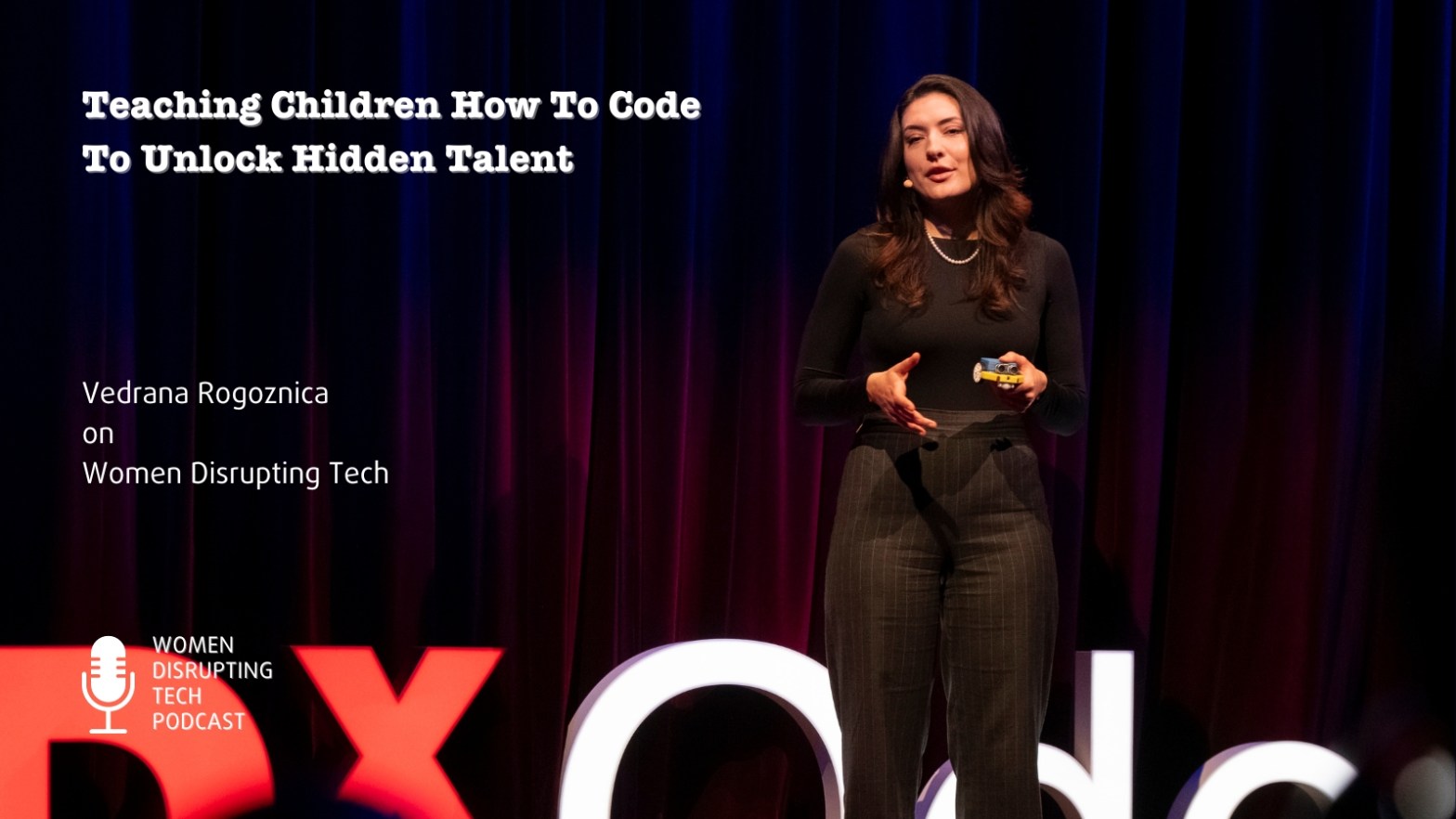
Being a startup founder is challenging, and being a female founder of a tech startup is even more difficult. But Vedrana Rogoznica takes the concept of doing things ‘the hard way’ to a whole new level.
Join us as we embark on her extraordinary journey. One that takes us from playing with dolls to becoming a female founder of a tech startup that teaches children coding skills by letting them program their own robots.
To listen, click play below or find episode 63 of Women Disrupting Tech on your favorite podcast platform.

Unlocking Hidden Talent by Teaching Children How To Code with Vedrana Rogoznica | Ep. 63 – Women Disrupting Tech
The Magic You Can Expect in this Episode 🪄
Vedrana Rogoznica is on a mission to shift education from teaching facts and formulas to teaching kids how to select and use technology effectively.
In episode 63 of Women Disrupting Tech, Vedrana and I speak about
🦄 Empowering the Next Generation: Vedrana is driven by the belief that young people should be enabled to make technology work for them to prevent knowledge and income inequality.
⚖️ Balancing Education and Fun: Vedrana discusses the challenge of keeping kids between 8 and 12 engaged with educational content while ensuring it’s both fun and trustworthy.
👥 Diversity in Tech: Drawing from her own experiences as a startup founder, Vedrana highlights the importance of diversity and collaboration in creating impactful solutions.Tune in now to hear Vedrana’s inspiring story and insights on how programming a robot can unlock hidden talents in children. You can find episode 63 of Women Disrupting Tech on Spotify, Apple, and YouTube.
PS. Don’t forget to let me know your thoughts about the episode in the comments.
No-cost ways to support the Women Disrupting Tech
When you’re ready to support my guests in making this podcast obsolete by the end of 2032, help out by doing these two things:
- Use the share button to share the podcast with friends, family, and co-workers. This way, you give the women disrupting tech the platform they need to make it happen. Use the buttons below to share.
- Rate the podcast on your favorite podcast platform. Better yet, leave a review. You can use a rating of one to five stars. This will help other people discover the podcast. And if you leave a review, it will help me improve.
What makes this episode magical🌟?
Already in the first few minutes, it becomes clear that Vedrana is not your average tech girl. She used to play with dolls and didn’t care much about the technology in the smartphones around her.
Her journey into tech is also far from average. After listening to it, you’d even be excused for thinking that she is taking the path of most resistance.
But make no mistake—this intelligent lady is driven by a passion for living a meaningful life. This passion filters through in her story about starting Rotoy. She asked her co-founder Krzysztof to explain the concept to her as if she were a nine-year-old. This created a customer-centric mindset from the start. As a non-techie, she acted as a guinea pig for the first iterations, simply using the power of her lack of knowledge to improve the product.
And who doesn’t love a quote that you don’t need to be technical to set up a tech startup?

“Even if you don’t have a tech background, you can have a tech startup.”
Vedrana Rogoznica, Co-founder and CEO of Rotoy
About Vedrana Rogoznica and Rotoy
“Life is about intentionally creating meaningful things!” is the life motto of female entrepreneur Vedrana Rogoznica. After moving from Croatia to Denmark, she became the co-founder and CEO of Rotoy. She holds a Master’s degree in Business Administration from the University of Southern Denmark. Besides being a startup founder, she also mentors other female founders.
You can connect with her on LinkedIn and watch her TEDx Talk on YouTube.
Rotoy teaches children coding skills by teaching them how to code their own robots. Their product is designed for children between 8 and 12 and can be used at home and schools. To learn more, visit their website or follow their journey on LinkedIn.
Let me know what you think!
Please let me know your thoughts about this episode of Women Disrupting Tech in the comments.
I’m interested to hear your thoughts about teaching children how to code at a young age.
By the way, if you would like to suggest a guest that I absolutely must have on the podcast, send me an email or a DM on LinkedIn.
What’s coming up?
Next week on Women Disrupting Tech, Nara Moripen is my guest to discuss how her startup, Pal, is creating digital palliative care solutions for families affected by life-limiting diseases.
After that, Kasia Pokrop will take us on a deep dive into the three Ms of a woman’s life: Menstruation, Motherhood, and Menopause.
So stay tuned for more inspiring women disrupting tech and their male allies in season three of Women Disrupting Tech!
More episodes like this?
If you like to listen to more episodes like this one, here are a few recommendations.
In Episode 59, Sonal Rattan tells me all about her daughter’s experience with tech education. In short, she absolutely hated it until it became more practical.
– In Episode 58, Carlota Salamat also highlights the need for more practical tech education.
– And for a primer on girls in Dutch vocational tech education and the need for more women in tech, you can listen to my conversation with Sanne Jongejan. -
Women Who Built The Internet: Marian Croak
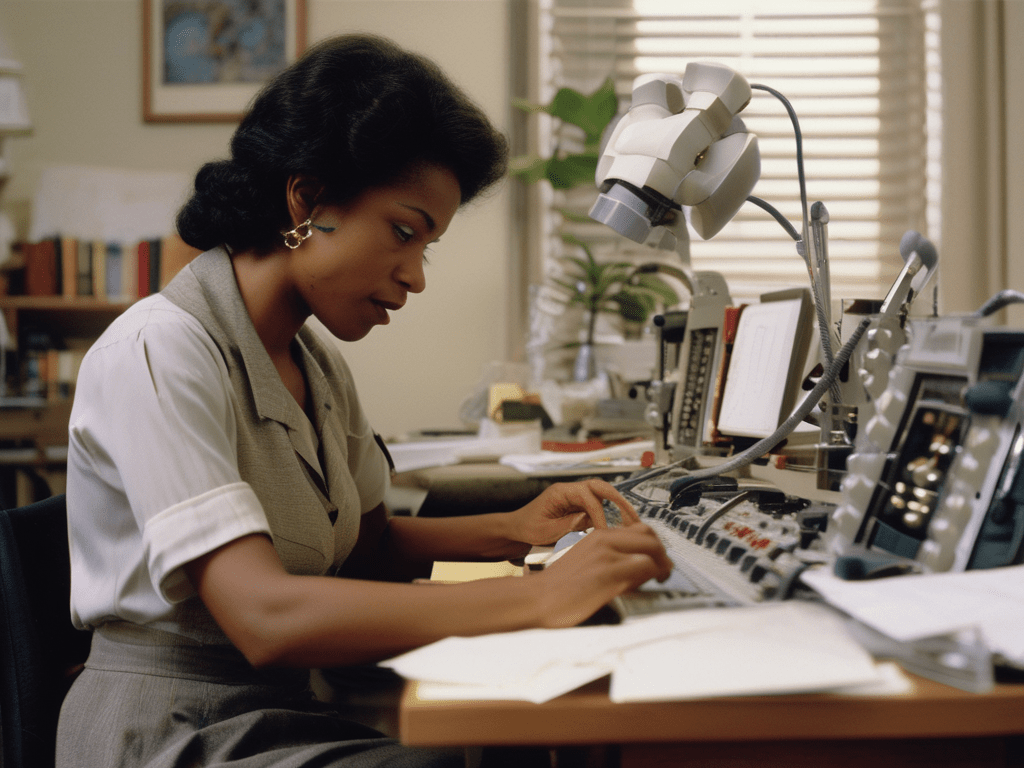
Behind every Zoom call or Google Meet, there is a visionary who made it possible.
And if you look at the history of the internet, you’d think that Voice over IP was invented by a man.
That is why I want you to meet Marian Croak. She played a pivotal role in developing Voice over Internet Protocol (VoIP) technology during her time at AT&T. Her work made online calls and remote work possible.
How did that happen? Scroll down below and I’ll tell you.

AI-generated image of Marian Croak while working on one of her VoIP developments. About Marian Croak
Marian Rogers Croak was born in 1955 in New York. Her father, who built her a home chemistry set, inspired her to enter tech.
She attended Princeton to study social psychology and obtained a Ph.D. in Quantitative Analysis and Psychology from the University of Southern California in 1982.
In that same year, she joined AT&T, where she would work for 3 decades before joining Google.
Her contribution to the Internet
Marian Croak is best known for her work on Voice over IP (VoIP).
When she joined AT&T Bell Laboratories, Croak first began working on digital messaging applications. She investigated whether various messaging applications could communicate with each other.
Her work involved converting the traditional circuit-switched networks used for telephone calls into more efficient packet-switched networks. This shift allowed voice data to be transmitted over the internet, which was a revolutionary concept at the time.
Croak’s innovations made VoIP more reliable, scalable, and widely accessible, paving the way for modern communication platforms like Zoom, Skype, and WhatsApp that we rely on today.
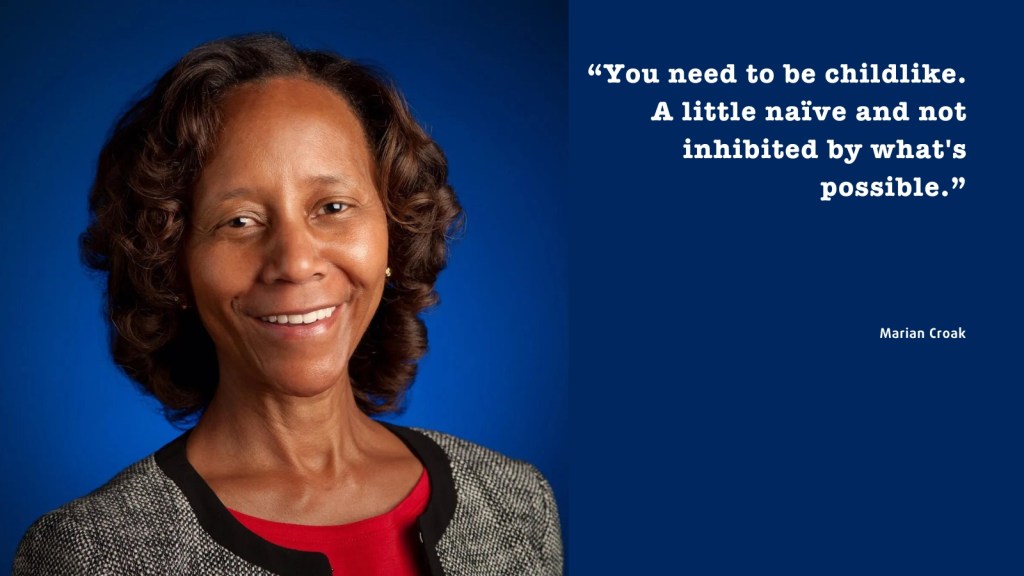
“You need to be childlike. A little naïve and not inhibited by what’s possible.” – Marian Croak
More than just VoIP
To say that she is a prolific inventor would be an understatement. Marian holds over 200 patents, about half of them related to VoIP developments. In 2022, she was one of the first two women of color to be inducted into the US National Inventors Hall of Fame.
Marian Croak is deeply committed to advocating for underrepresented groups in the tech industry. Throughout her career, she has been a passionate mentor and advocate for women and people of color, encouraging them to pursue careers in STEM (Science, Technology, Engineering, and Mathematics).
She has worked to create more inclusive and supportive environments within tech companies, emphasizing the importance of diversity in driving innovation. At Google, she continues to lead initiatives aimed at improving diversity and inclusion, leveraging her position to push for systemic changes that make the tech industry more fair.
Her efforts have inspired many and contributed to a broader movement toward greater representation in technology.
The story of Marian Croak continues
Marian Croak is still working at Google. She holds a senior leadership position as Vice President of Engineering. In this role, she leads efforts in site reliability engineering and is involved in projects focused on expanding internet access globally, as well as initiatives to improve the reliability and scalability of Google’s services.
Additionally, she continues to be an advocate for diversity and inclusion within the company, playing an active role in mentoring and supporting underrepresented groups in tech.
So, the next time you join a Teams meeting or use WhatsApp to send a voice memo, remember Marian Croak.
-
How to Create New Narratives for an Equal and Innovative Society With Ruben Brave | Show Notes to Episode 62 of Women Disrupting Tech
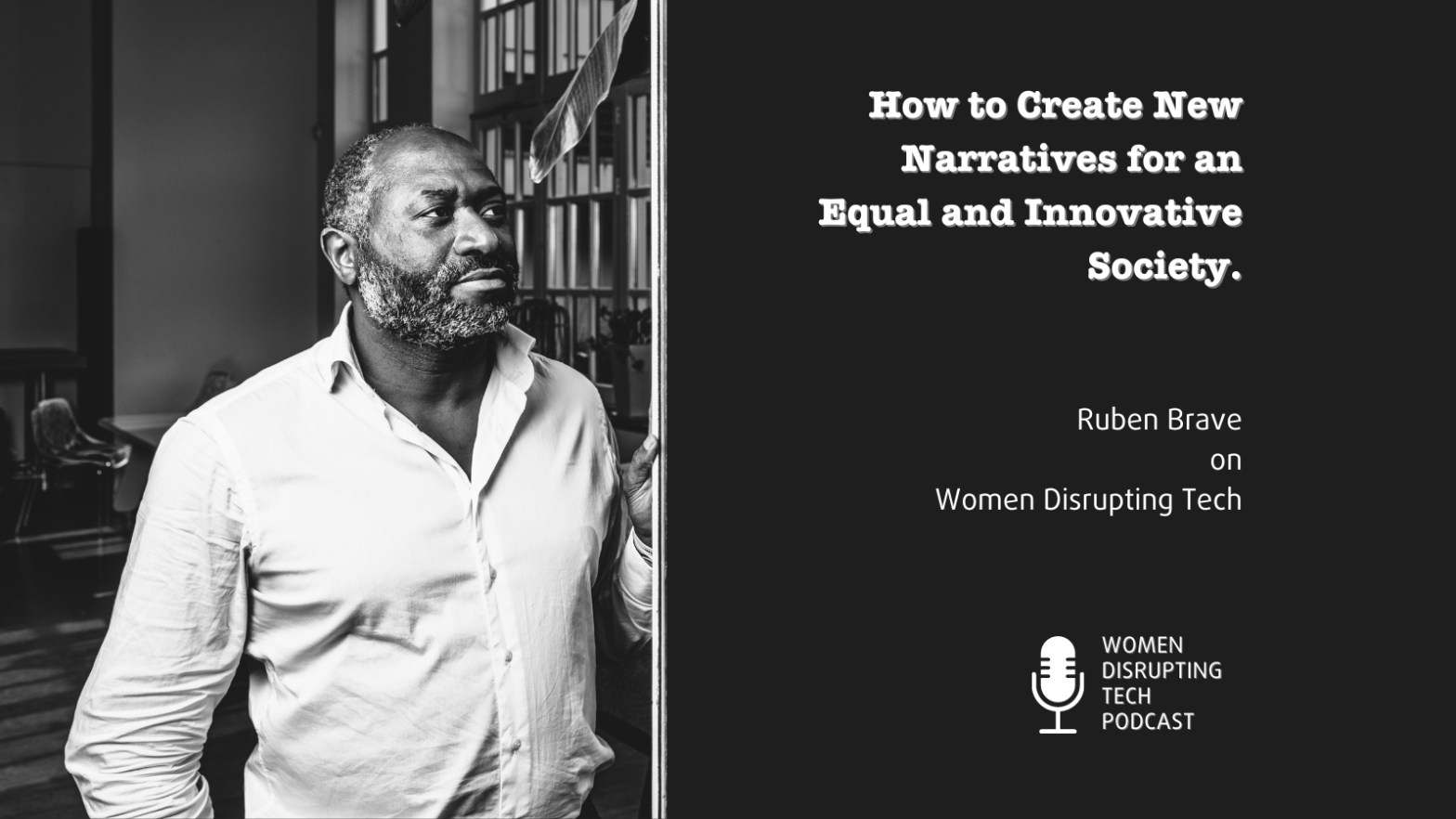
For the first time, we have a man on the show. And not just any man but Ruben Brave. As the founder of Dutch New Narrative Lab, Ruben is dedicated to creating new narratives that empower underrepresented founders.
In this Dutch episode, we explore Ruben’s personal experiences with racism in the boardroom, the systemic obstacles that prevent many from succeeding, and the important role men can play in dismantling these barriers.
Join us in this eye-opening conversation to learn how we can all contribute to a more equal and innovative society. Listen to episode 62 by hitting the play button below or scroll down for more information about Ruben and Dutch New Narrative Lab.
How to Create New Narratives for an Equal and Innovative Society With Ruben Brave | Ep. 62 – Women Disrupting Tech
The Magic You Can Expect in this Episode 🪄
An honest conversation. Not about diversity but about reality…
That is probably the best way to describe my conversation with Ruben Brave. He is the first man on Women Disrupting Tech. And for good reasons.
In episode 62, we explore Ruben’s personal experiences with racism in the boardroom, the systemic barriers faced by those who don’t fit the traditional mold, and the crucial role men play in breaking down these barriers.
Ruben also offers insightful advice for men who want to support his new narrative: start by asking women about their experiences and truly listen.
To hear this eye-opening conversation, find episode 62 of Women Disrupting Tech on Spotify, Apple, and YouTube, and hit play ⏯️. And let me know your thoughts about the episode in the comments.
No-cost ways to support the Women Disrupting Tech
When you’re ready to support my guests in making this podcast obsolete by the end of 2032, help out by doing these two things:
- Use the share button to share the podcast with friends, family, and co-workers. This way, you give the women disrupting tech the platform they need to make it happen. Use the buttons below to share.
- Rate the podcast on your favorite podcast platform. Better yet, leave a review. You can use a rating of one to five stars. This will help other people discover the podcast. And if you leave a review, it will help me improve.
What makes this episode magical🌟?
Ruben is really open about his own experiences and manages to translate them into concrete actions to change things.
In that sense, the Dutch New Narrative Lab is an apt name for his initiative. He practices what he preaches by removing the roadblocks that prevent people from underrepresented groups from getting access to the same opportunities as others.
In that sense, the example of a well-intentioned government initiative speaks for itself. Diversity can be considered a ranking factor for subsidy applications, but if diverse people do not apply, this ranking factor has no effect whatsoever.
But he also understands that most white people still have a long way to go. We need to develop empathy and not view feedback as an attack on us.
His advice to men is to ask women about their experiences, listen, and do some soul-searching about what their experiences mean to them. It’s the first step on a journey for a man to discover what his behavior does to women.
And if we take that a step further, the same is true when it comes to looking at people with another ethnicity, religion, and sexual preference.
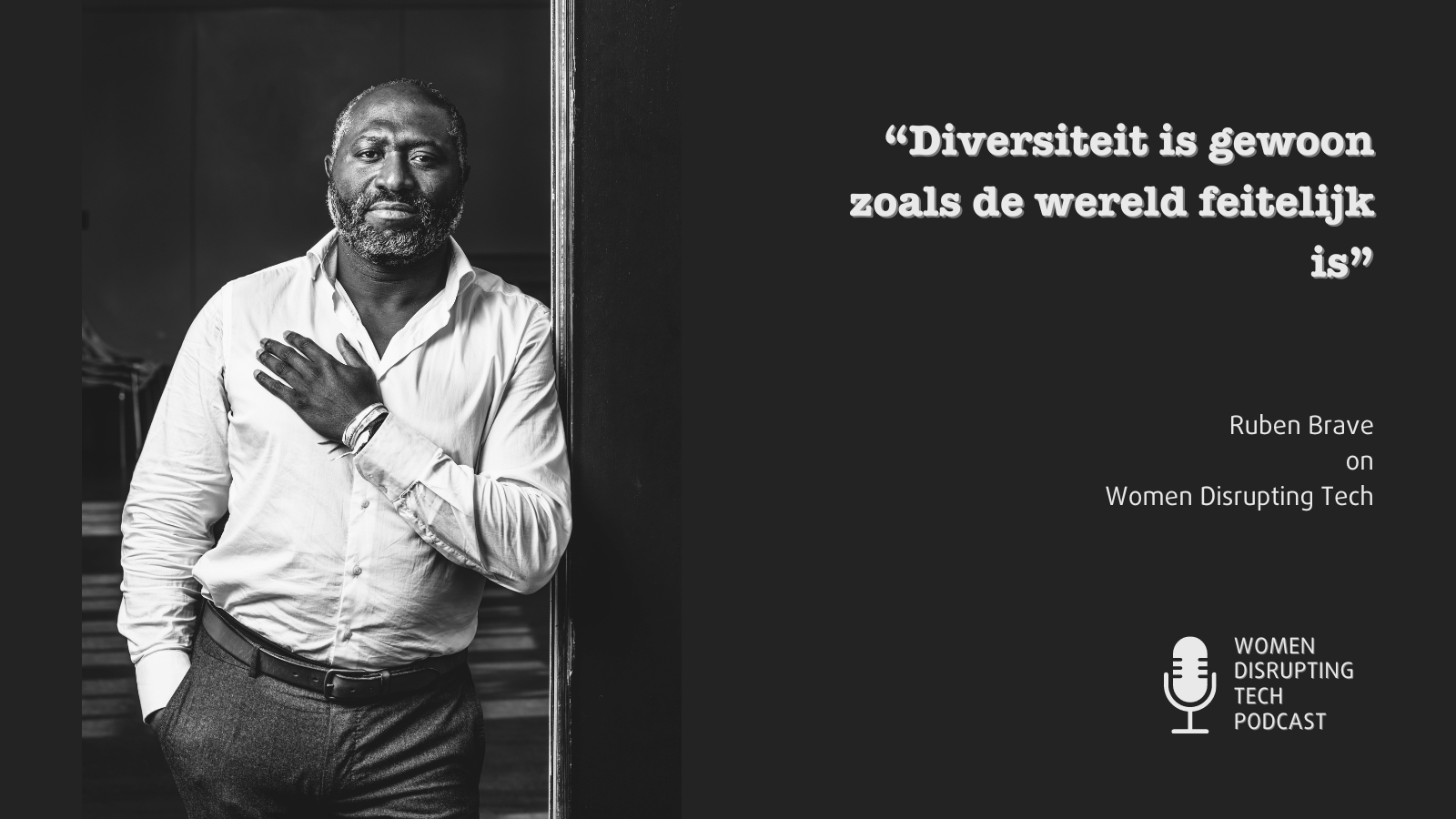
“Diversiteit is gewoon zoals de wereld feitelijk is.”
Ruben Brave, Founder Dutch New Narrative Lab
About Ruben Brave and the Dutch New Narrative Lab
Ruben Brave (1974) is a Dutch internet pioneer, media professional, serial tech entrepreneur, investor and Multi-Board Member. In 2004, he founded the academic business incubator Entelligence, in which startups of professors are kick-started (spin-offs) in the media, ICT, health, and education sectors.
Recently, he initiated the Dutch New Narrative Lab Foundation (DNNL) after conducting a Diversity Exploration in the Dutch startup ecosystem commissioned by the Dutch Ministry of Economic Affairs & Climate, for which he interviewed 350+ underrepresented founders and professionals.
I invite you to visit his website for a wealth of background information on his work. You can connect with Ruben on LinkedIn.
The Dutch New Narrative Lab aims to improve access to innovative entrepreneurship for all underrepresented groups in the Dutch startup ecosystem. It creates visibility for these entrepreneurs and thereby tilts the dominant standard image of “the innovative entrepreneur.” Among other initiatives, DNNL does this through its DNNL Launchpad and the unConference.
I encourage you to visit their website and invite you to follow them on LinkedIn or YouTube to learn more about their mission and programs.
Let me know what you think!
Please let me know your thoughts about this episode of Women Disrupting Tech in the comments.
I’m curious to hear about your experiences with racism and would love to hear if Ruben’s views resonate with you.
By the way, if you would like to suggest a guest that I absolutely must have on the podcast, send me an email or a DM on LinkedIn.
What’s coming up?
Next week on Women Disrupting Tech, Vedrana Rogoznica will tell us all about her startup, Rotoy. Rotoy teaches children how to program a robot. This approach helps them learn coding. Prepare for some serious female founder inspiration!
After that, Nara Moripen is my guest to discuss how her startup, Pal, is creating digital palliative care solutions for families affected by life-limiting diseases.
So stay tuned for more inspiring women disrupting tech and their male allies in season three of Women Disrupting Tech!
More episodes like this?
If you like to listen to more episodes like this one, here are a few recommendations.
– In episode 21, Marijke Kasius argued that we should stop pointing to diversity and start approaching it as normal. If you look at Ruben’s quote, I’m sure you can imagine the similarities in their positions. This episode is in Dutch.
– In episode 54, I talked to Kimberly Ofori. One of the things she mentions is that there are huge growth opportunities in Africa. But, the traditional financial system seems to overlook them. -
Women Who Built The Internet: Sandy Lerner

For the Internet to work, you need a network, right?
And when you say network, you say Cisco. This firm practically invented networks.
But did you know that a woman co-founded Cisco?
Therefore, I want you to meet Sandra Lerner. With Cisco she pioneered in building local area networks. She built the foundations for what is now standard: having a network connection everywhere we go.
Cisco developed the first commercially successful multi-protocol router. The impact of this invention can be summarized as ‘no router, no network, no internet.’
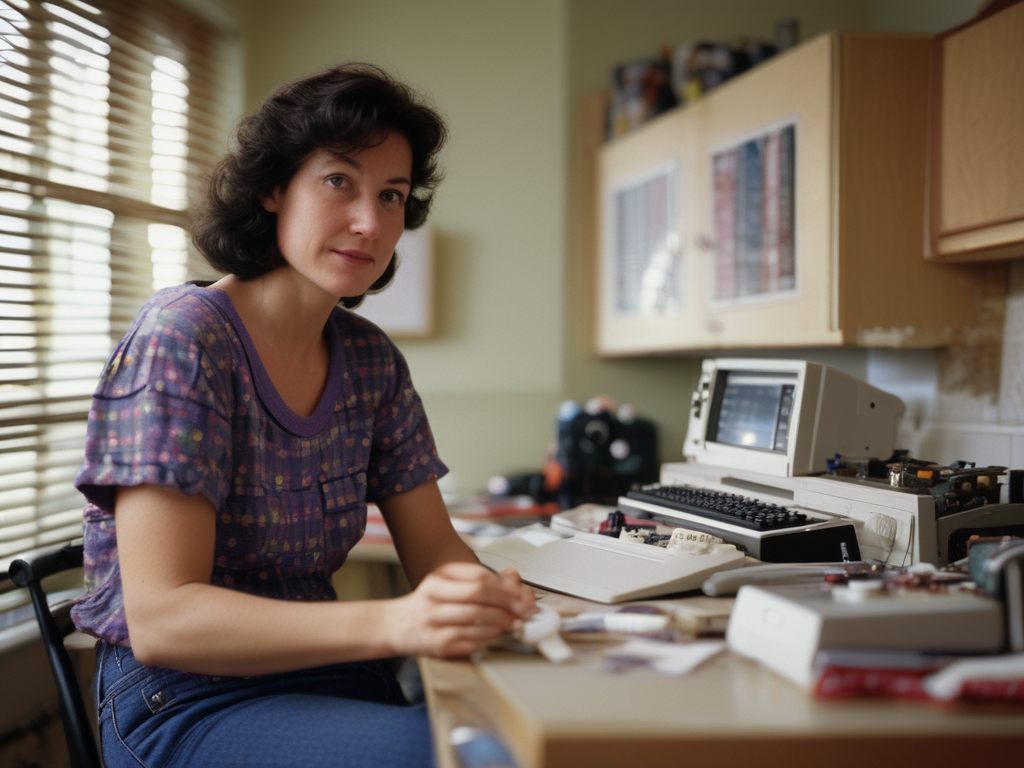
AI-generated image of Sandra Lerner while developing the first Cisco router. About Sandra Lerner
Sandra “Sandy” Lerner was born in 1955 and grew up in California. She wasn’t your typical girl. She was fiercely independent and showed an early interest in the sciences and technology.
Her academic career is quite impressive. She first earned a bachelor’s degree in political science from California State University. She went on to earn a master’s degree in econometrics from Claremont University and a master’s degree in statistics and computer science from Stanford University in 1981.
While working for Stanford University, she met her partner and co-founder, Leonard Bosack. Together they founded Cisco in 1984.
Her contribution to the Internet
If you say Cisco, you say routers. Cisco pioneered Local Area Networks (LAN), which connected devices within a limited area. They developed the Advanced Gateway Server (AGS) router in 1986. This technology proved crucial for the development of ethernet and Wi-Fi.
It all started when Lerner and Bosack worked on a project to better connect all of Stanford’s computer systems. They later adapted Stanford software into what would become the foundation for Cisco’s operating system.
Cisco was not the first company to develop and sell dedicated network nodes. But it was one of the first to sell commercially successful routers supporting multiple network protocols.
This innovation enabled businesses, governments, and individuals to communicate more efficiently and effectively, forever changing the landscape of global communication.
No ‘happily ever after’
Despite her significant contributions, Sandy Lerner’s journey with Cisco ended abruptly in 1990. They were forced out of the company after it went public and after a power struggle with the board of directors.
Lerner and Bosack were known for their unconventional and hands-on approach, which sometimes clashed with the board’s wish for a more traditional corporate structure. The couple felt their innovative and entrepreneurial spirit was being stifled, and when Lerner was fired, Bosack resigned in solidarity,
That was a bitter end because they had built Cisco from the ground up. It became even more bitter when the couple divorced shortly after.
They set up the company well, though. Cisco would continue to thrive and become a global leader in networking technology. As of 3 August, the company is valued at US$192 Bio.
Lerner’s legacy
Today, Sandy Lerner’s influence extends far beyond the tech industry. After leaving Cisco, Lerner began managing sustainable farms in California.
She also used part of the proceeds from the sale of Cisco stock to found a start-up venture capital firm called & Capital Partners. One of the companies it funded was Urban Decay Cosmetics, which she also co-founded. Urban Decay, now a subsidiary of l’Oreal, is a cosmetics company known for its commitment to cruelty-free products.
These ventures showcase her versatility and ability to disrupt industries outside of technology.
Conclusion
Sandra Lerner is one of the women who built the Internet because, without the router that she helped to build, there would be no network connectivity. She founded multiple startups, and her impact extends beyond technology.
Sandra Lerner’s story is a powerful reminder of the challenges faced by visionaries in navigating corporate dynamics, especially in male-dominated industries. Her legacy at Cisco remains a testament to her pioneering spirit and the transformative impact of her work.
-
Living a Sustainable Life with Asceline Groot & Wyke Potjer | Show Notes to Episode 61 of Women Disrupting Tech

Living a sustainable life: People think it is complicated. And they believe that it means giving up on luxury and comfort.
So, how can you start living a sustainable life? Where can you find reliable research and information about sustainable lifestyles or inspiring examples of how other people do it?
To find out the answers, I interviewed Asceline Groot and Wyke Potjer from the Dutch sustainability platform het kan WEL.
When you’re ready to learn how to live a sustainable life, press play. Or scroll down to read more about the episode.
Living a Sustainable Life with Asceline Groot & Wyke Potjer | Episode 61 of Women Disrupting Tech – Women Disrupting Tech
The Magic You Can Expect in this Episode 🪄
Since 2005, hetkanwel.nl has been the answer to questions about living a sustainable life. So, when Johan Oudshoorn connected me with Asceline Groot and Wyke Potjer, I did not have to think long about making an episode of Women Disrupting Tech with them.
In episode 61, Wyke and Asceline take us on a journey into the world of sustainable living. In the longest episode of Women Disrupting Tech to date, they talk openly about:
♻️ Persuading people in a growth-centered world to consume less.
🤝 Ensuring that their business partners share their definition of sustainable living.
🌎 ‘Anders Wonen’, their new book with inspiring stories from pioneers in sustainable living.Of course, they share many, and I mean many, tips on how to live sustainably. I’ll give you the most important one: Just start!
To hear them, find episode 61 of Women Disrupting Tech on Spotify, Apple, and YouTube, and hit play ⏯️. And let me know if the tips made your life easier in the comments.
No-cost ways to support the Women Disrupting Tech
As a man in tech, your aim is to support my guest to make this podcast obsolete by the end of 2032. And you can help by doing these two things:
- Use the share button to share the podcast with friends, family, and co-workers. This way, you give the women disrupting tech the platform they need to make it happen. Use the buttons below to share.
- Rate the podcast on your favorite podcast platform. Better yet, leave a review. You can use a rating of one to five stars. This will help other people discover the podcast. And if you leave a review, it will help me improve.
Of course, you can do these things when you’re a woman, too.
What makes this episode magical🌟?
We had a blast recording this episode, so much so that we forgot about the time. As a result, the episode is longer than usual, without becoming boring.
What I love about the episode is that it invites you to take a different perspective on growth and consumption.
Many people see a sustainable lifestyle as a step back. They think they have to give up luxury and comfort. But Wyke argues that you get back a different kind of luxury: time to enjoy. Truly a scarce commodity.
The change in perspective comes up many times. Like when we talk about starting a sustainable lifestyle. And when we learn about the examples of sustainable building and living in their book.
Asceline shares the inspiring example of the Land van Aine in the northeast of The Netherlands. People in this community focus on enjoying life and taking things step by step. Their minimalist approach does not come at the expense of their happiness.

“Sustainable living opens up a whole new world for you, with possibilities and joy.”
Wyke Potjer, Partner at hetkanWEL
About Asceline, Wyke, and hetkanWEL
Asceline Groot and Wyke Potjer together run hetkanWEL. They’ve written two books together, the latest ‘Anders Wonen‘ on sustainable living.
Asceline Groot has worked her entire career in sustainability. She has initiated, developed, and managed different online and offline communities, entrepreneurial platforms, and programs for, among others, a Dutch newspaper and a Dutch sustainable bank. She also holds a PhD in the idea development of startup social enterprises. You can connect with her on LinkedIn.
Wyke Potjer has worked in journalism for more than twenty years, specializing in sustainability and sustainable lifestyles for the past decade. Next to her contributions to NPO Radio 1, she writes columns, conducts interviews, and contributes articles. Her work can be found on online platforms, in the printed press, and publications of several sustainable companies and organizations. You can also connect with Wyke on LinkedIn.
Hetkanwel.nl, ‘het kan wel’ loosely translates to ‘yes, you can,’ is the platform for a greener, fairer, and happier life. The website was voted ‘best sustainable website of the year’ for 2019, 2020, and 2021. In addition to a blog, it has a community of 5,000 people. These individuals are willing to take part in research and tests of sustainable products. I invite you to visit their website and to follow hetkanwel.nl on LinkedIn, Instagram, Facebook, Pinterest, and X/Twitter.
Let me know what you think!
When you’ve finished listening to this episode of Women Disrupting Tech, please let me know what you think about it in the comments.
I’d love to learn if the episode inspired you to start a sustainable lifestyle or take the next step.
By the way, if you would like to suggest a guest that I absolutely must have on the podcast, send me an email or a DM on LinkedIn.
What’s coming up?
Next week on Women Disrupting Tech, we have a special episode. Because, for the first time, I will have a man as a guest. And I can promise you it is worth listening to. This episode will be in Dutch.
And last Monday, I interviewed Vedrana Rogoznica about her startup, Rotoy. Rotoy teaches children how to program a robot. This approach helps them learn coding. Prepare for some serious female founder inspiration!
So stay tuned for more inspiring women disrupting tech and their male allies in season three of Women Disrupting Tech!
More episodes like this?
If you like to listen to more episodes like this one, here are a few recommendations.
– In episode 33, I spoke with Rolien Wiersinga about her company, Circular Green, which offers ‘plants as a service’.
– In episode 13, I interviewed Florentine Gillis about how you can give your closet an extra life. It’s the best listened to episode so far.Both episodes are in Dutch.
-
Women Who Built The Internet: Evelyn Berezin

Many inventions related to the Internet have been attributed to men. However, some of the key technologies that the Internet is built on actually originated from women’s inventions.
Like the word processor. The word processor is now one of the most used applications on any computer. It makes the lives of writers, journalists, bloggers, and secretaries a lot easier.
But we would all still be using a typewriter if Evelyn Berezin, a female founder of a tech startup, had not invented the Data Secretary in 1969.

AI-generated image of Evelyn Berezin while building the first Data Secretary. About Evelyn Berezin
Evelyn Berezin was born in 1925 in New York. She was the daughter of Russian immigrants. During her youth, she got very interested in mathematics and science, which led her to earn a degree in physics from New York University.
From 1951 to 1969, Berezin worked for several computer startup companies, learning logic design and other systems. Challenging societal norms and barriers, she was often the first or only woman technologist at these companies.
From 1957 to 1961, she worked for Teleregister, Inc. on the development of the world’s first airline reservation system.
Berezin felt that, as a woman, she could not become a senior manager at an established computer company, so she started her own, Redactron Corporation. With that, she became a female founder avant-la-lettre.
“At that time the idea that a person who was a manager might give up his secretary because he could do it himself did not exist. The men did not want to buy those machines because they were afraid they would lose their secretary, which would mean some diminution of status for them.” – Evelyn Berezin
Her contribution to the Internet
Evelyn Berezin is best known for inventing the word processor. The machine was called Data Secretary. She did so in 1969, a time when computers were in their infancy.
The initial model was the size of a small refrigerator and had no screen. Later versions of Redactron came with monitor screens for text, smaller consoles, and more programmed features to smoothen the writing and editing tasks.
Even though the technology was groundbreaking and the business case was clear, selling the machine turned out to be challenging. As she recalls, “At that time, the idea that a person who was a manager might give up his secretary because he could do it himself did not exist. The men did not want to buy those machines because they were afraid they would lose their secretary, which would mean some diminution of status for them.”
What goes up…
The Data Secretary was good business for quite a while. Her company was the only one that manufactured and sold these revolutionary machines for $8,000 a piece. Her clients were mostly law firms and corporate offices. By 1974, her company already had a revenue of $16,2 million per year.
However, staggering inflation and high interest rates ultimately forced her to sell her company to the Burroughs Corporation in 1976. She stayed on until 1979.
From 1980 to 1987, she was a General Partner at Greenhouse, a venture capital group dedicated to early-stage high-technology companies.
A lasting legacy
Evelyn Berezin’s work laid the foundation for modern word processing and had a lasting impact on the evolution of computer technology. She was an extraordinary female pioneer during the first three decades of an overwhelmingly male computer industry
As the New York Times pointed out in her obituary, Evelyn Berezin “liberated secretaries from the shackles of the typewriter” with her invention.
As one of the first electronic word processors aimed at simplifying secretarial work, the Data Secretary helped open up new career growth opportunities for women in business and technology.
And, without her, as Gwyn Headley aptly put it, “there would be no Bill Gates, no Steve Jobs, no internet, no word processors, no spreadsheets; nothing that remotely connects business with the 21st century.”
She was inducted into the National Inventors Hall of Fame in 2022, and her legacy as a trailblazing female entrepreneur in a male-dominated field continues to inspire future generations of women in tech.
-
Reinventing Capital Markets with Mesh’s Connie Bloem | Show Notes for Episode 60 of Women Disrupting Tech
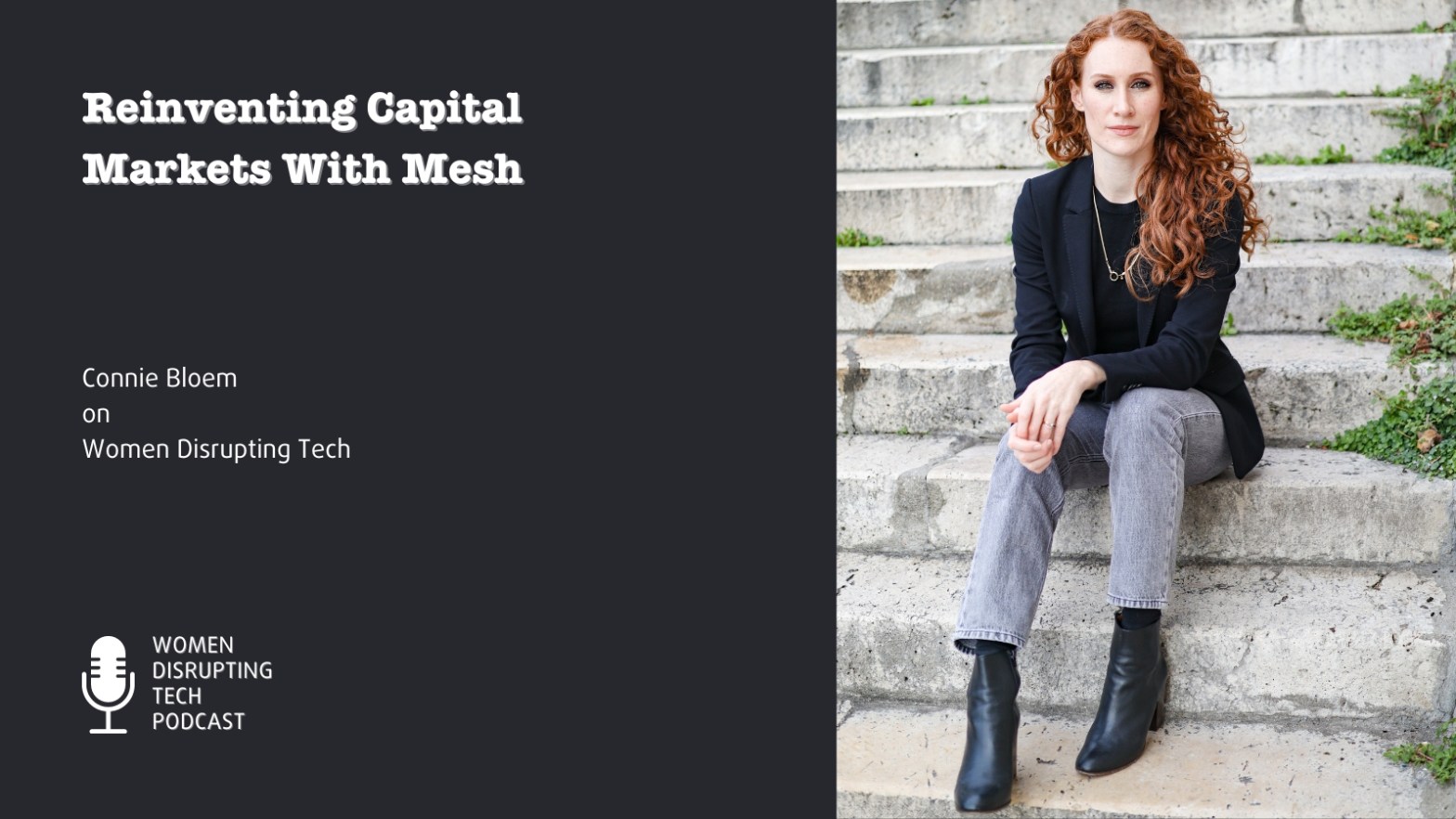
What does it take to build the future of investing? Where do you start to reinvent capital markets? How do you build trust with customers, investors, and regulators?
When you’re ready to hear the answers, listen to episode 60 of Women Disrupting Tech with Connie Bloem. With Mesh, she is reinventing capital markets from the ground up.
To listen to her incredible story, press the play button or read more about the episode by scrolling down.
Reinventing Capital Markets With Mesh's Connie Bloem | Episode 60 of Women Disrupting Tech – Women Disrupting Tech
The Magic You Can Expect in this Episode 🪄
In episode 60 of Women Disrupting Tech, we discover the future of investing. Connie is our guide as we learn about
👩🏼🏫 her unique journey into finance,
🚧 the hurdles of building trust with regulators and customers and
👥 the importance of a diverse team in developing innovative solutions on the blockchain.Plus, you’ll discover why women should use their unique strengths rather than playing the men’s game in finance.
To hear that and more, find episode 60 of Women Disrupting Tech on Spotify, Apple, and YouTube, and hit play ⏯️.
No-cost ways to support the Women Disrupting Tech
As a man in tech, you want to support Connie and the other women on the podcast to make this podcast irrelevant by the end of 2032. And you can help by doing these two things:
- Use the share button to share the podcast with friends, family, and co-workers. This way, you give the women disrupting tech the platform they need to make it happen. Use the buttons below to share.
- Rate the podcast on your favorite podcast platform. Better yet, leave a review. You can use a rating of one to five stars. This will help other people discover the podcast. And if you leave a review, it will help me improve.
Of course, you can do these things when you’re a woman, too.

AI-generated image of a woman who is reinventing capital markets on the blockchain.
What makes this episode magical🌟?
Did you know that only 4.9% of blockchain and crypto founders are women? So, being able to interview one of them on this podcast is already remarkable.
But there’s more. In this episode, we feature yet another talented young woman with a passion for building a better planet. Connie’s dedication to making investing accessible, easy to use, and transparent is genuinely inspiring.
The solution she is building with Mesh is a miracle of complexity. So, getting to the point where it’s at didn’t come easy. Just imagine having to do this in an environment where trust is rare. On top of that, startup funding dried up last year as we left zero-interest rate territory. Succeeding to find funding and, recently, becoming a regulated service provider is a piece of magic in itself.
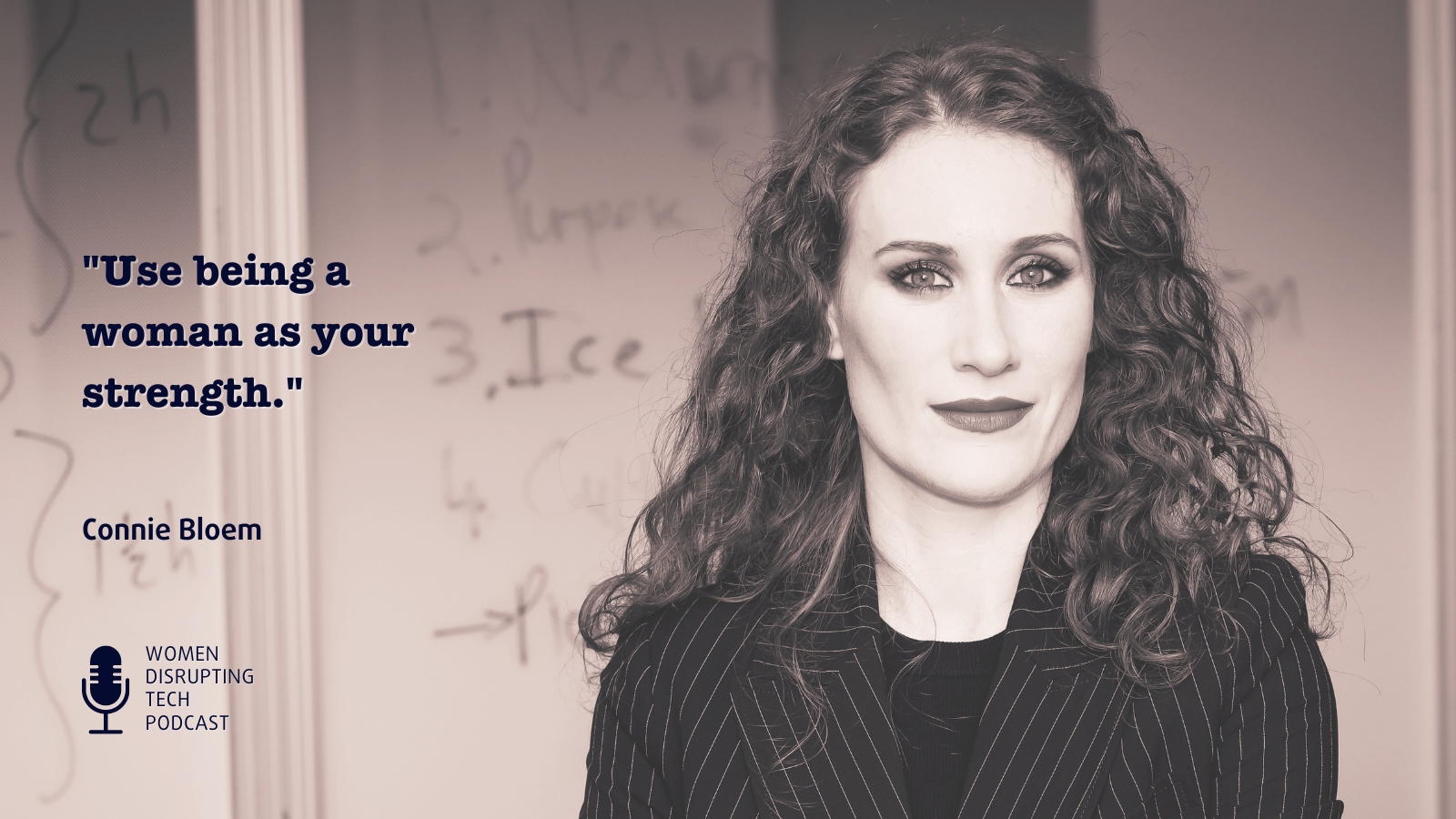
“Use being a woman as your strength.”
Connie Bloem, Co-founder and Managing Director of Mesh
About Connie Bloem and Mesh
Connie Bloem is the managing director and co-founder of Mesh. She holds bachelor’s degrees in industrial engineering and financial engineering from Pretoria University. Prior to starting Mesh, she worked for Accenture and Andile on solutions for capital market participants. You can follow her journey and connect with her on LinkedIn.
Mesh is a fully regulated crypto-asset platform based in The Netherlands. Mesh aims to make capital markets easy to access, simple to use, and transparent through the tokenization of real-world assets on the blockchain. You can learn more about Mesh’s journey by visiting its website and following it on LinkedIn and X/Twitter.
And when you’re ready for more on the future of capital markets on the blockchain, you should read this McKinsey article about the power and waves of tokenization.
Let me know what you think!
When you’ve finished listening to this episode of Women Disrupting Tech, please let me know what you think about it in the comments.
I’d love to hear your thoughts on Connie’s statement that women should play to their own strengths rather than playing the game of men.
By the way, if you would like to suggest a guest that I absolutely must have on the podcast, send me an email or a DM on LinkedIn.
What’s coming up?
Next week on Women Disrupting Tech, Asceline Groot and Wyke Potjer will guide us as we discover how to live a happy, healthy, and sustainable life.
After that, we have a special episode. Because for the first time, I will have a man as a guest. And not just any man: Ruben Brave. This episode will be in Dutch.
So stay tuned for more amazing women disrupting tech and their male allies in season three of Women Disrupting Tech!
More episodes like this?
If you like to listen to more episodes like this one, here are a few recommendations.
– In episode 54, Kimberly Ofori and I talked about the power of financial inclusion and how it can help us build a more sustainable world.
– In episode 35, Joanna Pamphilis shares the value proposition of having more women in IT and digital.
– In episode 4, I talked to Puck Landewé about her mission to help 1 million women become financially independent. The episode is in Dutch. -
Women Who Built The Internet: Marie Van Brittan Brown

What do you do when you’re working as a nurse, and you’re frustrated by the lack of response from the local police to crime?
Write your member of Congress? Start a protest rally at 1 Police Plaza? Invent a home security system?
Meet Marie Van Brittan Brown. In 1966, she and her husband took option number 3 and invented the home security system, including CCTV. Therefore, I invite you to discover more about her below.
AI-Generated image of Marie Van Brittan Brown About Marie Van Brittan Brown
Marie van Brittan Brown was born on 30 October 1922 in Jamaica, Queens, New York, and lived there until her death on 2 February 1999. Little is known about her early life.
At the time she invented the home security system, she worked as a nurse, and her husband, Albert Brown, was an electronics technician.
In the neighborhood where they lived, Jamaica, the crime rate shot up in the early 1960s by 35%. But the police weren’t doing much about it. When coming home late at night, Marie often felt unsafe, even at home.
Her contribution to the Internet
Frustrated by the lack of police response, she and her husband developed a system with cameras, closed-circuit televisions, wirelessly controlled locks, and a button that could send an alarm signal to police or security.
Her invention was patented in 1969 and received a decent amount of press attention. Marie was quoted in the New York Times saying that with her invention, “A woman alone could set off an alarm immediately by pressing a button, or if the system were installed in a doctor’s office, it might prevent holdups by drug addicts.”
No profit, but a lasting legacy
The female black inventor and her husband were far ahead of her time and never saw a dollar of proceeds from their invention. At the time, the cost of equipment was too high to make the technology attractive to manufacturers and home builders.
Even though the Browns never profited from their invention and patent, Marie’s home security system was the first in a long string of home security inventions. It laid the foundation for other versions of various security systems that are used today in homes, businesses, and some private and public places.
As of July 2024, Brown’s patent had been cited in 38 patent applications, and she received an award from the National Science Committee for her invention.
Role model for Women In Tech
Like a true role model, Marie inspired her daughter, Norma Brown, to follow in her footsteps. Norma became a nurse and an inventor with more than ten inventions to her name.
So, the next time you answer the doorbell on your phone from the convenience of your couch, thank Marie Van Brittan Brown.
-
Making Data Protection Byte Size with eXate CTO Sonal Rattan | Show Notes for Episode 59 of Women Disrupting Tech
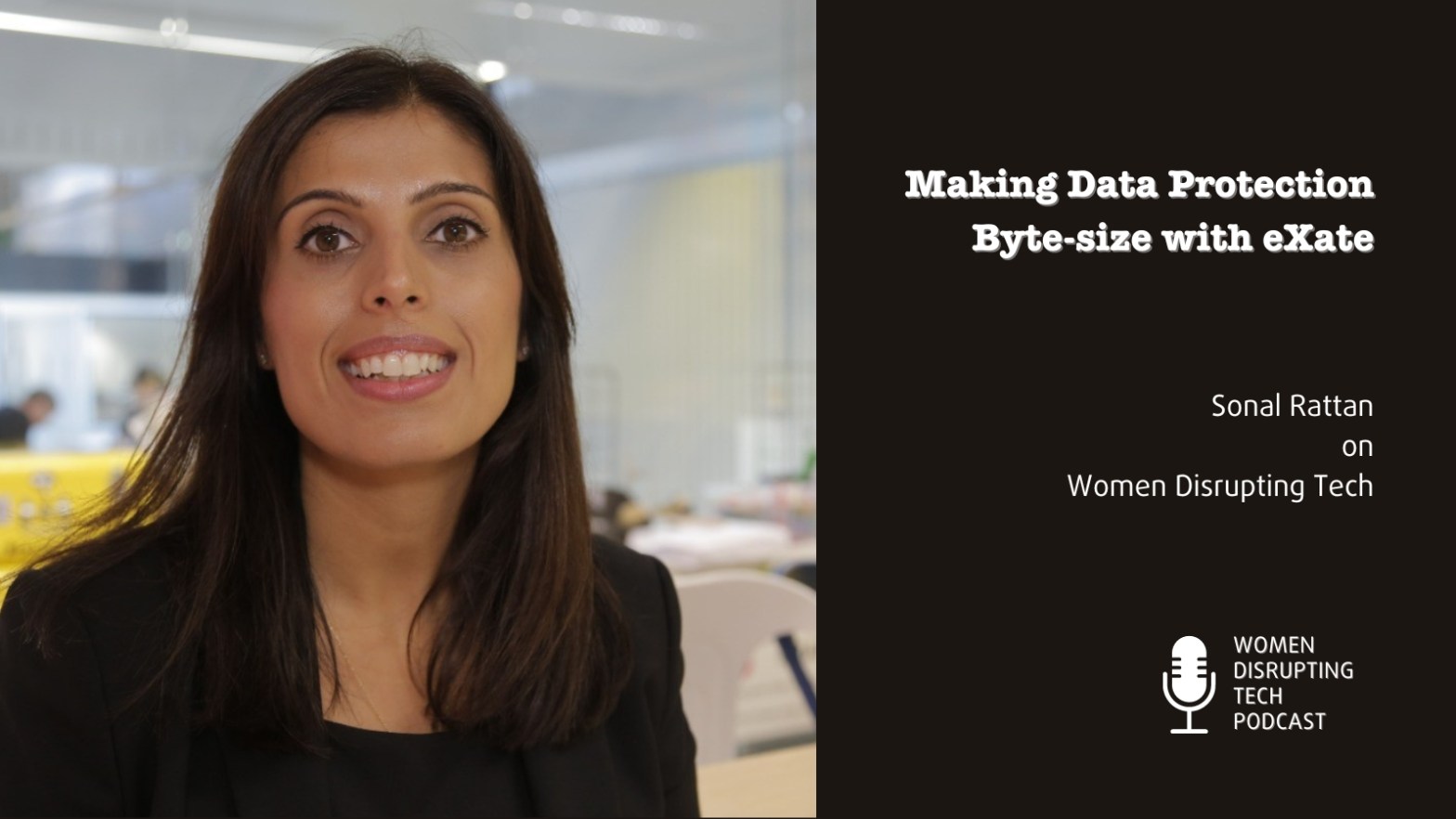
Are you in for a story of innovation, resilience, and breaking barriers?
Then you’re in for a treat. Because in episode 59 of Women Disrupting Tech, I interview Sonal Rattan. She is the co-founder and CTO of eXate and the first female CTO of a startup on the show.
Together with a diverse team, she is building the future of data protection. It’s a journey that began at her kitchen table and that involves more than just writing a piece of code.
To tune in to this magical conversation, press the play button or read more about the episode by scrolling down.
Making Data Protection Byte Size with eXate CTO Sonal Rattan | Episode 59 of Women Disrupting Tech – Women Disrupting Tech
The Magic You Can Expect in this Episode 🪄
Episode 59 of Women Disrupting Tech covers not one but two stories. The one of Sonal and that of her daughter.
Listen and learn as Sonal and I talk about
🚀 Her own journey from running technology teams at a bank to being a CTO and co-founder of an innovative Fintech startup.
💪 The resilience she and her co-founder needed while building a solution that businesses will embrace.
🚧 The barriers that the tech industry needs to break to solve its branding problem with women.Plus, you’ll discover that men can be great models for women in tech, too.
When you’re ready to listen and learn from Sonal Rattan what the future of data protection looks like, find episode 59 of Women Disrupting Tech on Spotify, Apple, and YouTube, and hit play ⏯️.
Free ways to support the Women Disrupting Tech as a man
As a man in tech, you want to support Sonal and the other women on the podcast to make this podcast irrelevant by the end of 2032. And you can help by doing these two things:
- Use the share button to share the podcast with friends, family, and co-workers. This way, you give the women disrupting tech the platform they need to make it happen. Use the buttons below to share.
- Rate the podcast on your favorite podcast platform. Better yet, leave a review. You can use a rating of one to five stars. This will help other people discover the podcast. And if you leave a review, it will help me improve.
Of course, you can do these things when you’re a woman, too.

AI-generated image of a woman sitting behind a computer to develop a data protection solution for large multinationals.
What makes this episode magical🌟?
Sonal’s passion, knowledge, and engaging storytelling make this episode an extraordinary experience. For example, when she shares the discussions around the kitchen table with her co-founder about her initial solution, she is told that her solution would not work. She takes on the challenge of rebuilding her solution to fit his specifications and ends up with a better product.
In addition, she is the first female CTO on the show and hopefully one of many to come.
One particular anecdote stands out – the story of her daughter’s journey into tech. It underlines the struggle that young women (and indeed young people) have to go through to get into tech. Encouraged by her mother, she took a computer science class at school only to discover that she absolutely hated it.
Then, she participated in some projects for tech companies to discover that she loved AI. This highlights the importance of making tech education more practical and engaging for young people.
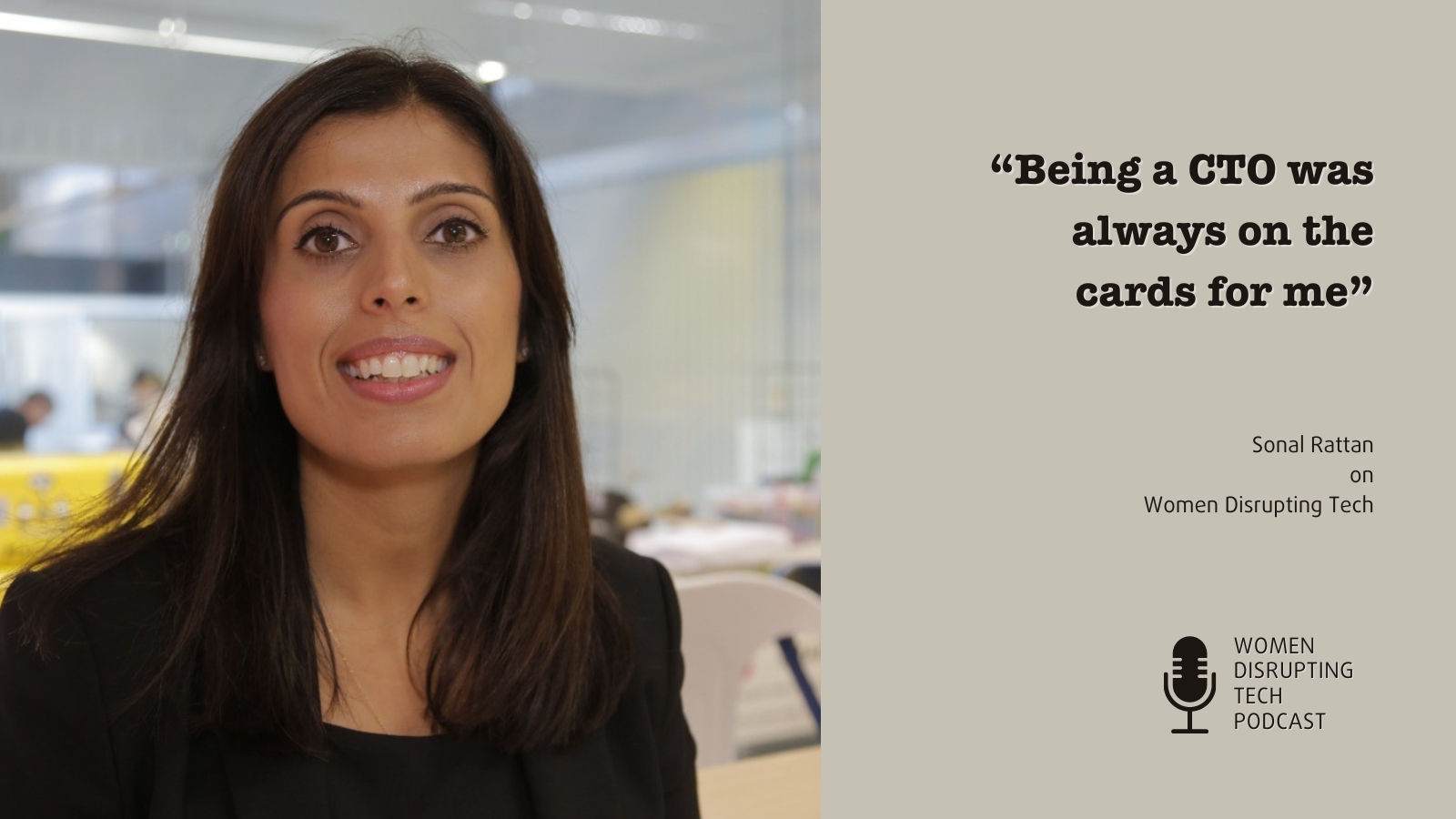
“Being a CTO was always on the cards for me.”
Sonal Rattan, CTO and Co-founder of eXate
About Sonal Rattan
Sonal Rattan is the co-founder and Chief Technology Officer at eXate. Before founding eXate as part of ING Labs, she worked in various tech capacities for large multinational banks like HSBC and UBS. You can follow her journey and connect with her on LinkedIn.
Exate is reshaping the future of data protection to make it easy. Their solution helps multinational companies let data flow across borders while ensuring compliance with data protection, privacy, and security regulations. You can find more information about eXate on their website and follow them on Twitter/X, Facebook, and LinkedIn.
Let me know what you think!
When you’ve finished listening to this episode of Women Disrupting Tech, please let me know what you think about it in the comments.
I’m curious to learn how you view tech education at primary and middle schools. Is it practical enough? And, if not, how can we make it more appealing to young people.
By the way, if you would like to suggest a guest that I absolutely must have on the podcast, send me an email or send me a DM on LinkedIn.
What’s coming up?
Next week on Women Disrupting Tech, we’ll go on the blockchain as Connie Bloem explains how she is building the future of investing with Mesh.
After that, Asceline Groot and Wyke Potjer will be our guides as we discover how we can live a happy, healthy, and sustainable life.
So stay tuned for more amazing women disrupting tech and their male allies in season three of Women Disrupting Tech!
More episodes like this?
If you like to listen to more episodes like this one, here are a few recommendations.
– Martine van de Gaar’s startup Linksight is solving a similar problem: sharing large data sets between companies. Episode 50 features an interview with Martine.
– Sujata Dasgupta helps companies prevent cybercrime. In episode 24, we hear how she takes inspiration from the dark side while remaining an eternal optimist. -
Women Who Built The Internet: Grace Hopper

If you would research the history of the internet, you’d be forgiven for believing that building it was a man’s affair. But the contrary is true. Therefore it is time to highlight the women who built the Internet.
This edition is about a woman without whom may not have had a language to program computers, let alone programs to translate human language into code. Plus, without her, we would not be debugging.
Meet Grace Hopper
AI-generated picture of Grace Hopper Grace Hopper
Grace Murray Hopper was a truly amazing woman. In fact, the US Navy called her “Amazing Grace” when she was a Rear Admiral. And with good reasons: she was a true computer science pioneer and a trailblazing woman in tech.
Born in 1906, Grace Hopper was fascinated by machines and how things worked from a young age. She graduated from Vassar College with a degree in mathematics and physics. After that, she earned a Ph. D. in Mathematics at Yale University, a remarkable feat for a woman at that time.
Her contribution to the Internet
One of Hopper’s most significant contributions to computer science was developing the first compiler. In the early 1950s, while working at Remington Rand, she created the A-0 System. This revolutionary tool translated human-readable code into machine code.
This innovation made programming more accessible and efficient, laying the groundwork for the development of modern programming languages.
Hopper once said, “The most dangerous phrase in the language is, ‘We’ve always done it this way.’” Her creation of the compiler is an excellent example of this belief.
It challenged the status quo and opened up new possibilities in computing.
COBOL
Grace Hopper’s influence didn’t stop with the compiler. In 1959, she played a crucial role in the development of COBOL (Common Business-Oriented Language). COBOL’s user-friendly nature allowed businesses to automate processes efficiently.
COBOL remains in use today. That’s a testament to Hopper’s forward-thinking approach. Her work in creating COBOL exemplified her commitment to making technology accessible and practical for all.
Debugging
An interesting anecdote about Grace Hopper is about how she coined the term “debugging.”
While working on the Mark II computer at Harvard University in 1947, Hopper and her team ran into a problem: the computer was malfunctioning.
When they investigated it, they found a moth inside the machine. This was causing an electrical fault. Hopper carefully removed the moth and taped it into the logbook, jokingly noting that they were “debugging” the system.
With that, she gave birth to a term that has become fundamental in the world of computing and the Internet.
More Women Who Built The Internet?
For more inspiring stories about the Women Who Built The Internet, subscribe to this blog or to my newsletter on LinkedIn.
And, on my podcast Women Disrupting Tech, I interview modern-day Grace Hoppers, who are changing the face of tech and inspiring you to follow in their footsteps.
Women Disrupting Tech | The Podcast
The Podcast Closing the Funding Gap for Women in Tech.
 Women Disrupting Tech | The Podcast