-
Why defunding tech companies without a DEI Policy does not work (and what does)

In June, I participated in a roundtable discussion at the TNW Conference, organized by the Dutch DEI coalition. The purpose was to discuss how to translate the existing data on DEI into concrete actions.
One proposed step was to have tech investors only invest in companies with a D&I policy. This step should serve as an incentive for companies to start promoting diversity.
And I don’t think that’s the right step for three reasons.
A policy is just paper unless you act on it.
For starters, it leads to the same result I’ve seen in Compliance in the early years: It’s just there on paper. Having a policy is meaningless, as most companies with a D&I policy don’t actually do something meaningful with it. They outsource D&I to some overworked and underpaid person without an influence on how the business is run to keep the outside world quiet. But they get the funding anyway because they can tick the box.
Just requiring a policy works the wrong way
Also, the incentive works in the opposite way as intended. Research into investments in ESG indices has shown that defunding Oil & Gas companies has not led to better behavior in terms of responding to climate change. On the contrary, these companies put off making the necessary investments in better equipment and practices and move harmful operations to countries with less rigorous emission rules to avoid the problem. So, effectively it would have the effect of defunding all Diversity, Equity and Inclusion efforts. And that is not really what we want or need.
A DEI Policy can’t cure the catch-22 that we’re in
Thirdly, implementing real D&I is about breaking the current catch-22 situation. As long as we teach girls and young women that tech is unsafe, convincing them to work there will be challenging. And since you can’t be what you can’t see, if we don’t promote the women who are working in tech, we do not set the example that we need.
What should we do instead?
And that brings us to one effective action every company can take. We know from data that women tend to follow their peers. As a result, promoting and celebrating the existing diversity in the workforce is a great way to bring about positive change.
Role model campaigns like that of Equals, who literally put the faces of the women already working in tech on every bus and tram stop in Amsterdam and The Hague to celebrate International Women’s Day, are a great example of how positive attention to the topic can make a splash.
Should we abolish DEI policies?
Of course, there are many more things we can do to promote diversity in tech. And having a policy can guide us in the right direction. That is, if we also can show real-life examples of how it can be implemented.
-
The Power of Role Models for More Gender Equality | Dieuwke van Buren on Women Disrupting Tech

Only 18% of those working in the tech industry are women. And I don’t need to explain anymore that this is too low. But how do you ensure that women choose tech so that this percentage increases?
To answer that question, I spoke to Dieuwke van Buren. As the Managing Director of Equals, she wholeheartedly champions diversity in tech and entrepreneurship. You can listen to the Dutch-spoken episode below or scroll down to learn what we discussed.
"Die 18 procent heeft toch wel hele mooie, toffe vrouwen…" | Dieuwke van Buren on Women Disrupting Tech – Women Disrupting Tech
You Can’t Be What You Can’t See
The answer, although simple, carries a touch of magic: We empower them by showcasing examples of women who have already paved the way. Among that 18%, there are remarkable women, says Dieuwke.
Extensive research underscores a powerful truth: When women contemplate their career choices, they seek inspiration from the achievements of their peers. As the saying goes, ‘You can’t be what you can’t see.’
That’s where Equals comes in. Around International Women’s Day, they used a poster campaign in Amsterdam and The Hague to put the spotlight on the women working in tech companies. And in doing so, they provide much-needed visibility for women in tech.
About This Podcast
In this Dutch-spoken episode of Women Disrupting Tech, Dieuwke tells us how the book “Invisible Women” was an eye-opener for her and inspired her to take action. And she explains:
- 🤔 Why diversity is so important,
- 🚀 How New York City shows us the business case for the government and
- 🧐 How Shell is doing really well in one area.
Want more inspiration and connection?
If you’re keen to learn more about Dieuwke’s remarkable initiatives or wish to connect, feel free to reach out via LinkedIn.
On Equals’ website, you’ll discover invaluable information about their Academy and Momentum programs, among other offerings. And don’t forget to follow Equals on LinkedIn and Instagram to stay connected and motivated.
Join the Women Disrupting Tech Community
With the podcast and the blog, I provide a platform for women who are building successful (tech) startups to help inspire other women to take the leap.
To amplify the message, I’m building a community of like-minded people. Community members
- Get access to behind-the-scenes information on the podcast.
- Are the first to hear when new episodes of the podcast or blog post go online.
- Can opt into a special Facebook Group where they can share views and experiences.
- Have exclusive access to online and offline Community events.
To learn more, leave your email address below.
Processing … hold on…Yes! You're in! Thank you for your support.Sorry, something went wrong. Please try again. -
“Why does it have to be a man?”

“Why does it have to be a man? I think our answer is always it’s the best person for the job.”, said the English Football Association Chief Mark Bullingham when asked if Sarina Wiegman – currently the head coach of the women’s football team – could be the next head coach of the men’s football team.
Wiegman has had tremendous success with the English women’s team so far. In just three years on the job, she helped the Lionesses win the European Championship and reach the final of the World Championships this year.
She previously coached the Dutch women’s team to win a European title and a World Championship final. So, she has quite a track record.
The case for appointing Wiegman
And indeed, she should be considered for the job. If not for the English team, then for the Dutch team. And I believe so for two reasons.
- She is capable of managing any team.
- Appointing her would inspire other women to try as well.
On her capability, I think her track record says enough about her ability to manage a team and to be a successful coach. And, like Mark Bullingham, I agree that a Football Association should appoint the best person for the job, regardless of gender, or other diversity.
More importantly, the positive impact this could have on how women perceive themselves is hard to overestimate. One of the things that I keep hearing on the podcast is that we need role models. After all, you can’t be what you can’t see.
This is why role model campaigns like that of Equals in Amsterdam and The Hague are so powerful. Suddenly, girls and women who aspire to be a football coach or work in tech see this as possible and normal. And that you can even become the CEO of the Year, like Marijke Kasius.
How to deal with arguments against appointing Wiegman?
So how do we deal with the arguments against appointing Wiegman? One of those arguments will be about the example it sets for when she fails. The point here is that never in history this argument was used as an excuse for not appointing a man. So the possibility of failure, which is always a possibility with any new coach, shouldn’t prevent us from taking the opportunity.
Another argument is that, while the appointment is a step in the right direction, it needs to come with equal pay. While that should indeed be the goal, this may take more time (let’s call it a stretched ambition). Appointing a woman would already be a giant leap towards more diversity in football (a real culture shock even).
The third argument you hear, especially in the Netherlands, is that the time needs to be right. This goes back to the first argument above as there is never a right time for any change. So we might as well do it when we have a woman available who has shown that she is capable of leading teams to success.
Not an immediate affair
That said, of course, both head coaches of the Dutch and English men’s teams still have an active contract, and so has Sarina Wiegman. But I do hope that both the Dutch and English Football Associations will have the courage to appoint Wiegman (or another capable woman) if the opportunity arises. And as a Dutchman, I hope we’ll be the first to have a woman coaching our national men to win an important prize.
What’s your take?
As football has many fans (men and women), you probably have a view on this as well. Or maybe you have a question about it? Anyway, I’d love to hear them (but please keep it nice, people)!
-
Reinventing Potty Training for a Better Planet with Elianne Leeffers | Episode 22 on Women Disrupting Tech

Is potty training sh*t you can handle? If not, this episode is for you.
Because in the new episode of Women Disrupting Tech, I interview Elianne Leeffers. Elianne is the CEO and Founder of Go Potty. The Go Potty app helps parents jumpstart the potty training of their babies. By using the app, parents can save up to €600 per year by using fewer disposable diapers and save the environment in the process.

Reinventing Potty Training for a Better Planet With Elianne Leeffers | Episode 22 on Women Disrupting Tech – Women Disrupting Tech
The Magic in this episode 🪄
Besides discussing the dirty business, we also talk about how potty training is still a women’s affair, her journey to build her Tech For Good startup from the ground up, and how the startup scene can use more investors who understand the problems that female-led startups are trying to solve.
Because “I don’t think that my idea is one that a man would ever come up with.”

AI-generated image of a mother and her toddler doing potty training. Learn More
To learn more about Elianne Leeffers and to connect with her, you can find and connect with her on LinkedIn.
If you’d like to learn more about Go Potty (“De Pot Op” in Dutch), you can visit the website, LinkedIn and Instagram. And if you’re ready to start potty training, you can download the app from the Apple App Store and Google Play Store.
By the way, if you’re a new parent and you wonder how potty training works when your child is going to daycare: Partou is doing a pilot in collaboration with Go Potty. You can read about this in the (Dutch) article on the Partou website.
Be the first to know when new episodes come online
Enter your email address to subscribe to updates about the Women Disrupting Tech podcast. This way, you’ll be among the first to know when new episodes or blog posts come online.
Processing … hold on…Yes! You're on the list. Thank you for your supportSorry, something went wrong. Please try again. -
What’s the real elephant in the room when it comes to funding female-led teams?

Saturday, 12 August, is World Elephant Day.
And maybe you wonder why I mention this, but the reason is simple.
When I speak to experts on diversity, the one thing they keep stressing is that diverse teams perform better than non-diverse teams.
And studies, even with tech startups, show this.
So, you’d think that most Venture Capitalists make it a policy to prefer investments in startups with diverse teams. And to invest in both male-led and female-led as a way to diversify the portfolio.
Yet, they mostly don’t.
And I did not understand this.
Until I read this article by Saskia van den Ende on the Antler blog. It’s about biases that people in Venture Capital have.
One of the biases she discusses is gender bias. Besides a lack of representation and stereotyping, one of the reasons is that we traditionally associate the qualities that men have with the qualities of a good leader.
In other words: you can’t be a good leader when you’re a woman.
And that got me thinking. Is gender bias the real elephant in the room when it comes to funding female-led teams?
-
Diversiteit als het Nieuwe Normaal met Marijke Kasius | Show Notes Episode 21 of Women Disrupting Tech

Een van de vragen die ik aan elke gast bij Women Disrupting Tech stel, gaat over hoe deze podcast over 10 jaar overbodig kan zijn. En het antwoord van Marijke Kasius has ik even niet zien aankomen.
Hoe het gesprek verder verliep, hoor je in aflevering 21 van Women Disrupting Tech.
“Misschien moeten we stoppen met diversiteit te benoemen en het gewoon als normaal zien?” | Marijke Kasius on Women Disrupting Tech – Women Disrupting Tech
In deze aflevering van Women Disrupting Tech
Met Marijke had ik een mooi gesprek over een diverse set onderwerpen.
- Hoe diversiteit verder gaat dan alleen man-vrouw.
- Hoe de toenemende AI en data-science vanzelf leiden tot een andere man-vrouw balans in de IT sector.
- Hoe focus haar helpt om de verschillende rollen de aandacht te geven die ze nodig hebben.
En uiteindelijk heeft ze wel gelijk. We moeten diversiteit in tech als normaal gaan zien. Niet pas over 10 jaar, maar nu. Want IT is een mooie branche waarin iedereen tot zijn recht kan komen.
Over Marijke Kasius
Marijke Kasius is CEO van IT-bedrijf PQR en werd in 2022 uitgeroepen tot CEO van het jaar. Zonder echte IT-achtergrond maar met een afgeronde communicatiestudie belandde ze aan het begin van haar loopbaan in de IT-sector. Dankzij haar doelgerichte aanpak groeide ze al snel door tot een positie als operationeel directeur. Inmiddels is ze al 13 jaar op bestuurlijk niveau actief bij IT-bedrijven en combineert ze een drukke baan als CEO met een commissariaat bij een ander bedrijf en haar rol als gemeenteraadslid.
Meer informatie over Marijke en PQR
Wil je Marijke beter leren kennen of met haar connecten, dan kan dat via haar LinkedIn profiel.
En als je wilt weten welke mooie IT-oplossingen PQR in petto heeft en welke evenementen ze organiseren, volg ze dan via LinkedIn, Instagram of Facebook. En kijk dan ook even op hun website.
-
“You are serving people. You have paying customers. So people value what you bring to the table.” | Livia Hirsch on Women Disrupting Tech
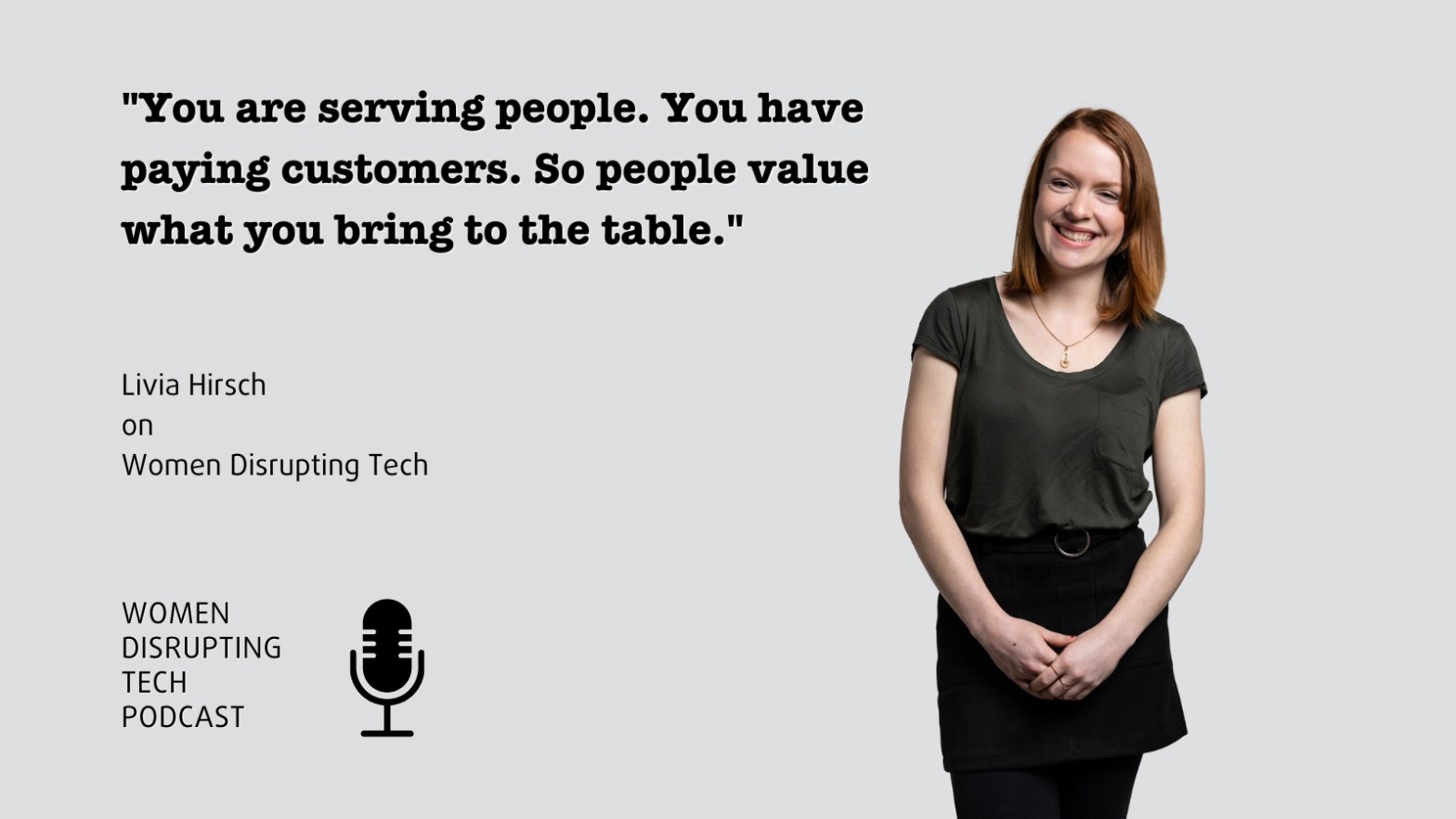
As a startup or scale-up, you need to stand out from the crowd. This enables you to attract and retain the customers you need to help your company and impact grow.
But how do you do this if you have limited time and resources?
To answer this question, I spoke to Livia Hirsch. She helps B2B SaaS scale-ups grow their visibility from local to global names via blog writing. She started her career as an intern at Dept, where she grew into a content marketer before starting her own content marketing business as a freelancer.
In this episode of Women Disrupting Tech
In this podcast, Livia talks about her own journey in the world of startups and scale-ups.
The episode contains a wealth of advice on how to start out and stand out with content marketing, even if you don’t have a lot of time or money available. We also discuss how to use social media in your marketing, how you can find your brand voice, and how to overcome imposter syndrome.
She talks about how her mentor helped her flourish as an intern and later as a content marketer. And she also explains how the doom and gloom messaging is counterproductive in the debates on climate and diversity.
What’s special about this episode
Besides her personal story on finding her passion, I really like how Livia goes beyond the basics to explain what makes a good content strategy and what KPIs to link to. And she really goes out of her way to share the knowledge that she has built with you.
Connect with Livia Hirsch
You can connect with Livia via LinkedIn. And you can find more information about Livia’s workshop via her LinkedIn post about it.
-
3 things I learned from 20 Episodes of Women Disrupting Tech
I’ll release the 20th episode of the Women Disrupting Tech Podcast this Friday. Thanks to the incredible women who are disrupting the technology sector with their knowledge and inspiration, it has been an exciting journey. So, I thought it would be an excellent moment to look at what I’ve learned so far.

Before I start, I want to thank the 23 women that I interviewed so far for their help, network, and wisdom. Also, a shout-out to all the other people who helped me connect with guests. I learned that just mentioning the podcast has opened so many doors, that as I write this post, I already have a list of possible guests that help me get to around 75 episodes. Which brings me to the first lesson I learned from the podcast.
When I started, my biggest fear was not having enough guests to interview because they would consider it a ‘female fight’. During the interviews, I learned that women appreciated the help of male allies. In fact, all of them somehow mentioned that promoting diversity in the technology sector is something we should all do together. So my podcast is a small step towards having more diversity and inclusion in the world of tech.
Another thing I learned is that every initiative has a business case, and so has diversity and inclusion. Research shows that having women on the team more than doubles profits increases the quality of products and services, and leads to more productivity. Therefore, I don’t think it is justified to approach it as a social responsibility issue. Instead, to quote Claire Tange, you’re missing out if you’re not looking at female-led companies.
The third and final thing I learned is a career tip that applies regardless of your position and regardless of the organization that you’re in. It’s that you need to tell the people around you about your ambitions and achievements. And yes, especially for women, this is sort of ‘not done’. But all the women I spoke to mentioned that being vocal about what you have done and still want to do is crucial to their success. If you listen to my interviews with Marie Weijler and Hendrika Willemse, you’ll get plenty of tips on how to do this.
What I have not learned yet is if I can keep my promise to Jacqueline van den Ende to make the podcast irrelevant 10 years from now. What I did learn is that there are plenty of ideas and that the timeline is very ambitious. But, in the spirit of the lessons I learned, there are plenty of reasons to continue, and I hope you’ll join me on that journey.
Want to be the first to learn when the 20th episode comes online?
Working on it…Yes, you're on the listOops, something went wrong. Please try again. -
“Technological capabilities come in different packages, not just male” | Kamales Lardi on Women Disrupting Tech

Kamales Lardi may not look like a woman who can code. But looks can be deceiving.
Because, at a young age, she decided to ignore the well-intended advice of people around her to go into a more female-friendly occupation and study computer science. There, she learned how to code.
Join me on episode 19 of Women Disrupting Tech to discover how she charted her own path toward writing a best-selling book and building her own successful consultancy company.
To listen, click the play button below or search for “Women Disrupting Tech” in your favorite podcast player.
"Technological capabilities come in different packages, not just male" | Kamales Lardi on Women Disrupting Tech – Women Disrupting Tech
About Kamales Lardi
Kamales is a tech leader with over 23 years of deep experience in implementing the latest digital and technology solutions. Since establishing Lardi & Partner Consulting GmbH in 2012, Kamales has advised many multinational companies across various industries in Europe, Asia, and Africa.
She is featured in the “Top 10 Global Influencers & Thought Leaders in Digital Transformation” and the “Top 50 Women in Tech Influencers 2021“.
And she has an entrepreneurial Gen-Z daughter.
Connect with Kamales Lardi
You can connect with Kamales Lardi on LinkedIn and Twitter. To learn more about her, her work, and her book, I encourage you to visit her website. She also has an inspiring TEDx talk on “Revolutionizing The Technology Industry With A Values Contract’’.
About The Human Side of Digital Business Transformation
You can find more information about the best-selling book “The Human Side of Digital Business Transformation” on Kamales’ website, Amazon, Bol.com, and other online bookstores.
And you can jumpstart the digital transformation of your company with her free Digital Maturity Assessment Tool.
The magic you can expect in this episode🪄
Kamales Lardi may not look like a woman who can code. But looks can be deceiving.
At a young age, she decided to ignore the well-intended advice of people around her to pursue a more female-friendly occupation and study computer science instead. Among many other things, she learned how to code.
In episode 19 of Women Disrupting Tech, she talks about her experience as a leader in tech and about how entrepreneurship allowed her to create a balance between being a parent and having a successful career.We discuss a broad range of topics, including:
🌪️ How Gen-Z could force traditional corporate structures to change.
👩🏼🏫 How founders play a vital role when it comes to the culture of their startup.
📚 Her book “The Human Side of Digital Business Transformation”
Her advice to startup founders (men and women) who want to build a transformative startup: “Don’t focus on building a Tech solution, but on developing a strong value proposition supported by an ecosystem in the market.” 🌟
What makes this episode truly magical 🌟
One of the things I keep hearing about women in tech is that they are discouraged from going into technology by people around them. Technology is still regarded as unsafe.
The same applies to being an entrepreneur. That world is not suitable for women because it’s considered too brutal.
Kamales is living proof that women can be very successful in tech. Provided you find your own path to success.What I particularly like about the episode is that Kamales, like a good role model, is not shy about sharing her knowledge and experiences with others.
And believe me when I say that she has a lot to share. Like why technology companies need diversity of thought to build transformative solutions.
To hear what it takes for technology companies to be ready for the next generation of customers and employees, listen to the full interview. Simply click the link below, or search for Women Disrupting Tech in your favorite podcast player.
Want to be the first to learn when episodes come online?
Working on it…Yes, you're on the listOops, something went wrong. Please try again. -
“Het is magisch hoeveel het kan doen als je even die spanning van de boog kunt halen.” | Lotte Leufkens on Women Disrupting Tech
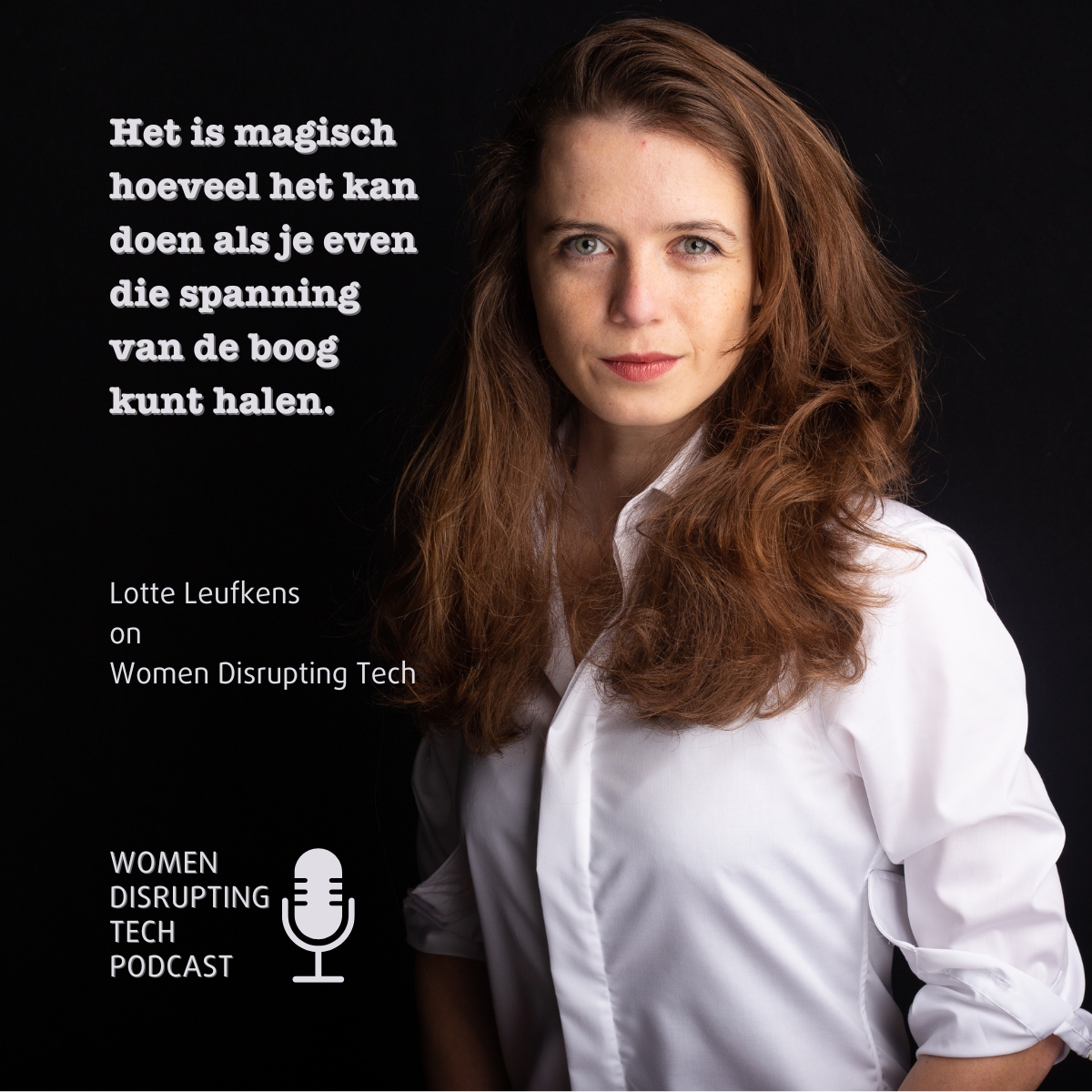
Het begon als een project voor een vak bij haar studie werktuigbouwkunde: los het grootste probleem van een stel met een meervoudig gehandicapt kind op. En inmiddels is CloudCuddle een bedrijf dat zowel gezinnen als zorginstellingen voorziet van bedden waarin meervoudig gehandicapte kinderen veilig kunnen slapen.
"Het is magisch hoeveel het kan doen als je even die spanning van de boog kunt halen." | Lotte Leufkens on Women Disrupting Tech – Women Disrupting Tech
In Nederland zijn er naar schatting 120.000 kinderen met een meervoudige handicap. Vaak gaat het dan over de combinatie van ernstige lichamelijke beperkingen en verstandelijke beperkingen. Deze kinderen kunnen niet in een gewoon bed slapen, omdat het te gevaarlijk is voor henzelf en hun omgeving.
In deze aflevering
In deze aflevering van Women Disrupting Tech spreek ik met CloudCuddle founder en social impact ondernemer Lotte Leufkens. We hebben het over wat het voor ouders betekent dat ze eindelijk een weekendje met hun kind weg kunnen, of dat die kinderen uit logeren kunnen bij Opa en Oma. Maar ze praat ook openhartig over haar eigen motivatie om met CloudCuddle deze gezinnen er weer bij te laten horen.
De onderwerpen die verder aan bod komen zijn:
- het (niet) combineren van studie, sport en een startup;
- de barrières die je als HealthTech bedrijf moet overwinnen bij je go-to-market;
- de ‘gevolgschade’ die het kan hebben als je als ouders van een meervoudig gehandicapt kind niet de hulp krijgt die je nodig hebt;
- hoe we diversiteit en inclusie in tech alleen kunnen bereiken als we dat vanuit opportunity doen, en niet vanuit boosheid.
Meer informatie over Lotte Leufkens
Als je meer informatie over CloudCuddle wilt, dan kun je die vinden op hun website, Facebook en Instagram. Meer informatie over Lotte Leufkens vind je op haar eigen website of via A Cup of Ambition.
De volgende aflevering van Women Disrupting Tech
De volgende aflevering is weer eens in het Engels. Ik sprak met Kamales Lardi over haar nieuwe boek “The Human Side of Digital Transformation” en over haar eigen reis als vrouw in de wereld van Tech. Wil je weten wanneer die online gaat? Schrijf je dan hieronder in voor updates, dan hoor je het als eerste als de aflevering live staat.
Bezig met verwerken …Gelukt! Je staat op de lijst.Er is een fout opgetreden en we konden je aanmelding niet verwerken. Laad de pagina opnieuw en probeer het opnieuw.

Women Disrupting Tech | The Podcast
The Podcast Closing the Funding Gap for Women in Tech.
 Women Disrupting Tech | The Podcast