

Many founders believe burnout happens because people work too hard. Or because startups move fast. Or because resources are tight.
But what if burnout starts earlier? In something quieter. In the work no one sees.
In Episode 143, I spoke with Jamie Albaum about how invisible labor builds up inside mission-driven teams. What begins as dedication can turn into overload when effort goes unrecognized.
Jamie and I explore why understanding how people actually spend their time is essential for preventing burnout, why invisible labor is often distributed unevenly, and how timekeeping can be a tool that protects your people rather than controlling them.
Listen to the episode on Spotify, Apple Podcasts, or YouTube. Or scroll down to go deeper.
3 Lessons From This Conversation
This conversation is about building through instability. But underneath that, it reveals something deeper. Resilience is rarely one big heroic act. It is a series of small, deliberate design choices.
1. Diversification is resilience in disguise
When the pandemic hit, many enterprise clients froze budgets. Smaller companies did not. Some even leaned in. Oryna also built relationships in different markets, from platform-driven acquisition in the US to relationship-based partnerships in Israel. She did not depend on one geography, one client type, or one channel.
Diversification is not only about revenue. It is about reducing single points of failure.
2. Anxiety can become structured preparation
At one point, Oryna describes how anxious people sometimes feel calmer during catastrophe. The worst-case scenario they have been rehearsing finally happens. Instead of spiraling, they move to execution.
Her method is simple. Act as if a difficult situation already happened. Write down what you would do. Revisit it from time to time. This is similar to the pre-mortem exercise described by Daniel Kahneman in Thinking, Fast and Slow. It turns vague fear into defined action.
3. Once you see opportunity, you don’t step back
At one point, Oryna reflects on what happens when women move into tech roles during crisis. Once you see what is possible, you cannot unsee it. Once you have built, led, shipped, and earned, you do not return to the same mental frame.
This episode is not about timekeeping software. It is about leadership blind spots. Jamie’s light-bulb moment came when she and her co-founders helped a customer uncover the real reason behind high burnout and attrition. It led them to co-found Kello Time. Here’s what she learned along the way.
1. Burnout starts in the invisible work.
When leaders don’t see where time really goes, effort accumulates without recognition. Operational tasks, emotional labor, and support work quietly expand until overload feels normal. Burnout rarely appears out of nowhere. It grows in the gap between the assumed and the actual workload.
2. Invisible labor is not gender neutral.
Jamie shares a pattern they see in the data: women often carry more operational and care-related work, while men log more project-based work. Project work is easier to measure and reward. Care work keeps teams functioning but often goes unrecognized. When that imbalance is ignored, structural bias becomes embedded in performance and promotion decisions.
3. Time visibility legitimizes rest.
Here’s something counterintuitive that Jamie learned along the way: when the real workload becomes visible and trusted, people take the time off they actually need. Not because they are less committed, but because their effort has been acknowledged. And when rest is legitimized, teams retain institutional knowledge, protect innovation, and build something that lasts.
These lessons teach us that when you make invisible work visible, you don’t just prevent burnout. You build a more equitable and sustainable organization.
💬 If you know a founder who could benefit from these lessons, use the buttons below to share the episode with them.
Or scroll down for magical moments, practical takeaways, and my own observations on the conversation that bring these lessons to life.
- 3 Lessons From This Conversation
- Highlights and timestamps
- 3 Magic Moments In The Episode
- Practical Takeaways for Founders
- The Quote From The Episode
- 3 Things That Changed The Way I Think
- Coming up on Women Disrupting Tech
- Listen to Episode 143 on Spotify, Apple, or YouTube
- About Jamie Albaum
- About Kello Time
- Amplify The Voices of Women Disrupting Tech and Close The Funding Gap
- Events that Women Disrupting Tech Must-Attend
- What I Want To Leave You With
- A Question for You 🤔
Highlights and timestamps
| Time | Highlight |
|---|---|
| 02:10 | The Birth of Kello Time: Addressing Burnout in Organizations |
| 05:03 | Understanding the Importance of Timekeeping |
| 07:55 | Cultural Implications of Invisible Labor |
| 10:54 | The Impact of Burnout on Employee Engagement |
| 13:49 | Identifying Patterns of Burnout Across Organizations |
| 16:55 | The Role of Data in Shaping Workplace Culture |
| 19:51 | Kello Time’s Unique Approach to Timekeeping |
| 22:45 | The Gender Dynamics of Invisible Labor |
| 25:35 | Kello Time’s Functionality and Benefits |
| 28:27 | Strategic Resource Management with Kello Time |
| 31:19 | Building Trust and Avoiding Micromanagement |
| 34:25 | Cultural Shifts and Employee Wellbeing |
| 37:33 | Recognizing Signs of Employee Disengagement |
| 40:24 | The Importance of Open Communication |
| 43:22 | Encouraging Time Off for Better Productivity |
| 46:31 | Implementing Sabbatical Policies for Employee Retention |
| 49:35 | Advice for Founders on Managing Workloads |
| 52:16 | The Invisible Labor of Fundraising |
| 55:14 | Practicing Public Speaking as a Founder |
| 58:17 | Connecting with Jamie and Kello Time |
3 Magic Moments In The Episode
Invisible work does not just live inside teams. It lives in founders, leadership, and in the expectations we carry. These moments expand what it means to lead sustainably as a woman building something ambitious.
1. The Data-Driven and Human-Centered Team
Right at the beginning of our conversation, Jamie describes her team this way with intention. The data makes invisible effort visible. The human-centered lens determines whether that visibility becomes care or control. You do not have to choose between performance and care. Leadership can hold both.
2. “If the powers that be needed to take a day off…” (approx. 41:30)
Rest is not a perk or a weakness. It’s a rhythm built into creation itself. And when loyalty is structurally recognized and time off is normalized, sustainability stops depending on individual endurance. It becomes part of how a company is designed.
3. “Public speaking does not come naturally to me.” (approx. 54:00)
Jamie shares this when we talk about the invisible work in fundraising. What looks like effortless confidence is usually preparation no one sees. For female founders stepping into investor rooms and onto public stages, hearing this is liberating. You don’t have to be born ready; confidence grows with practice, and true preparation is what gives you power.
Together, these moments show that leadership is built through preparation, sustained through rest, and strengthened when data is used to protect people rather than pressure them.
💬 What was your favorite moment from the episode? Let me know in the comments.
Or keep scrolling for practical takeaways you can apply as a female founder to build a healthier business.
Practical Takeaways for Founders
Invisible labor affects more than team morale and performance. It shapes margins, retention, and long-term stability. Therefore, sustainable founders design systems that prevent burnout from surfacing. These are three structural choices that protect both people and performance.
1. Watch for early signals of overload.
As we’ve seen in other episodes, burnout rarely arrives without warning. Communication slows down. Innovation drops. Performance conversations become more frequent. Hiring gets harder because your reputation precedes you. Sustainable founders treat these as system signals, not personal shortcomings, and adjust before attrition becomes the headline.
2. Use timekeeping data to inform pricing decisions.
When you know how long work actually takes, you stop relying on instinct to quote new projects. That clarity protects your margins and ensures you are not quietly subsidizing clients with invisible labor. Sustainable companies price from evidence, not optimism.
3. Build recognition into your company’s structure.
Loyalty should not depend on individual resilience alone. Sabbaticals, formal rest policies, and long-tenure recognition turn appreciation into architecture. When rest and retention are designed into the company, sustainability becomes predictable rather than aspirational.
The common thread is simple: what you choose to measure and recognize shapes what your company becomes.
💬 Know a founder who could use some help identifying where their time is going? Share this episode with them.
Or scroll down to discover an inspiring quote and learn about my own takeaways.
The Quote From The Episode
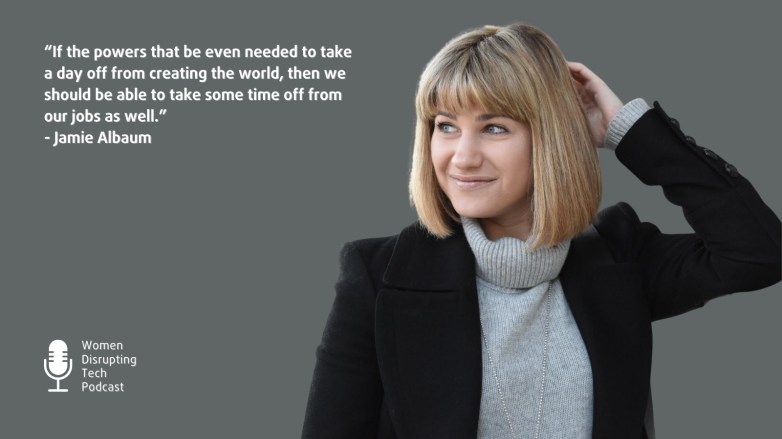
“If the powers that be even needed to take a day off from creating the world, then we should be able to take some time off from our jobs as well.”
Jamie Albaum- Co-founder and President of Kello Time
This line reframes rest as something necessary, even when the mission feels urgent. If creation itself requires rhythm and rest, so do founders.
3 Things That Changed The Way I Think
At the start of this conversation, I was skeptical. Timekeeping felt like something outdated, even slightly oppressive. By the end, I realized I had underestimated what visibility can actually do.
1. Timekeeping isn’t micromanagement.
I’ve experienced time tracking as a bureaucratic chore. In my early corporate years, it felt like something you postponed and quietly resented. So when Jamie described logging hours as a way to see and value invisible labor, I had to pause. I had framed it as control. She framed it as recognition.
2. Timekeeping means people feel allowed to take time off
I know that taking rest helps people perform better. But I was surprised to learn that tracking workload leads to people taking more time off. Especially in startups, urgency and putting in long hours are often worn like a badge of honor. But everyone needs to recharge eventually.
3. Gendered labor patterns show up clearly in the data.
I’ve heard about invisible labor for years now. What surprised me was how clearly it appears once you measure it. Jamie shares that women log more operational and care-related work, even within projects, and that men log more project-based work. And I don’t need to tell you which of these leads to better chances of promotion. Having data turns a cultural observation into something measurable and, therefore, addressable.
Together, these reflections made me rethink how visibility, rest, and equity intersect inside growing companies.
💬 What changed your thinking as you listened to this episode? I would love to hear from you in the comments.
Coming up on Women Disrupting Tech
What if technology is not just a tool, but a system that shapes how we behave, what choices we have, and even who holds power?
Those are the questions that Dr. Chris Miller and I cover in next week’s episode of Women Disrupting Tech. We unpack her framework of tools, totems and totalities to understand why technology sometimes promises freedom but ends up creating systems that are hard to escape. It is a slightly more philosophical conversation than usual, but one that connects directly to how founders design products and how societies adopt technology.
In the teaser from the episode, Christine explains how our understanding of tools has changed. A traditional tool, like a hammer or digging stick, is designed for a clear function. But many modern digital tools raise a different question: are they really designed to help us accomplish tasks, or are they designed around transactions where our data becomes part of the exchange?
If you like conversations that challenge how we think about technology, startups and power, you will enjoy this one. Episode 144 drops on 19 March 2026 at 8am CET.
Until then, as always, keep being awesome.
Dirkjan
Want to be the first to hear when new episodes drop? Leave your email below.
Listen to Episode 143 on Spotify, Apple, or YouTube

How a Female Founder Tackles Invisible Labor and Startup Burnout with Jamie Albaum | Ep. 143 – Women Disrupting Tech

About Jamie Albaum
Jamie Albaum is the co-founder and President of Kello Time. She co-founded Kello Time because she and her cofounders believe leaders can use real workload visibility to protect their people and run healthier organizations.
Before launching Kello Time, she advised clients across sectors on operations, business development, turnaround work, and U.S. government partnerships as Managing Director of LaCire, LLC, where she helped startups and small teams establish efficient and equitable systems that support long-term success.
You can connect with Jamie via LinkedIn.
About Kello Time
Kello Time is a web-based workforce and time management platform designed to make invisible work visible. It lets individuals and teams log hours in simple weekly or monthly intervals, and helps leaders plan capacity, understand project effort, and prepare for staffing needs months in advance — including vacations and sabbaticals. Built to be stand-alone and easy to implement alongside existing tools, Kello pairs project planning with integrated timekeeping so organizations can better track how work actually happens, protect their people, and make more informed decisions about workload and profitability.
You can learn more about Kello Time on the website and by following Kello on LinkedIn and Instagram.
Amplify The Voices of Women Disrupting Tech and Close The Funding Gap
Want to help close the funding gap? Here’s how you can help:
Follow the Women Disrupting Tech Podcast
Follow the show on Spotify, Apple Podcasts or YouTube. Every follow brings these stories to more people.
Give the show a rating or review on Spotify or Apple.
It only takes a moment, but it tells others this podcast is worth listening to. And helps the voices of my guests carry further.
Share the episodes that move you.
Send this episode to a friend, a colleague, or someone who needs to hear it. Every share helps to build a more inclusive tech future and supports my guests in getting the stage they deserve.
Events that Women Disrupting Tech Must-Attend
Some great events take place this spring. Below are three that you definitely want to check out. For a full overview of all events, including links to buy tickets, please check the events page.
Featured Event: She Talks Money – 17 March 2026
Are you looking for an event about money where you leave feeling energized, connected and confident?
On 17 March 2026, Women Disrupting Tech is partnering up with Yoana Leusin and Tiffany Aude of impowr and Equals to host ‘She Talks Money’, an informal, fun-to-attend event about money, careers and investing.
What to expect:
- Panel discussion with experts who remember what it’s like to be a beginner
- Interactive table rotations where you can deep dive into the topics YOU care about
- A room full of women who get it, because we’re all figuring this out together
No question is too simple. No topic is off-limits. Just clarity, community, and coffee.
📅 March 17, 2026
⏰ 9:30 AM – 12:30 PM
📍 Equals Amsterdam
🎟️ More information and tickets on Luma starting at €20.
What I Want To Leave You With
At the start of the episode, I remember thinking how totally unsexy this story is. Hearing the story about the spreadsheets stitched together did not help. But by the end, I realized that visibility is not about control, but about care and the possibility to run a better business.
As founders, we want to build companies that last. To do this, we have to pay attention to the work that does not show up in revenue dashboards or pitch decks. Invisible labor shapes culture, profitability, and retention, whether we track it or not. The question is whether we choose to see it.
You can listen to our entire conversation on Spotify, Apple Podcasts, or YouTube.
A Question for You 🤔
💬 How do you think tracking time can help you build a better company?
👇 Share your routine in the comments. Let’s keep this conversation going and discover new truths.

 Women Disrupting Tech | The Podcast
Leave a comment