
If you’ve watched Game of Thrones, you know the line: “Winter is coming.” In the North, that meant survival, preparation and endurance. And the House of Stark learning to withstand what others could not.
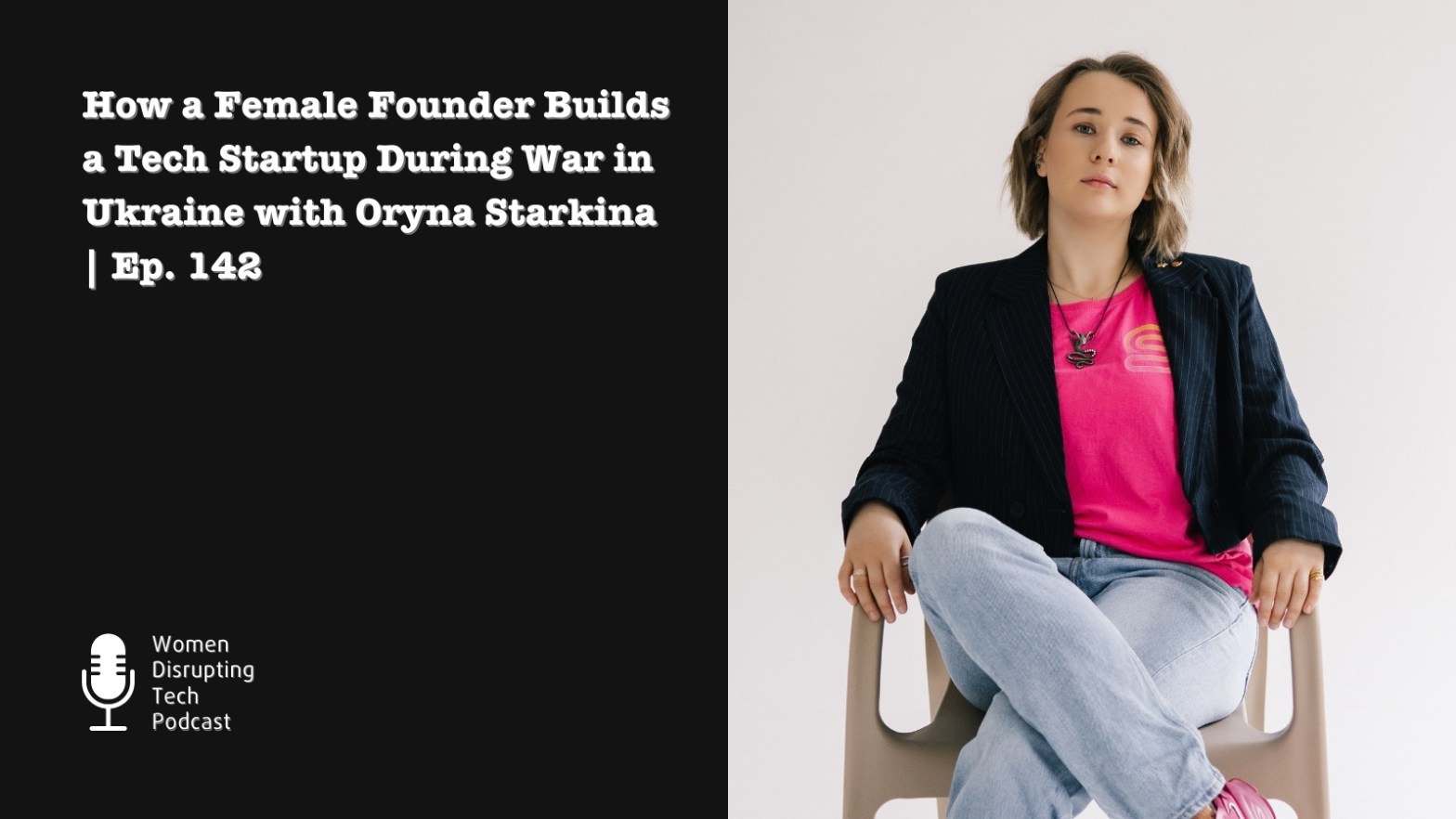
In episode 142 of Women Disrupting Tech, winter came to Ukraine in the form of war. And Oryna Starkina found herself building a tech startup while everything around her was shifting. The name is a coincidence. The resilience is not.
Oryna founded StarkSoft during the pandemic, structured it as a fully remote company, and then had to keep it running when infrastructure was attacked, and uncertainty became daily reality. What emerged is more than a story about crisis.
It is a story about diversification, clients, and markets. Thinking patterns. Even emotional regulation. And about what happens once someone sees an opportunity in the middle of instability. Because once you see it, you rarely go back to how you were before.
Listen to the episode on Spotify, Apple Podcasts, or YouTube. Or scroll down to explore the lessons behind building through winter.
3 Lessons From This Conversation
This conversation is about building through instability. But underneath that, it reveals something deeper. Resilience is rarely one big heroic act. It is a series of small, deliberate design choices.
1. Diversification is resilience in disguise
When the pandemic hit, many enterprise clients froze budgets. Smaller companies did not. Some even leaned in. Oryna also built relationships in different markets, from platform-driven acquisition in the US to relationship-based partnerships in Israel. She did not depend on one geography, one client type, or one channel.
Diversification is not only about revenue. It is about reducing single points of failure.
2. Anxiety can become structured preparation
At one point, Oryna describes how anxious people sometimes feel calmer during catastrophe. The worst-case scenario they have been rehearsing finally happens. Instead of spiraling, they move to execution.
Her method is simple. Act as if a difficult situation already happened. Write down what you would do. Revisit it from time to time. This is similar to the pre-mortem exercise described by Daniel Kahneman in Thinking, Fast and Slow. It turns vague fear into defined action.
3. Once you see opportunity, you don’t step back
At one point, Oryna reflects on what happens when women move into tech roles during crisis. Once you see what is possible, you cannot unsee it. Once you have built, led, shipped, and earned, you do not return to the same mental frame.
This is not only a personal insight. It is visible at system level. While the war created a shortage of engineers, the Ukrainian government did not only look for temporary substitutes. It invested in educating more women into IT. Over time, that expands the workforce structurally.
Winter tests systems. It also reveals what was already there. In Oryna’s case, diversification, preparation, and self-awareness were not reactions. They were already foundations.
💬 If this seems relevant to someone you know, share the episode with them.
Or scroll down for magical moments, practical takeaways, and my own observations on the conversation that bring these lessons to life.
- 3 Lessons From This Conversation
- Highlights and timestamps
- 3 Magic Moments In The Episode
- Practical Takeaways for Founders
- The Quote From The Episode
- 3 Things That Changed The Way I Think
- Coming up on Women Disrupting Tech
- Listen to Episode 142 on Spotify, Apple, or YouTube
- About Oryna Starkina
- About StarkSoft
- Other ways to amplify the voices of Women Disrupting Tech
- Events that Women Disrupting Tech Must-Attend
- What I Want To Leave You With
- A Question for You 🤔
Highlights and timestamps
| Time | Highlight |
|---|---|
| 02:05 | Navigating Crisis: The Birth of Starksoft |
| 04:49 | Building a Resilient Business Model |
| 07:56 | Client Relationships and Support During Turbulence |
| 10:29 | Overcoming Personal Challenges: Anxiety and Imposter Syndrome |
| 13:26 | Networking and Attracting Clients |
| 16:16 | The Role of Routine in Managing Anxiety |
| 18:58 | Mindfulness and Focus Through Physical Activity |
| 22:01 | Leveraging Overthinking for Business Success |
| 24:52 | Coping with Uncertainty in a War Zone |
| 30:49 | Impact of War on Workforce Dynamics |
| 35:09 | Women in Tech: Rising Opportunities |
| 39:52 | Long-Term Changes in Female Entrepreneurship |
| 41:55 | Lessons from Uncertainty: Insights for Founders |
| 44:16 | Preparing for the Unknown: Practical Strategies |
| 48:43 | Empowering Women Entrepreneurs: Realizations and Growth |
3 Magic Moments In The Episode
Before we started recording, we discussed what to do in case of an air raid or other alarm. Fortunately, we did not need to follow the plan (the only intermission coming from my cat), but having to take this precaution made her situation tangible. And it shaped the tone of the entire conversation. Here are three moments I want to highlight.
1. “For anxious people, this is when we feel more calm.”
When Oryna explains that anxious people sometimes feel calmer during a catastrophe, it reframes anxiety completely. Before the war, the scenarios lived in her head. When the crisis finally happened, the uncertainty narrowed. The mind moved from imagining to responding.
There was no triumph in her voice, just recognition. The worst had arrived. And with it, focus.
2. The companies that stayed
Winter also reveals who stands with you. During the pandemic, many enterprise accounts froze budgets immediately. Smaller companies did not. Some kept going. Some even supported.
It changed how I think about safety. Scale does not always equal stability. In moments of instability, relationships show their weight.
3. “When a woman sees the opportunity, she won’t unsee it.”
And then there was this line. Simple. Quiet. Steady.
War pushed more women into tech roles. But what struck me was not urgency. It was certainty. Once someone has built, led, and earned in a new field, their frame changes. The opportunity is no longer theoretical.
In Game of Thrones, winter separates the prepared from the unprepared. It reveals character. It forces movement. What it cannot do is erase what someone has already seen.
💬 What was your favorite moment from the episode? Let me know in the comments.
Or keep scrolling for practical takeaways you can apply as a female founder to build a more resilient business.
Practical Takeaways for Founders
Winter has a way of revealing how something was built. The way Oryna talks about preparation makes clear that building resilience comes from thinking ahead and building accordingly. Her story contains three ways you can prepare.
1. Contain overthinking before it paralyzes you
Oryna admits she tends to overthink. When left unchecked, it can spiral and paralyze you.
Her solution is simple. Choose a few realistic scenarios. Act as if they already happened. Write down what you would do. Revisit it from time to time.
This is similar to the pre-mortem approach described by Daniel Kahneman. You simulate failure in advance, so when something shifts, you move to execution instead of panic.
In that way, preparation becomes a way to calm the mind.
2. Diversify before you feel forced to
Oryna built her company so there is no single point of failure that could take it down. She diversified clients, markets, and acquisition channels.
The start of COVID taught her not to rely only on enterprise contracts. Instead, she built relationships with SMEs in different regions and used both her network and online networks like Upwork to attract business. When one layer froze, another held.
It shows that diversification is less about growth and more about stability.
3. Use AI to explore. Use engineers to scale.
Towards the end, we speak about vibe coding and tools that allow founders to prototype quickly. Oryna believes these tools are perfect for exploring your product yourself. To test flows and understand and improve your own logic.
But when it is time to scale, invest in proper engineering. Because AI lowers the barrier to exploration. It does not replace architecture.
Preparation reduces panic. Diversification reduces fragility. Exploration reduces hesitation. None of it is dramatic. All of it compounds.
💬 Know a founder who could use some help thinking about resilience? Share this episode with them.
Or scroll down to discover an inspiring quote and learn about my own takeaways.
The Quote From The Episode
There was one line that captured the long-term shift beneath the crisis.
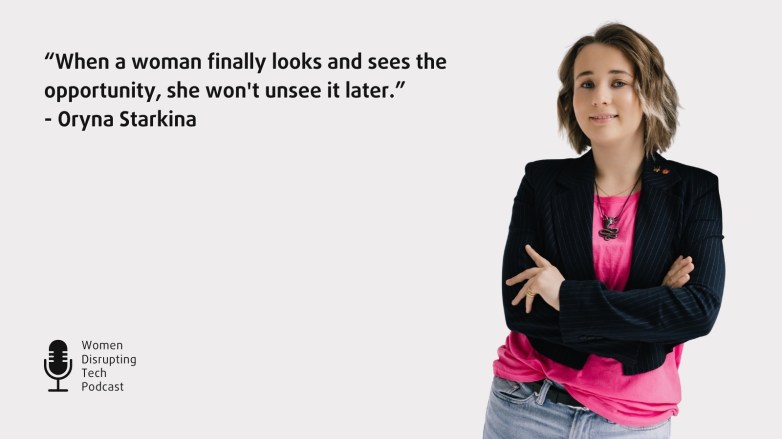
“When a woman finally looks and sees the opportunity, she won’t unsee it later.”
Oryna Starkina – CEO and founder of StarkSoft
This is not about optimism, but about exposure. Once someone has built, led, and earned in a new field, their internal frame changes. The opportunity is no longer theoretical. And once your identity expands, shrinking back becomes harder.
3 Things That Changed The Way I Think
Preparing for winter is one thing. Seeing how someone else builds through it is another. This episode made me look differently at stability, markets, and long-term change.
1. Enterprise is not automatically safer than SMEs
In the startup ecosystem, enterprise is often seen as the ultimate validation. Bigger contracts. Bigger logos. Supposedly more predictable revenue.
As Oryna explains, during COVID many enterprise accounts froze immediately. Smaller companies did not. Most stayed with Oryna and StarkSoft. Some even supported.
It made me rethink the assumption that scale equals safety. What if stability is not only about size but also about diversification and decision speed? In a crisis, human relationships tend to move faster than corporate policy.
2. Markets are emotional environments
The way Oryna described working with US clients through platforms and Israeli clients through personal relationships made something click. Markets are not only economic spaces. They are cultural systems.
Platform-driven acquisition behaves differently from recommendation-based networks. In moments of crisis, shared context and trust matter more than efficiency. That nuance changed how I think about cross-border partnerships.
3. Structural change can start during a crisis
What stood out to me is how Ukraine uses education as a strategy to get more women into IT, instead of just filling temporary gaps. That is long-term thinking in unstable times.
If more women gain skills, experience, and income in tech now, it becomes harder to reverse that shift later. Crises can expose weakness. They can also accelerate capacity building.
This episode reinforced something I believe deeply: resilience is rarely loud. It is built quietly, layer by layer.
💬 What changed your thinking as you listened to this episode? I would love to hear from you in the comments.
Coming up on Women Disrupting Tech
When you hear “employee time tracking,” you probably think: boring. Like, not something startups would be involved in.
Well, next week, Kellotime co-founder and President Jamie Albaum joins the podcast to talk about the importance of time tracking for mission-driven organizations (startups included). You’ll learn all about invisible labor, and its impact on burnout, retention, and sustainable growth.
In this clip, Jamie shares something that might raise eyebrows: when teams understand their real workload, they actually take more time off.
Want to understand how that works? Episode 143 drops on 12 March 2026 at 8am CET.
And until the next episode, as always, keep being awesome.
Dirkjan
Want to be the first to hear when new episodes drop? Leave your email below.
Listen to Episode 142 on Spotify, Apple, or YouTube

How a Female Founder Builds a Tech Startup During War in Ukraine with Oryna Starkina | Ep. 142 – Women Disrupting Tech

About Oryna Starkina
Oryna Starkina is the founder of StarkSoft, a software development company she launched in 2020 at the start of the pandemic. StarkSoft builds custom mobile apps and provides IT consulting for clients across the US, Israel, and Europe, often in long-term partnerships.
Structured as a fully remote company from day one, StarkSoft proved durable when war disrupted infrastructure in Ukraine. Oryna continued serving international clients while navigating power outages and uncertainty.
Her leadership blends practical risk management with self-awareness. She speaks openly about overthinking, preparation, and emotional regulation as tools to build stability under pressure.
You can connect with her on LinkedIn.
About StarkSoft
StarkSoft is a software development company founded in 2020 during the pandemic. From the start, it was built as a fully remote organization, serving clients across multiple international markets.
The company specializes in mobile application development for Android and iOS, cross-platform solutions, and IT consulting. More than 20 mobile projects have been delivered, with many client partnerships lasting over four years. The focus is on quality and clarity, managing projects from concept to release in a structured and reliable way.
StarkSoft’s mission is to unlock the full potential of mobile technology for businesses, helping them grow, operate more efficiently, and build sustainably.
Learn more on the website or by following StarkSoft on LinkedIn.
Other ways to amplify the voices of Women Disrupting Tech
Want to help make the funding gap go away by the end of 2032? Here’s how you can help:
Follow the Women Disrupting Tech Podcast
Follow the show on Spotify, Apple Podcasts or YouTube. Every follow brings these stories to more people.
Give the show a rating or review on Spotify or Apple.
It only takes a moment, but it tells others this podcast is worth listening to. And helps the voices of my guests carry further.
Share the episodes that move you.
Send this episode to a friend, a colleague, or someone who needs to hear it. Every share helps to build a more inclusive tech future and supports my guests in getting the stage they deserve.
Events that Women Disrupting Tech Must-Attend
Some great events take place this spring. Below are three that you definitely want to check out. For a full overview of all events, including links to buy tickets, please check the events page.
Featured Event: Women in IT Gala 2026 – 6 March 2026
Want to celebrate International Women’s Day in a special way? Join a gala night filled with joy, strength and real connection for every woman in IT. The Women in IT Gala is for anyone who identifies as a woman and is hosted by She Unfolds.
📆 Date: 6 March 2026
🕖 Time: 20:00 – 24:00
📍 Location: Castle Woerden
🎟️ More information and tickets on Eventbrite
Featured Event: Understanding Women’s Health – 10 March 2026
Learn how hormone cycles or perimenopause impact your life, and discover more about conditions like PCOS or Endometriosis at the quarterly Understanding Women’s Health Events hosted by Kasia Pokrop.
Women’s health is a topic near and dear to my heart. Which is why I’m happy to support and attend the events that 3mbrace Health organizes at Equals every quarter.
📅 March 10, 2026
🕠 17:30–20:30
📍 Equals Amsterdam
🎟️ Tickets on Luma.
Men are expressly invited to join. Because women’s health deserves space for real dialogue and shared learning.
Featured Event: She Talks Money – 17 March 2026
Are you looking for an event about money where you leave feeling energized, connected and confident?
On 17 March 2026, Women Disrupting Tech is partnering up with Yoana Leusin and Tiffany Aude of impowr and Equals to host ‘She Talks Money’, an informal, fun-to-attend event about money, careers and investing.
What to expect:
- Panel discussion with experts who remember what it’s like to be a beginner
- Interactive table rotations where you can deep dive into the topics YOU care about
- A room full of women who get it, because we’re all figuring this out together
No question is too simple. No topic is off-limits. Just clarity, community, and coffee.
📅 March 17, 2026
⏰ 9:30 AM – 12:30 PM
📍 Equals Amsterdam
🎟️ More information and tickets on Luma starting at €20.
What I Want To Leave You With
Winter is not always as dramatic as the war in Ukraine. Sometimes it arrives quietly as budgets freeze, markets shift, or plans stall.
What winter does is reveal structure. It shows you where you built for growth and where you built for durability. It shows you who stands with you. And it shows you what you are capable of once the worst has already happened.
The lesson I take from this conversation is simple. Build in a way that assumes winter will come. Diversify. Prepare. Know yourself. Because when the temperature drops, you want foundations, not improvisation.
You can listen to our entire conversation on Spotify, Apple Podcasts, or YouTube.
A Question for You 🤔
💬 How do you prepare without overthinking?
👇 Share your routine in the comments. Let’s keep this conversation going and discover new truths.

 Women Disrupting Tech | The Podcast
Leave a comment