
What if being honest about what we feel was a starting point for being a good ally?
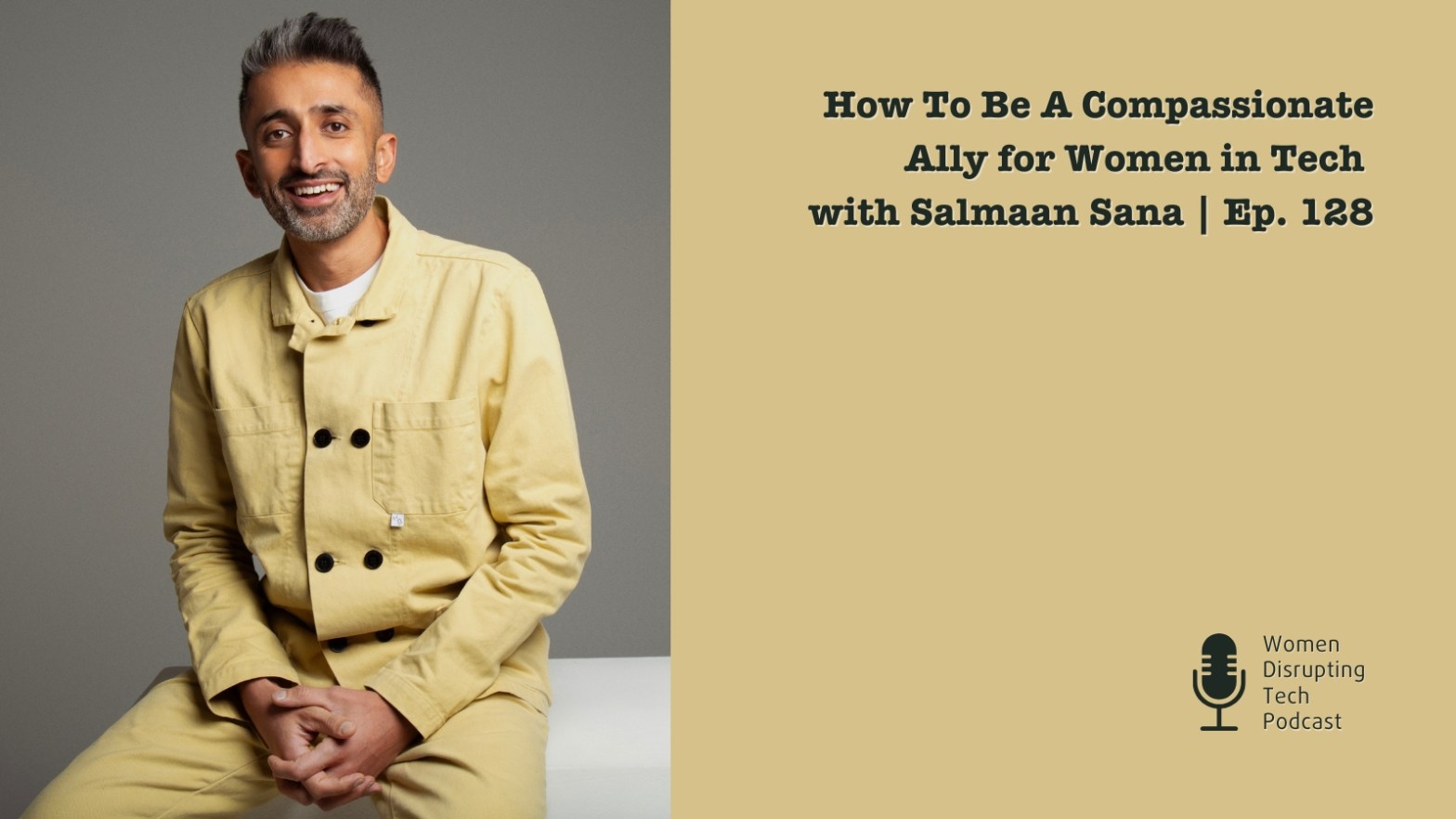
In this episode, Salmaan Sana explains how allyship touches leadership, emotional health and the role men can play to support women in tech. As a former medical student turned leadership facilitator, he brings both personal stories and structural insights to the table. We dig into how vulnerability matters, how small moments can be big for change, and how being an ally isn’t only about what you do — it’s how you show up.
We talk about vulnerability, overcompensation, and the everyday micro-moments that reveal who we really are at work.
Listen on Spotify, Apple Podcasts, or YouTube—or scroll down to explore the key lessons from our conversation.
3 Lessons From This Conversation
When Salmaan Sana was a medical student, he stumbled on The 7 Habits of Highly Effective People by Stephen Covey. That book changed his path. It taught him that leadership isn’t a trait you’re born with, but a skill you can train. He began sharing those ideas with other medical students—long before he called himself a facilitator or consultant. The same lessons still shape how he thinks about allyship today.
1. Focus on what you can influence
Salmaan reminds us that frustration often comes from worrying about things we can’t change. He uses Covey’s idea of the circle of influence versus the circle of concern to help people redirect their energy. In his view, true leadership—and true allyship—start when you act where your influence actually matters.
2. Seek first to understand
Another principle from Covey’s book that stayed with him is listening before responding. Salmaan applies this to allyship: men need to ask women about their experiences rather than assume they know. His barbershop story shows how bias often slips in unnoticed, and how one moment of humility can change the tone of a whole conversation.
3. Sharpen your awareness
Covey calls it “sharpening the saw,” the habit of continuous reflection. For Salmaan, that means noticing your own bias, being honest about it, and learning from it. He openly shares how he once came out sexist and racist on a Harvard bias test—and how awareness, not denial, became his way forward.
These lessons remind us that allyship isn’t about perfection. It’s about awareness, humility, and small consistent actions.
Share this episode with someone who cares about making people feel at home in new places.
Or scroll down for magic moments.
And if you want more lessons like this? Follow the podcast or subscribe to updates for a weekly dose of female founder inspiration.
Or scroll down for magical moments, practical takeaways, and my own observations.
- 3 Lessons From This Conversation
- Highlights and timestamps
- 3 Magic Moments In The Episode
- Practical Takeaways for Founders and Allies
- The Quote From The Episode
- 3 Things That Changed The Way I Think
- A Question for You 🤔
- Coming Up On Women Disrupting Tech
- Listen to Episode 128 on Spotify, Apple, or YouTube
- Other ways to amplify the voices of Women Disrupting Tech
- About Salmaan Sana
- Events that Women Disrupting Tech Must-Attend
- What I Want To Leave You With
Highlights and timestamps
| Time | Highlight |
|---|---|
| 03:00 | Journey into Healthcare and Leadership |
| 10:30 | The Role of Medical Education in Leadership |
| 20:06 | Understanding Allyship and Its Importance |
| 31:45 | Men’s Vulnerability and Emotional Health |
| 51:32 | Practical Steps to Become an Ally |
| 59:04 | Closing the Funding Gap for Female Founders |
3 Magic Moments In The Episode
Salmaan’s story begins close to home. He saw his mother’s potential limited by culture and circumstance, and that realization stayed with him. It made him aware of how many women are still held back. Not because they lack talent, but because systems and expectations were never built for them. That awareness became the seed of his allyship. These three stories from the episode bring that awareness to life:
1. Healing starts with understanding, not blame
He shares a story from a woman who worked for the World Health Organization in Congo. She said their mission wasn’t only to heal women after violence, but also to heal men. Because the harm came from inherited trauma and a false sense of inferiority rooted in colonialism. That insight reshaped how Salmaan sees toxic behavior: not as evil, but as pain looking for an outlet.
2. Meeting bias with empathy
Another moment comes from an everyday encounter at a flower shop. A woman he’d just met told him she distrusted asylum seekers. Instead of confronting her, he chose to listen. When she asked if he had ever faced racism, he said yes, many times. But instead of turning it into a debate, he kept the door open for a real conversation later. By staying open, he gave her space to reflect on her own words (and food for thought in the process).
3. The micro-moments that matter
At his coworking space, he noticed a receptionist who looked unwell. When she whispered that she was on her period, he didn’t brush it off. He asked why she felt she had to push through instead of resting. That question opened a dialogue with her manager about creating space for menstrual health at work. It’s a small act, but it shows how allyship can show up in micro-moments: noticing, asking, and making room for change.
These stories reveal how allyship often begins with simple awareness. It’s not about grand gestures. It’s about how you choose to respond in the moment.
💬 What was your magic moment from the episode? Let me know in the comments.
Or scroll down for practical tips that will fuel your own journey as a founder or ally.
Practical Takeaways for Founders and Allies
Different perspectives are essential to close the gap. Salmaan’s stories remind us that inclusion isn’t just about representation; it’s about the quality of understanding that comes from it. Whether in funding decisions, company culture, or day-to-day collaboration, real progress depends on who’s in the room and how they listen to each other.
1. Let skeptics go through their own process
You can’t change people, no matter how strong your argument is. Salmaan says the best way to deal with resistance is to stay calm, keep the dialogue open, and allow others to reach their own realization in time. Change that comes from reflection sticks longer than change forced through debate.
2. Fairness sometimes requires imbalance
In his words, it’s okay to overcompensate for women in the workplace. After all, they’ve been undercompensated for too long. Founders and leaders can apply this by giving more room, resources, or visibility where imbalance has been the norm. Overcompensation isn’t favoritism; it’s repair.
3. From consideration to understanding to compassion to action
Salmaan describes allyship as a sequence that starts with noticing and ends with doing. Consider what others go through. Try to understand it. Let that spark compassion. Then take small, visible steps that improve the environment you’re in. It’s how you turn awareness into culture.
💬 Know a founder or ally who should hear this? Use the share button below to tell them.
Or scroll down to discover an inspiring quote and learn about my own takeaways.
Next, I’ll share the moments from this conversation that shifted how I think about building inclusive companies.
The Quote From The Episode
When Salmaan talks about allyship, he doesn’t hide behind neutral language. He says what many hesitate to say out loud: women deserve some extra support. Not because they’re weak, but because, for too long, women have been undercompensated, underrepresented, and underestimated.

“It’s okay to overcompensate for women in the workplace.”
Salmaan Sana
3 Things That Changed The Way I Think
This conversation challenged some of my own assumptions about leadership and allyship. It’s what a conversation with a facilitator like Salmaan will do. I want to share three examples where he provided a mirror so I could start seeing how some of my own behaviors work for me—or against me.
1. Relatability comes from being unfinished
Salmaan doesn’t present himself as someone who has it all figured out. He admits that he’s still learning, still catching himself, still rethinking old patterns. That honesty makes him relatable. It’s a reminder that credibility doesn’t come from perfection—it comes from being in the process.
2. The real question under defensiveness
When men are confronted with their own toxic behavior, Salmaan says the deeper question is, “How good do I feel about myself right now?” That one line reframed how I see defensiveness. It’s not just resistance—it’s often a reflection of pain, insecurity, or shame. And seeing it that way changes how you respond.
3. Vulnerability is leadership, not weakness
What stands out most is how he lives what he teaches. He doesn’t share his flaws to prove he’s self-aware. He does it to show others that it’s safe to be honest. That kind of vulnerability isn’t a strategy—it’s leadership in action.
What’s so powerful is that by sharing his own dilemmas and biases, Salmaan helps others shift their perspective and stays open to the perspectives that shift his own.
💬 What changed your thinking? I’d love to hear from you in the comments.
A Question for You 🤔
💬 Which part of Salmaan’s perspective on allyship made you rethink your own assumptions?
👇 Share your thoughts in the comments. Let’s keep this conversation going and make inclusion the new normal in tech.
Coming Up On Women Disrupting Tech
Next week, Gina Schinkel discusses how her ventures, Driftawave and Leaderwave, are strategically capitalizing on the remote work boom by using innovative workations to foster team culture and productivity, while simultaneously preparing leaders and organizations to leverage AI and other new technologies for the future of work.
Gina is clearly a tech and AI enthusiast. So in this clip, she explains why people who risk being laid off because of AI should actually embrace it.
So stay tuned for more Women Disrupting Tech. And until the next episode, as always, Keep Being Awesome!
Dirkjan
PS If you fear missing out, subscribe to updates or follow the show on Spotify, Apple Podcasts or YouTube.
Listen to Episode 128 on Spotify, Apple, or YouTube

How To Be A Compassionate Ally for Women in Tech with Salmaan Sana | Ep 128 – Women Disrupting Tech

Other ways to amplify the voices of Women Disrupting Tech
Want to make inclusion in tech the new normal by 2032? Here’s how you can help:
Follow the Women Disrupting Tech Podcast
Follow the podcast on your favorite platform. Every follow brings these stories to more people.
Give the show a rating or review on Spotify or Apple.
It only takes a moment, but it tells others this podcast is worth listening to. And helps the voices of my guests carry further.
Share the stories that move you.
Send this episode to a friend, a colleague, or someone who needs to hear it. Every share helps to build a more inclusive tech future and supports my guests in getting the stage they deserve.
So when you know someone who should hear it, pass it on when you’re done.
About Salmaan Sana
Salmaan Sana is a leadership facilitator and organisational consultant based in Amsterdam who brings a rare blend of seriousness and humanity to his work. He started his career in medicine, where he witnessed chronic fatigue, burnout and a system built for endurance — not for wellbeing. That experience awakened his interest in how people and structures respond to change. Today, he works with teams and organisations to rediscover connection, belonging and alignment through inclusive leadership and emotional awareness.
He describes himself as a process-artist who listens deeply, designs with intention and then turns insight into action. Whether through consultancy, workshops or master-classes, Salmaan uses everyday experiences and structural insight to help people move from resignation to agency. His mission is to make the workplace somewhere everyone can show up fully and be heard, not just survive.
In the podcast, Salmaan mentions a TEDx Talk that he gave in 2011. You can watch that on YouTube.
You can learn more about Salmaan on his website and connect with him on LinkedIn and Substack.
Events that Women Disrupting Tech Must-Attend
The fall is loaded with great events, and I’ve found some cool ones. Below is one event you definitely want to check out. For a full overview of all events, including links to buy tickets, please check the events page.
Featured event: Understanding Women’s Health – 3 December 2025
During this final 3mbrace Health event of 2025, you’re invited to better understand the importance of women’s health and the powerful role it plays in our personal, professional, and societal well-being. Men are expressly invited to join. And yes, I will be there too. So buy your tickets on Luma.
That’s What She Said
Looking for an event to start your new year off right? Well, Impowr and Boom Chicago have got your back. They’re starting on 14 January with an event where networking meets comedy. You can get your early-bird ticket (a €10 discount until 30 November) on the Boom Chicago website.
Diverse Leaders in Tech Events
If you like being in the know about what is happening in the DEI space, Diverse Leaders in Tech is the place to be.
Every last Thursday of the month, they have monthly in-person meetups for tech people, HR leaders and supporters of diversity to exchange insights, tackle challenges, and take action. It’s a vibrant, safe space where diversity is celebrated.
You can register for events on the DLiT website. Did I mention that joining your first event is free?
Equals Events
Equals is on a mission to shape a society where women and men stand on equal footing. At their home base in Amsterdam, they regularly organize events, but you can organize yours there too (like the 3mbrace Health events). You can find the events on Luma.
What I Want To Leave You With
We recorded this episode the same week that 17-year-old Lisa was killed while cycling home in Amsterdam. The city felt different that week. Many women, across the country and in the media, spoke up about what it means to not feel safe in the dark. Many men, myself included, started to listen more closely.
It reminded me that allyship is something that needs constant attention and improvement. It’s checking in, asking, and noticing who doesn’t feel safe or seen—and what we can do about it, right where we are.
Salmaan’s work shows that leadership and allyship aren’t separate things. They both begin with paying attention. And they both depend on whether we’re willing to act, even when it feels uncomfortable.
Listen to the full episode on Spotify, Apple Podcasts, or YouTube.

 Women Disrupting Tech | The Podcast