
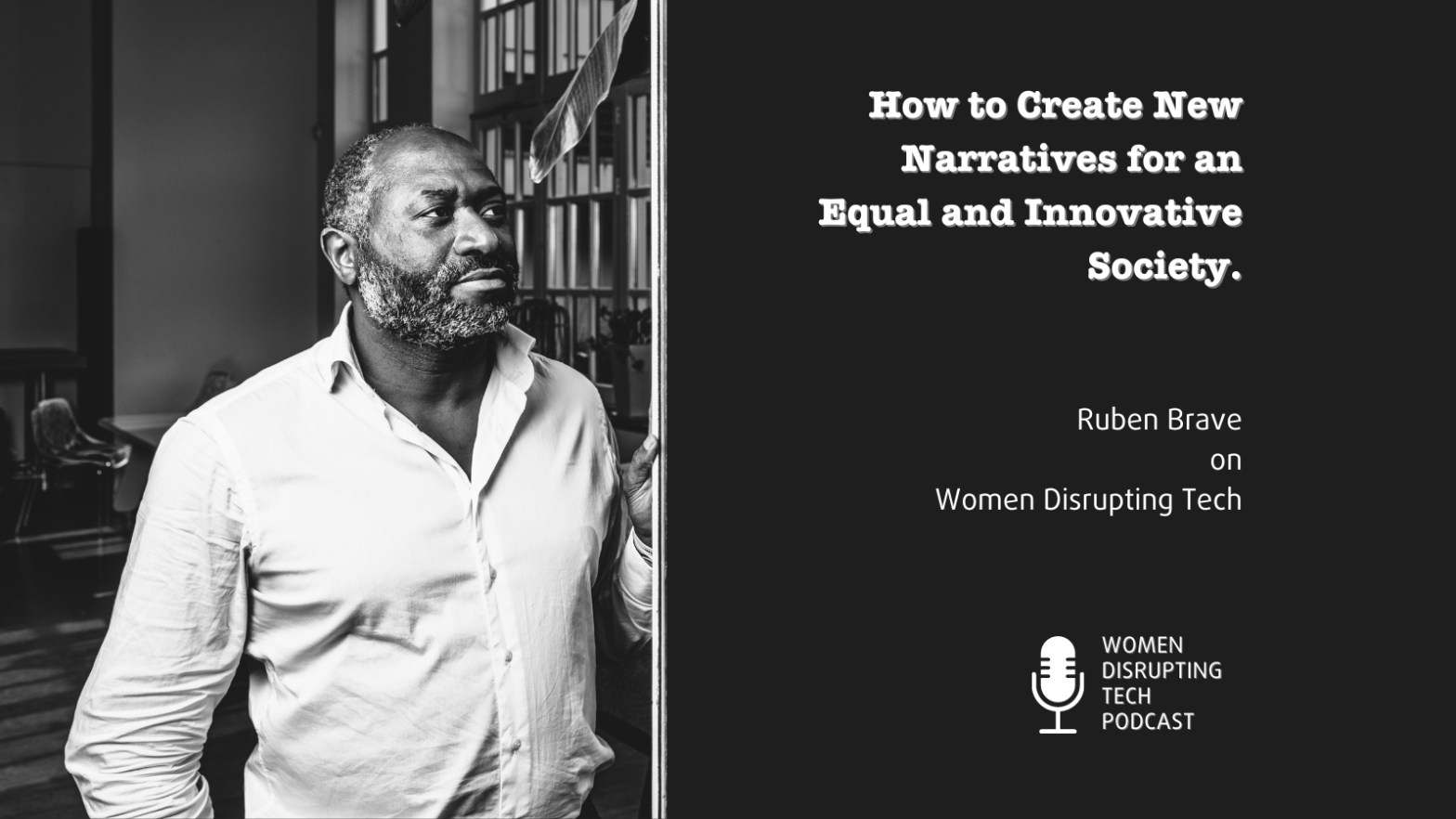
For the first time, we have a man on the show. And not just any man but Ruben Brave. As the founder of Dutch New Narrative Lab, Ruben is dedicated to creating new narratives that empower underrepresented founders.
In this Dutch episode, we explore Ruben’s personal experiences with racism in the boardroom, the systemic obstacles that prevent many from succeeding, and the important role men can play in dismantling these barriers.
Join us in this eye-opening conversation to learn how we can all contribute to a more equal and innovative society. Listen to episode 62 by hitting the play button below or scroll down for more information about Ruben and Dutch New Narrative Lab.

How to Create New Narratives for an Equal and Innovative Society With Ruben Brave | Ep. 62 – Women Disrupting Tech
The Magic You Can Expect in this Episode 🪄
An honest conversation. Not about diversity but about reality…
That is probably the best way to describe my conversation with Ruben Brave. He is the first man on Women Disrupting Tech. And for good reasons.
In episode 62, we explore Ruben’s personal experiences with racism in the boardroom, the systemic barriers faced by those who don’t fit the traditional mold, and the crucial role men play in breaking down these barriers.
Ruben also offers insightful advice for men who want to support his new narrative: start by asking women about their experiences and truly listen.
To hear this eye-opening conversation, find episode 62 of Women Disrupting Tech on Spotify, Apple, and YouTube, and hit play ⏯️. And let me know your thoughts about the episode in the comments.
No-cost ways to support the Women Disrupting Tech
When you’re ready to support my guests in making this podcast obsolete by the end of 2032, help out by doing these two things:
- Use the share button to share the podcast with friends, family, and co-workers. This way, you give the women disrupting tech the platform they need to make it happen. Use the buttons below to share.
- Rate the podcast on your favorite podcast platform. Better yet, leave a review. You can use a rating of one to five stars. This will help other people discover the podcast. And if you leave a review, it will help me improve.
What makes this episode magical🌟?
Ruben is really open about his own experiences and manages to translate them into concrete actions to change things.
In that sense, the Dutch New Narrative Lab is an apt name for his initiative. He practices what he preaches by removing the roadblocks that prevent people from underrepresented groups from getting access to the same opportunities as others.
In that sense, the example of a well-intentioned government initiative speaks for itself. Diversity can be considered a ranking factor for subsidy applications, but if diverse people do not apply, this ranking factor has no effect whatsoever.
But he also understands that most white people still have a long way to go. We need to develop empathy and not view feedback as an attack on us.
His advice to men is to ask women about their experiences, listen, and do some soul-searching about what their experiences mean to them. It’s the first step on a journey for a man to discover what his behavior does to women.
And if we take that a step further, the same is true when it comes to looking at people with another ethnicity, religion, and sexual preference.
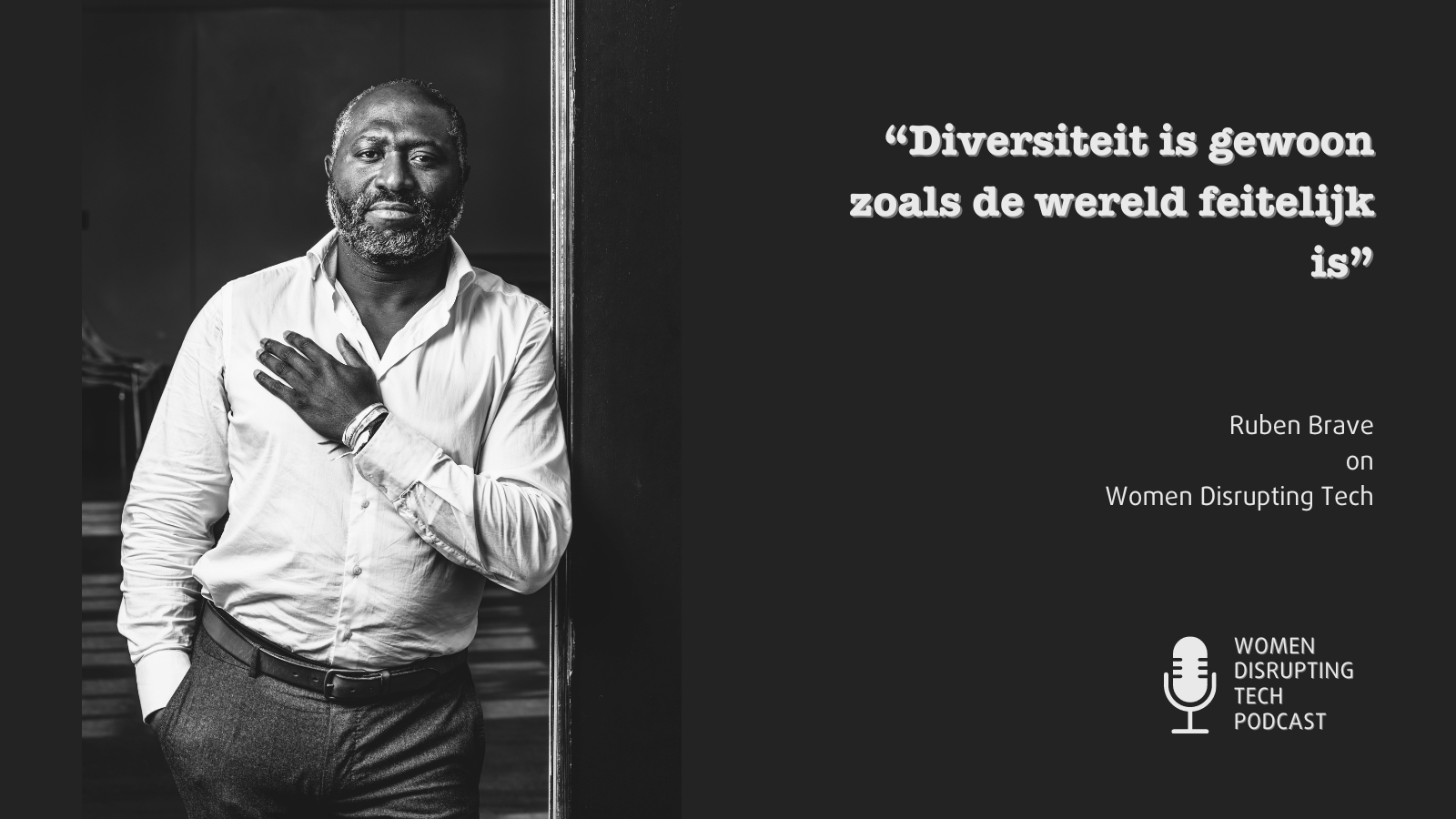
“Diversiteit is gewoon zoals de wereld feitelijk is.”
Ruben Brave, Founder Dutch New Narrative Lab
About Ruben Brave and the Dutch New Narrative Lab
Ruben Brave (1974) is a Dutch internet pioneer, media professional, serial tech entrepreneur, investor and Multi-Board Member. In 2004, he founded the academic business incubator Entelligence, in which startups of professors are kick-started (spin-offs) in the media, ICT, health, and education sectors.
Recently, he initiated the Dutch New Narrative Lab Foundation (DNNL) after conducting a Diversity Exploration in the Dutch startup ecosystem commissioned by the Dutch Ministry of Economic Affairs & Climate, for which he interviewed 350+ underrepresented founders and professionals.
I invite you to visit his website for a wealth of background information on his work. You can connect with Ruben on LinkedIn.
The Dutch New Narrative Lab aims to improve access to innovative entrepreneurship for all underrepresented groups in the Dutch startup ecosystem. It creates visibility for these entrepreneurs and thereby tilts the dominant standard image of “the innovative entrepreneur.” Among other initiatives, DNNL does this through its DNNL Launchpad and the unConference.
I encourage you to visit their website and invite you to follow them on LinkedIn or YouTube to learn more about their mission and programs.
Let me know what you think!
Please let me know your thoughts about this episode of Women Disrupting Tech in the comments.
I’m curious to hear about your experiences with racism and would love to hear if Ruben’s views resonate with you.
By the way, if you would like to suggest a guest that I absolutely must have on the podcast, send me an email or a DM on LinkedIn.
What’s coming up?
Next week on Women Disrupting Tech, Vedrana Rogoznica will tell us all about her startup, Rotoy. Rotoy teaches children how to program a robot. This approach helps them learn coding. Prepare for some serious female founder inspiration!
After that, Nara Moripen is my guest to discuss how her startup, Pal, is creating digital palliative care solutions for families affected by life-limiting diseases.
So stay tuned for more inspiring women disrupting tech and their male allies in season three of Women Disrupting Tech!
More episodes like this?
If you like to listen to more episodes like this one, here are a few recommendations.
– In episode 21, Marijke Kasius argued that we should stop pointing to diversity and start approaching it as normal. If you look at Ruben’s quote, I’m sure you can imagine the similarities in their positions. This episode is in Dutch.
– In episode 54, I talked to Kimberly Ofori. One of the things she mentions is that there are huge growth opportunities in Africa. But, the traditional financial system seems to overlook them.

 Women Disrupting Tech | The Podcast
8 Comments